
 Wenzhou Lita Electric Co., Ltd.

Understanding the Difference and Connection between Voltage Protectors and Voltage Stabilisers
A device that disconnects during low voltage can be doing exactly what it was designed to do, yet still fail to meet a site’s need for continuous operation. Buying another device with the same “power protection” label may not solve the problem. Some products disconnect an abnormal supply, some regulate output, some limit transient surges and some provide stored energy during an outage. Those functions need to be separated before equipment is selected. For a buyer comparing voltage protectors and voltage stabilisers, the first question is what disturbance has actually been measured and what the connected equipment needs to do while it occurs.
The short answer is that voltage protectors that monitor high and low supply limits usually disconnect the load outside their specified operating thresholds. A voltage stabiliser adjusts its output within a defined input range and load limit. A surge protective device, or SPD, limits transient overvoltages; a UPS provides stored-energy support within its design and runtime limits. A product may combine functions, but the combination must be confirmed in its documentation. Select against the measured disturbance, load characteristics and required operating continuity rather than assuming that one product name covers every power-quality problem.
What is the difference between a voltage protector and a voltage stabiliser?
A monitoring protector measures supply voltage and controls a switching device. When a threshold is crossed under its specified timing conditions, it disconnects the load; depending on the model, it reconnects after acceptable voltage returns and a delay has elapsed. The intended response is interruption. It does not raise a persistently low supply to the appliance’s nominal voltage.
Voltage stabilisers use a regulation method to adjust output while input remains within their declared operating envelope. Depending on design, that may involve transformer taps, electromechanical adjustment or power electronics. Correction range, accuracy, response and load capacity are model-specific; regulation should never be described as unlimited.
The operational consequence matters. A protector may be appropriate where equipment should remain off during an unacceptable supply condition. A stabiliser may be considered where the equipment needs to keep running through a variation that the stabiliser can accommodate. Neither choice establishes backup capability during a complete supply failure.

Will a surge protector protect against low voltage?
An SPD alone does not correct a brownout. Its role is to limit transient overvoltage and divert surge current. It does not supply the missing voltage during a sustained reduction. If a plug-in accessory also disconnects on undervoltage, that is an additional function that must be documented separately.
IEC 61643-11:2025, published on 18 June 2025, addresses SPDs connected to AC low-voltage power circuits and equipment rated up to 1,000 V RMS. Its public scope specifically describes limiting surge voltages and diverting surge currents. In that title, “low-voltage” describes the electrical-system category; it does not mean the SPD protects an appliance by correcting an abnormally low supply.
This terminology is a common purchasing trap. A search for “low voltage surge protector” can lead to an SPD catalogue even when the actual requirement is undervoltage disconnection or voltage regulation. Write the required action into the specification instead of relying on the search phrase.
Which device addresses which power problem?
| Function | Typical action | Useful specification | What must not be assumed |
|---|---|---|---|
| High/low voltage monitoring protection | Disconnects outside configured or fixed limits | Trip thresholds, timing, reconnection and switching capacity | That output voltage is regulated |
| Voltage stabilisation | Adjusts output within an operating range | Input range, output tolerance and capacity across that range | That an outage can be bridged |
| Surge protection | Limits transient overvoltage and diverts surge current | Relevant SPD ratings and installation coordination | That sustained undervoltage is corrected |
| UPS support | Supplies a load from stored energy under defined conditions | Topology, transfer behavior, load compatibility and runtime | Unlimited runtime or identical regulation across designs |
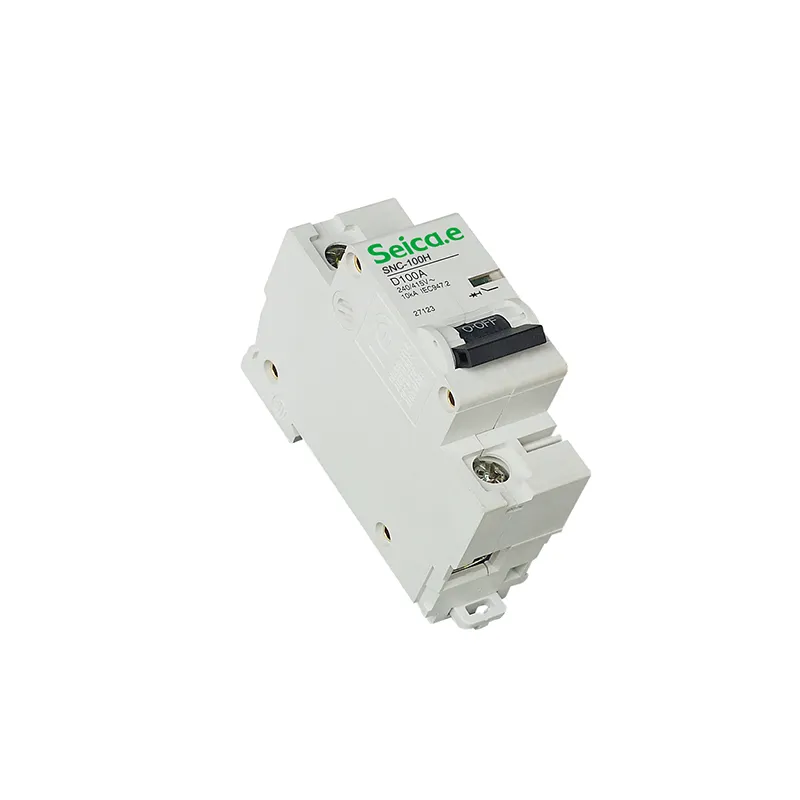
| Overcurrent protection | Responds to overload or short circuit within its characteristics | Rated current, breaking capacity and coordination | That normal supply voltage is maintained |
A multifunction product can occupy more than one row. The table separates the requirements so each claimed function can be verified, rather than recommending that every installation needs five separate devices.
What information should be collected before choosing a device?
Record the supply condition at the affected equipment using an appropriate investigation by a competent electrical professional. Note the voltage variation, duration, time of occurrence and relationship to starting loads or other site activity. A single reading taken while the equipment is idle may miss the condition that causes the fault.
Also collect the equipment nameplate, allowable input conditions, running demand and startup characteristics. A compressor, motor and electronic power supply can place different demands on a switching contact or regulator even when their running wattages look similar. The equipment manufacturer’s instructions should guide acceptable interruption and restart behavior.
Persistent abnormal voltage, unexpected changes between circuits, overheating or suspected wiring faults require investigation at their source. An accessory should not be used to hide a loose connection or other installation defect. The HSE electrical-safety FAQ explains why installation assessment and testing need appropriate competence.
How do load size and low input voltage affect selection?
Read both watts and volt-amperes where they are specified. For a simple steady-state single-phase screening calculation, apparent power in VA equals real power in W divided by power factor. An illustrative 1,000 W load at a power factor of 0.8 represents 1,250 VA; that arithmetic does not include startup demand, waveform effects or required design margin.
For broadly constant output power, a lower input voltage generally requires more input current, allowing for efficiency and the equipment’s operating limits. A stabiliser’s headline capacity therefore needs to be checked against its declared input-range and derating information. A rating at nominal input is not proof of the same usable capacity at every input voltage.
For a monitoring protector, confirm whether its contacts can switch the actual load directly or whether a correctly selected contactor is required. Check load category and inrush requirements, not only a printed ampere value. The complete arrangement still needs suitable overcurrent protection, conductors and installation conditions.
Why do reconnection delay and hysteresis matter?
If the supply repeatedly crosses a threshold, the equipment could cycle on and off. A suitable difference between disconnect and reconnect conditions, often called hysteresis, can help prevent that behavior; the available settings and performance depend on the device.
A reconnection delay serves a different purpose: it prevents immediate restoration after the monitored condition becomes acceptable. For equipment with a compressor, use the appliance manufacturer’s restart requirements. There is no single delay that is automatically correct for every refrigerator, air conditioner, pump or control system.
Confirm how the device behaves after an outage or manual isolation. Does it retain settings? Does it reconnect automatically? Does a process need manual approval before restarting? For a facility operator, those answers can matter as much as the trip threshold.
When might protection, regulation and backup be combined?
| Observed need | Function to investigate | Decisive check |
|---|---|---|
| Equipment should stay off outside acceptable supply limits | Monitoring and disconnection | Thresholds and interruption are suitable for the equipment |
| Operation is required through a recurring voltage variation | Regulation | Variation and load remain inside the regulator’s envelope |
| Transient exposure needs to be addressed | Coordinated surge protection | Installation, earthing and SPD selection match the system |
| Orderly shutdown or continued service is required during an outage | Stored-energy backup | Runtime, transfer behavior and load compatibility meet the duty |
Combining devices requires an engineered connection arrangement. Check grounding, protective devices, bypass provisions, fault behavior and manufacturer instructions. Do not publish or follow a universal “protector first, stabiliser second” wiring sequence without knowing the exact equipment and supply system.
What should a procurement specification include?
- The disturbance to be addressed and the required equipment response.
- Nominal supply, phases, wiring arrangement and environmental conditions.
- Load ratings, startup behavior and applicable operating limits.
- Trip, reconnect, delay and restart requirements where relevant.
- Installation instructions, maintenance method and model-specific conformity evidence.
Request evidence for each function claimed. The European Union’s CE-marking guidance explains the manufacturer’s responsibility for applicable conformity requirements; a CE mark is not an independent confirmation that a device combines regulation, backup and surge protection.
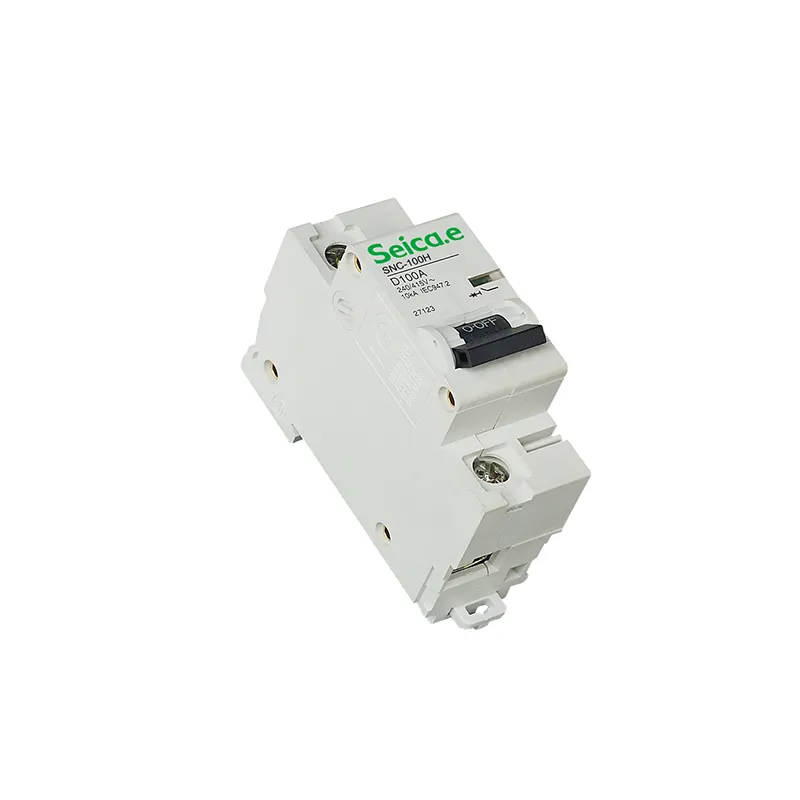
Keep other protection requirements distinct. An RCCB residual-current circuit breaker addresses a different fault condition from a voltage regulator. No accessory should be substituted for another simply because both appear in a circuit-protection catalogue.
What else do buyers ask about voltage protection?
Is a surge protector a voltage stabiliser?
No. An SPD limits transients; a stabiliser regulates output within specified conditions. A combination product must document both functions.
Can a voltage stabiliser replace a UPS?
Not when the requirement is stored-energy backup during a supply failure. Some UPS designs include regulation, but a stabiliser without an energy source cannot sustain a load through an outage.
Will an overvoltage protector keep equipment running?
A disconnection protector intentionally interrupts operation when its trip conditions are met. If continuity is required, the project must assess regulation or backup and the equipment’s allowable supply conditions separately.
Can the cheapest device be the better choice?
Yes, if its documented function fully meets the requirement. Compare the cost of interruption, maintenance and replacement with the proposed solution; adding functions that the site does not need is not automatically a better investment.
How should the final choice be made?
Start with the required response to the power problem. Disconnection, regulation, transient limitation and backup are different actions, and equipment may need one or several of them. Confirm the disturbance and load first, compare model-specific operating limits next, then have the installation and restart behavior reviewed before procurement. Do not assume that a product name, indicator light or enclosure proves a capability, and do not use protective accessories to avoid investigating a wiring fault. ABUK’s circuit protection products can form part of a model-specific sourcing review after those requirements are defined. Request the exact technical documentation and destination-market evidence so the purchase is based on the required function rather than a broad promise of power protection.