
 Wenzhou Lita Electric Co., Ltd.

What Is a Normal Electrical Outlet Voltage?
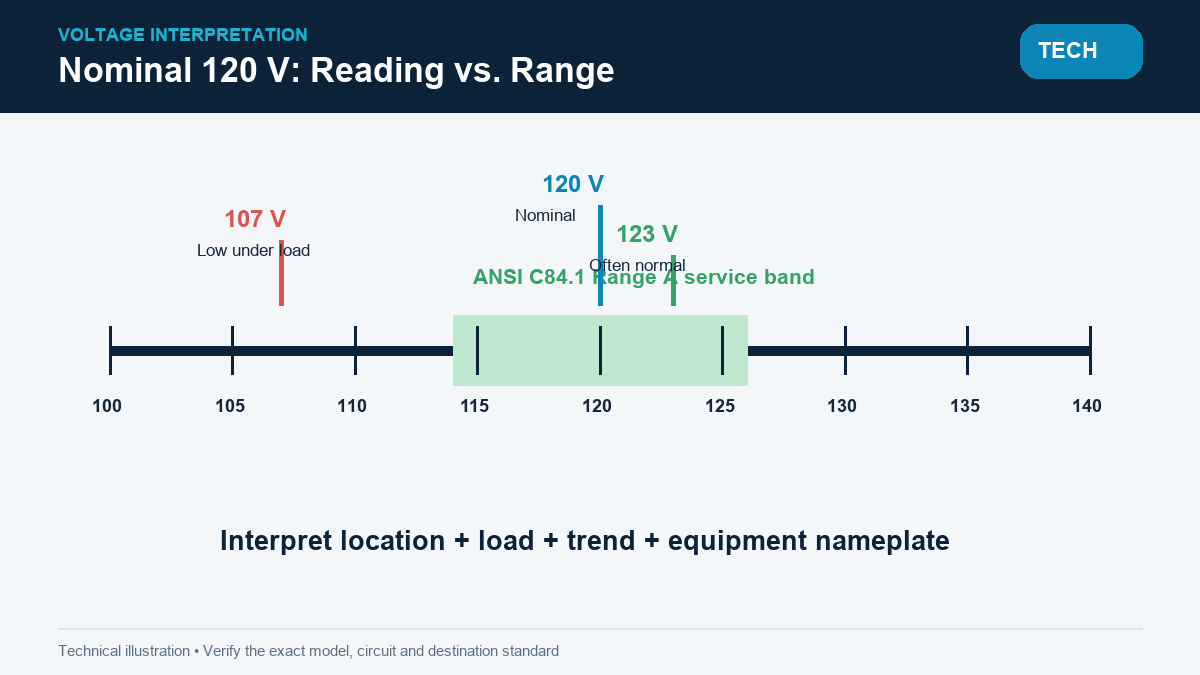
When a facilities technician in Chicago encountered a 123 V reading at a hotel receptacle, he watched a troubleshooting clip, assumed the circuit was overvoltage, and confidently ordered replacement outlets. The new devices produced the same reading, while a heavily loaded room on the next floor measured only 107 V and continued resetting equipment. The receptacles were not setting the voltage—the team had confused a nominal system rating with an acceptable measured range. The practical question was: what is a normal electrical outlet voltage?
Summary: In the United States, a standard receptacle is nominally 120 V at 60 Hz, although measured voltage changes with utility regulation, transformer position, wiring impedance, and load. ANSI C84.1 Range A commonly places 120 V service voltage around 114–126 V; utilization-point limits differ. A reading should be judged by location, load, frequency, equipment nameplate, voltage drop, and the adopted electrical code—not by the old “110 V” label alone.
Normal electrical outlet voltage describes the expected supply at a receptacle within a specific national system and operating range. It is not generated by the outlet itself. In North America, 110 V and 115 V survive as informal names, but 120 V is the modern nominal value. ANSI C84.1 defines preferred 60 Hz voltage ratings and operating ranges; IEC 60038 performs a similar harmonizing role for international systems, including 230/400 V networks.
Why Does a 120 V Outlet Read 117 V or 123 V?
Voltage is regulated across the supply system, but it changes with feeder loading, transformer taps, distance, conductor impedance, and local generation. ANSI C84.1 Range A service voltage for a nominal 120 V system is commonly cited as 114–126 V. At the utilization point, the allowable range is wider because building wiring adds voltage drop. Therefore, 117 V or 123 V can be normal, while the trend under load and the equipment’s nameplate range remain important.
Are 110 V, 115 V, and 120 V the Same?
They often describe the same North American supply family in everyday speech, but they are not interchangeable engineering measurements. A motor nameplate may state 115 V so it can operate on a nominal 120 V circuit after normal drop. A “110 V outlet” search usually refers to a NEMA 5-15R or 5-20R system, not a utility target of exactly 110.0 V. Procurement documents should use the equipment rating, nominal system voltage, frequency, and plug configuration separately.
How Do 208 V and 240 V Appear in Buildings?
A split-phase dwelling commonly provides 120 V from either line to neutral and about 240 V line to line. In a 120/208 V three-phase building, line-to-line voltage is about 208 V. A 240 V appliance cannot be assumed compatible with 208 V, and neither supply belongs on a standard 125 V receptacle. NEMA configurations and NEC 210.21 help prevent incompatible plugs, but the equipment schedule must still state voltage and phase.
How Should Normal Electrical Outlet Voltage Be Checked?
A qualified person should use a meter with an appropriate measurement category, inspect the receptacle condition, and compare no-load and operating-load readings. NEC informational notes commonly recommend limiting branch-circuit voltage drop to about 3% and total feeder-plus-branch drop to about 5% for efficient operation; these notes are design guidance, not a universal pass/fail rule. Persistent low voltage, large imbalance, heat, arcing, or unstable readings requires circuit-level investigation rather than repeated receptacle replacement.
Outlet Reading Comparison
| Observed reading | Possible meaning | What to check | Procurement impact |
|---|---|---|---|
| 114–126 V at service | Often within ANSI Range A | Location and load condition | Usually no device change |
| 110–113 V under load | Voltage drop or utilization range | Conductor length, load, terminals | May require circuit correction |
| Near 0 V | Open circuit or switched supply | Breaker, switch, conductor continuity | Troubleshoot before replacement |
| About 208/240 V | Different circuit class | Panel schedule and receptacle type | Use correctly rated equipment |
| Rapidly changing voltage | Loose connection or supply issue | Qualified diagnostic testing | Escalate promptly |
Regional Voltage Matrix
| Market example | Nominal household supply | Frequency | Typical concern |
|---|---|---|---|
| United States/Canada | 120/240 V | 60 Hz | NEMA configuration and split phase |
| United Kingdom | 230 V | 50 Hz | BS 1363 fused plugs |
| Continental Europe | 230 V | 50 Hz | Country-specific plug systems |
| Gulf markets | Often 230/400 V | 50 Hz | GSO and national requirements |
| Japan | 100 V | 50 or 60 Hz | Regional frequency difference |
Standards and Compliance
- ANSI C84.1: preferred 60 Hz system voltage ratings and operating ranges in the United States.
- IEC 60038: internationally standardized voltage values.
- NFPA 70: branch-circuit, receptacle-rating, conductor, grounding, and installation rules.
- CE, RoHS, and GCC/GSO: export documentation must correspond to the destination voltage, frequency, plug system, and model.
A device rated only 125 V should not be placed on a 230 V system because the face looks familiar. Noncompliance can damage loads, defeat protective coordination, trigger customs or inspection rejection, and create fire or shock exposure.
Selection and Troubleshooting Guide
- Record nominal voltage, measured voltage, frequency, phase, and load condition separately.
- Match receptacle voltage and ampere rating to the circuit and plug standard.
- Investigate voltage drop, loose terminals, and imbalance before replacing multiple outlets.
- Require destination-specific markings and model-linked test documents.
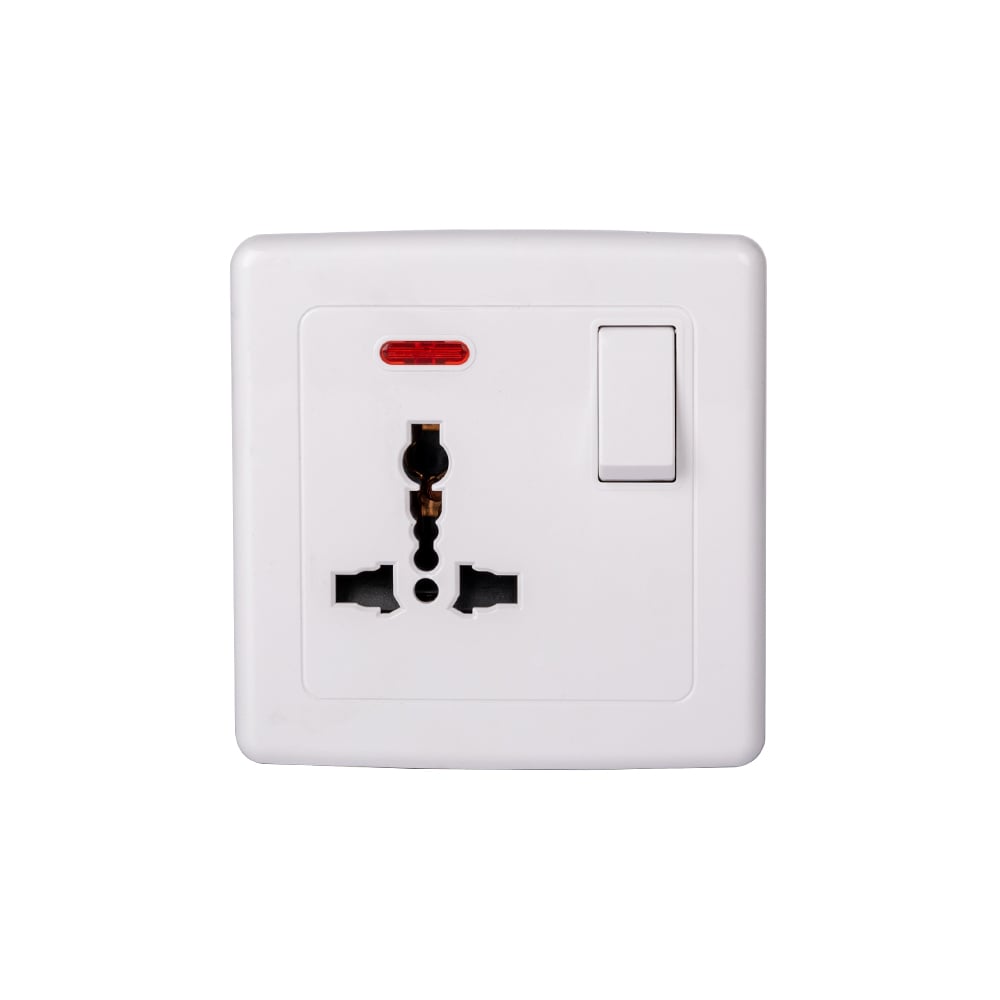
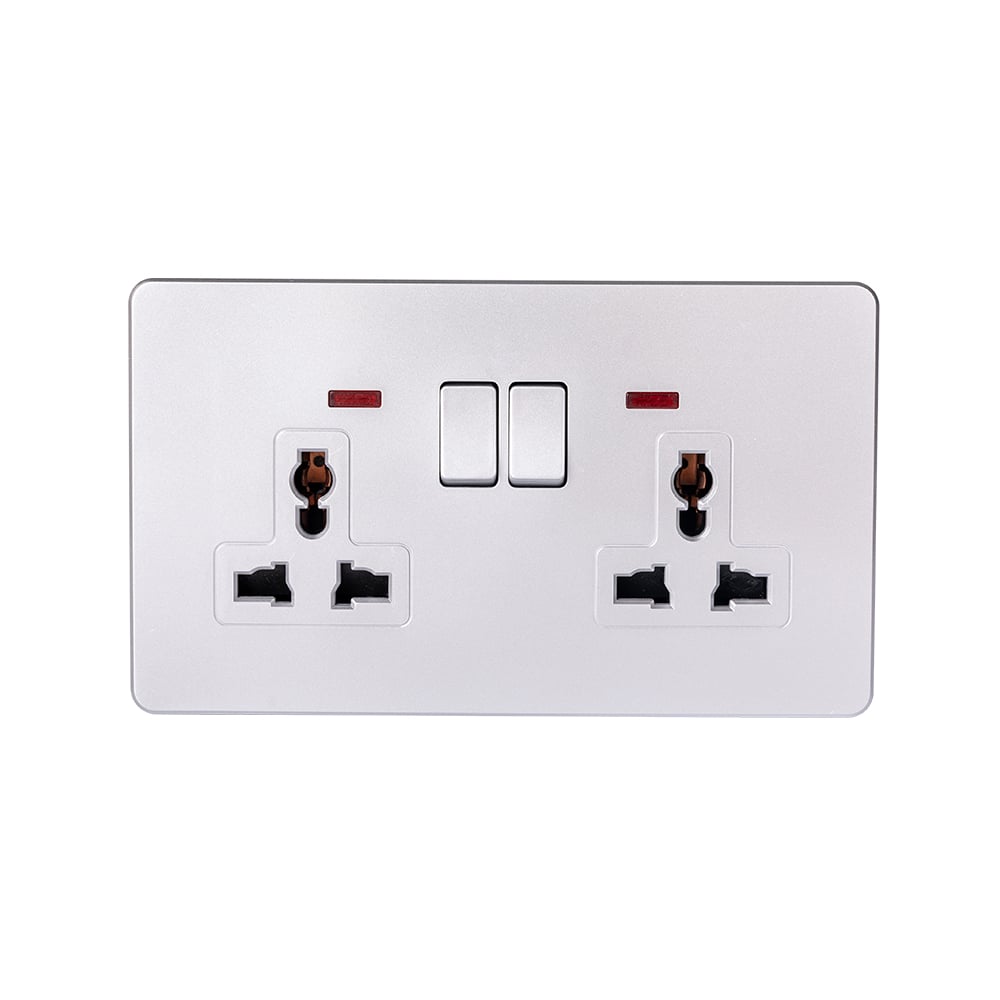
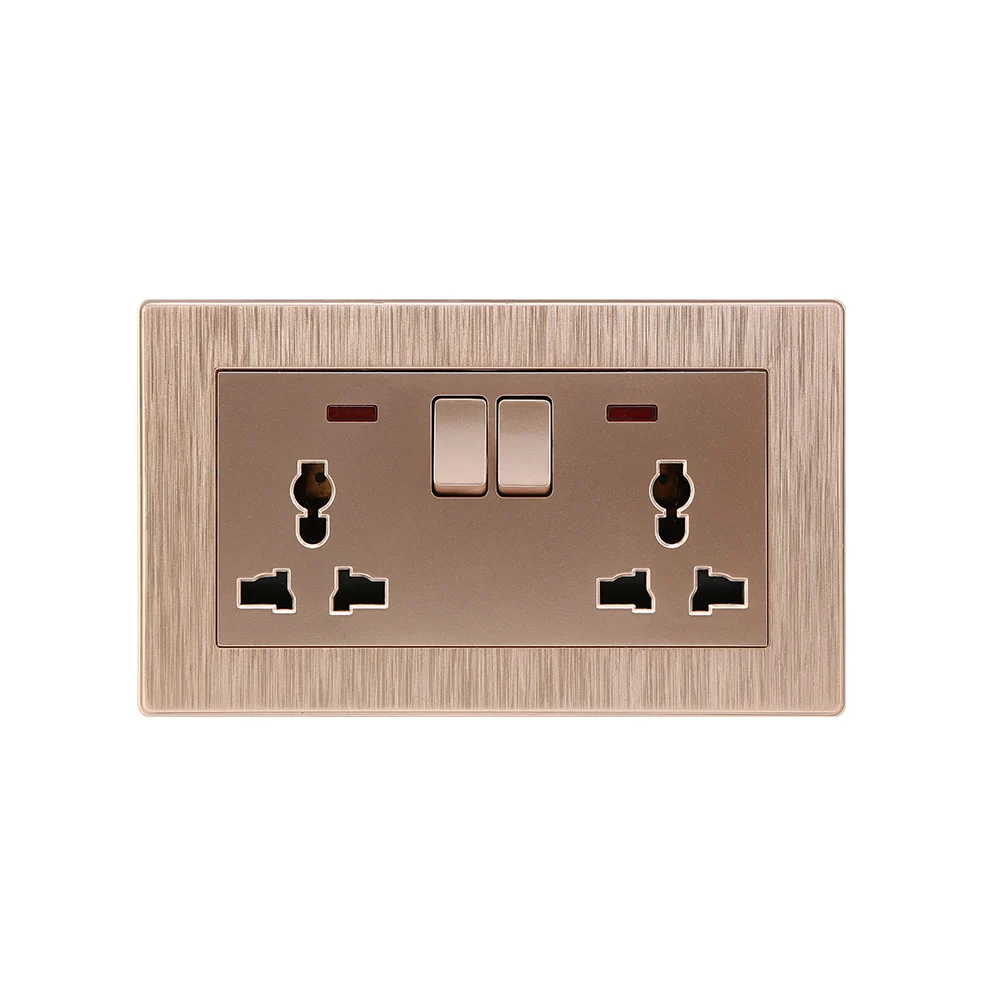
ABUK provides wall sockets and related devices for different supply systems; its normal electrical outlet voltage selection support includes CE, RoHS, and GCC documentation for applicable models and markets, subject to project verification.
Frequently Asked Questions
What is a normal voltage for an outlet?
In the United States, the nominal value is 120 V at 60 Hz. Actual readings vary, and ANSI C84.1 ranges plus the equipment nameplate should guide interpretation.
Is 220 volts a normal outlet?
It is normal in many countries and for certain North American equipment circuits, but it is not the standard U.S. 120 V general-use receptacle supply.
Is a normal house outlet 110?
“110 V” is a common legacy expression. Modern U.S. systems are nominally 120 V, while equipment may carry 115 V ratings.
Is 240 volts a normal outlet?
Yes for designated appliances and in many national systems, but the receptacle, breaker, conductors, and connected equipment must all be rated for it.
What is considered low voltage at a 120 V outlet?
The answer depends on whether measurement occurs at the service or utilization point and under what load. Sustained readings below the applicable range require qualified investigation.
Does a receptacle control the voltage?
No. The supply system and circuit determine voltage; the receptacle provides a rated connection interface. Buyers can compare regular plug voltage configurations before specifying hardware.
References
- NEMA — ANSI C84.1 Voltage Ratings
- IEC 60038 — Standard Voltages
- NFPA 70 — National Electrical Code
- OSHA — Electrical Safety
The memorable point is that “normal” is a range tied to a system and a load; one meter number without context is not a diagnosis.
ABUK builds voltage-appropriate wiring-device solutions for that moment. Review the normal electrical outlet voltage product range or contact the technical team with the destination and circuit schedule.