
 Wenzhou Lita Electric Co., Ltd.
Are Electrical Outlets in Mexico Polarized?
When a hotel guest in Mexico City encountered an outlet that rejected the wider blade of a US appliance plug, a small adapter appeared to solve the problem. In this hypothetical visit, the guest then discovered that the appliance also required a grounding connection the adapter did not provide. The overlooked distinction was between making a plug fit and preserving its intended electrical arrangement.
Summary: Many Mexican Type A and Type B outlets use polarized geometry, but not every installed outlet is identical or correctly wired. Mexico’s nominal supply is 127V, 60Hz. Check polarity, grounding, voltage and condition separately; neither a wider slot nor a grounding opening proves the installation behind it is correct.
Electrical outlets in Mexico are commonly associated with Type A and Type B. World Standards identifies NEMA 1-15 and NEMA 5-15 configurations in its Mexico guide and explains the unequal blade widths of polarized Type A plugs. That does not justify a nationwide claim that all outlets are polarized, unpolarized, grounded or ungrounded.
What does a polarized plug actually establish?
A polarized two-blade plug has unequal blade widths so that it enters a matching polarized outlet in only one orientation. In the intended wiring arrangement, the wider blade corresponds to neutral and the narrower blade to the live conductor. The geometry helps preserve that relationship; it does not independently verify the wiring.
World Standards gives the familiar Type A blade widths as approximately 7.9mm and 6.3mm. Those dimensions explain the visible difference, not a field measurement procedure. Guests should not insert tools, dismantle an outlet or alter a plug to investigate fit.
Some two-pin appliance plugs have equal-width blades because their design permits either orientation. That is different from taking an appliance designed around a polarized connection and defeating its wider blade with an unsuitable adapter. The manufacturer’s instructions determine the permitted connection.
Does a grounding hole prove that an outlet is grounded?
No. A Type B-style outlet includes a grounding contact position, but its presence cannot establish an intact protective-earth path. The wiring may be damaged, incorrectly connected or unsuitable. Polarity and grounding are related to different functions and need separate verification.
The NEMA 5-15 configuration is a three-contact arrangement, whereas the familiar NEMA 1-15 arrangement has two. An outlet face can help identify the intended interface; it cannot certify the condition of the conductors behind the wall. That requires a competent electrical assessment.
A simple plug-in indicator can have diagnostic limits and is not a universal proof of a safe installation. In particular, an apparent indication cannot settle every possible wiring fault or connection-quality issue. Hotel staff should report uncertain or damaged outlets through maintenance rather than invite guests to diagnose them.
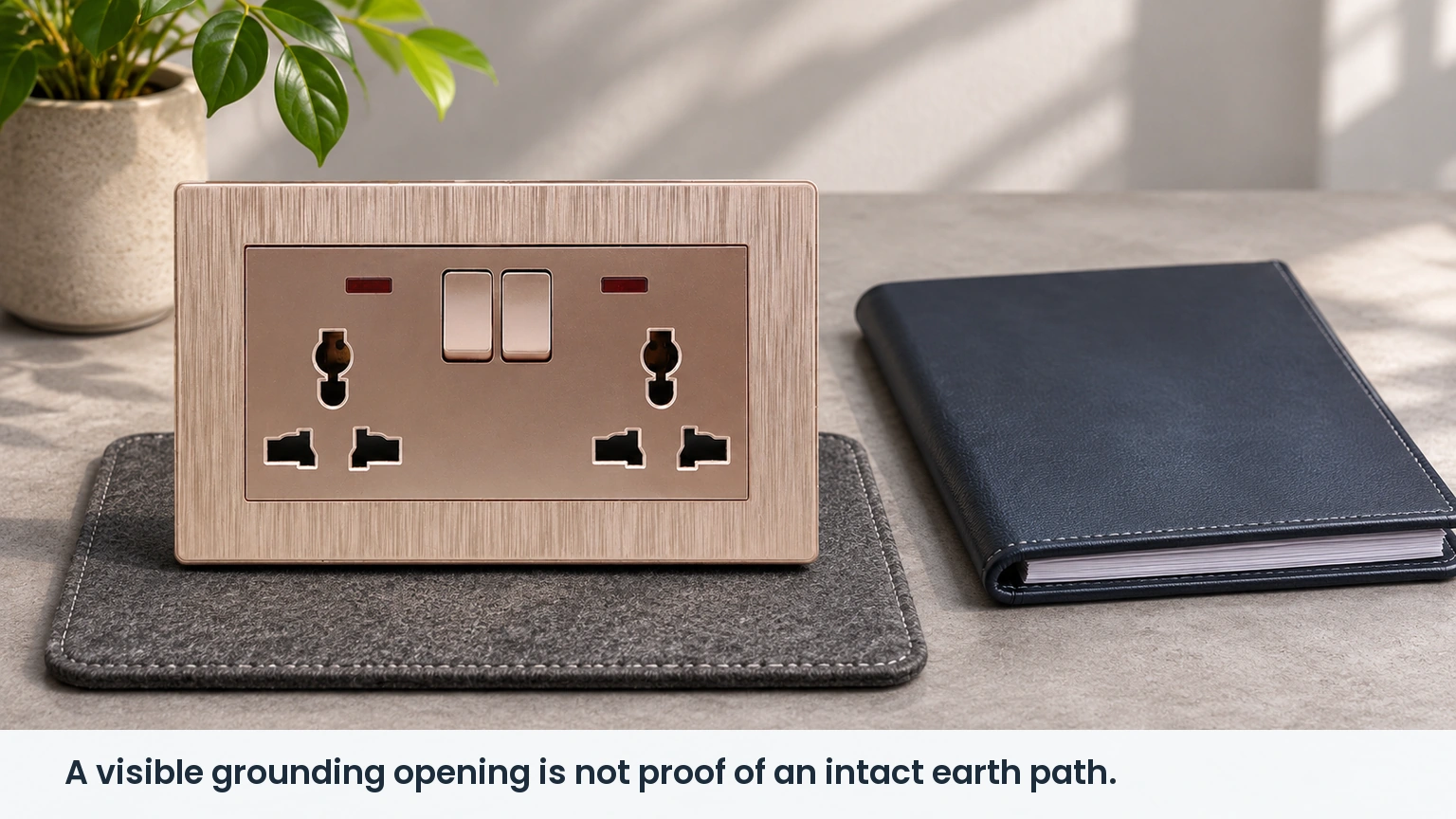
Why can an older building have two-slot outlets?
Buildings are altered over time, and older connections can remain alongside newer accessories. A two-slot outlet does not provide the same protective-earth connection as the three-contact arrangement expected by an appliance with a grounding pin. Its appearance alone does not establish when it was installed or whether its present use is permitted.
A three-prong appliance should not be made to fit by removing its grounding pin. A two-to-three adapter does not create a missing earth path. The appropriate response is a verified suitable supply or a maintenance assessment, following the appliance instructions and applicable local requirements.
The Mexico electrical outlet and voltage guide explains the general destination interface. For a particular room, the hotel must confirm the available provision; a national travel chart cannot establish the condition of one old wall connection.
Can a travel adapter preserve polarity and grounding?
Only a suitable, correctly used adapter arrangement can preserve the connections the appliance requires. Buyers should examine the exact permitted input and output configurations, current rating, voltage rating and earth provision. A product described as “universal” can still have restrictions.
An adapter also leaves Mexico’s nominal 127V, 60Hz supply unchanged. The United States commonly uses nominal 120V, 60Hz; the difference should be checked against the appliance’s permitted input range. A charger marked 100–240V, 50/60Hz differs from a single-voltage appliance whose manufacturer has not confirmed the operating range.
Neither connector fit nor an adapter’s overall power claim proves every appliance is suitable. High-wattage loads need a separate current and installation check. Where the appliance requires grounding or a particular polarity, uncertainty should be resolved before connection, not after it appears to work.
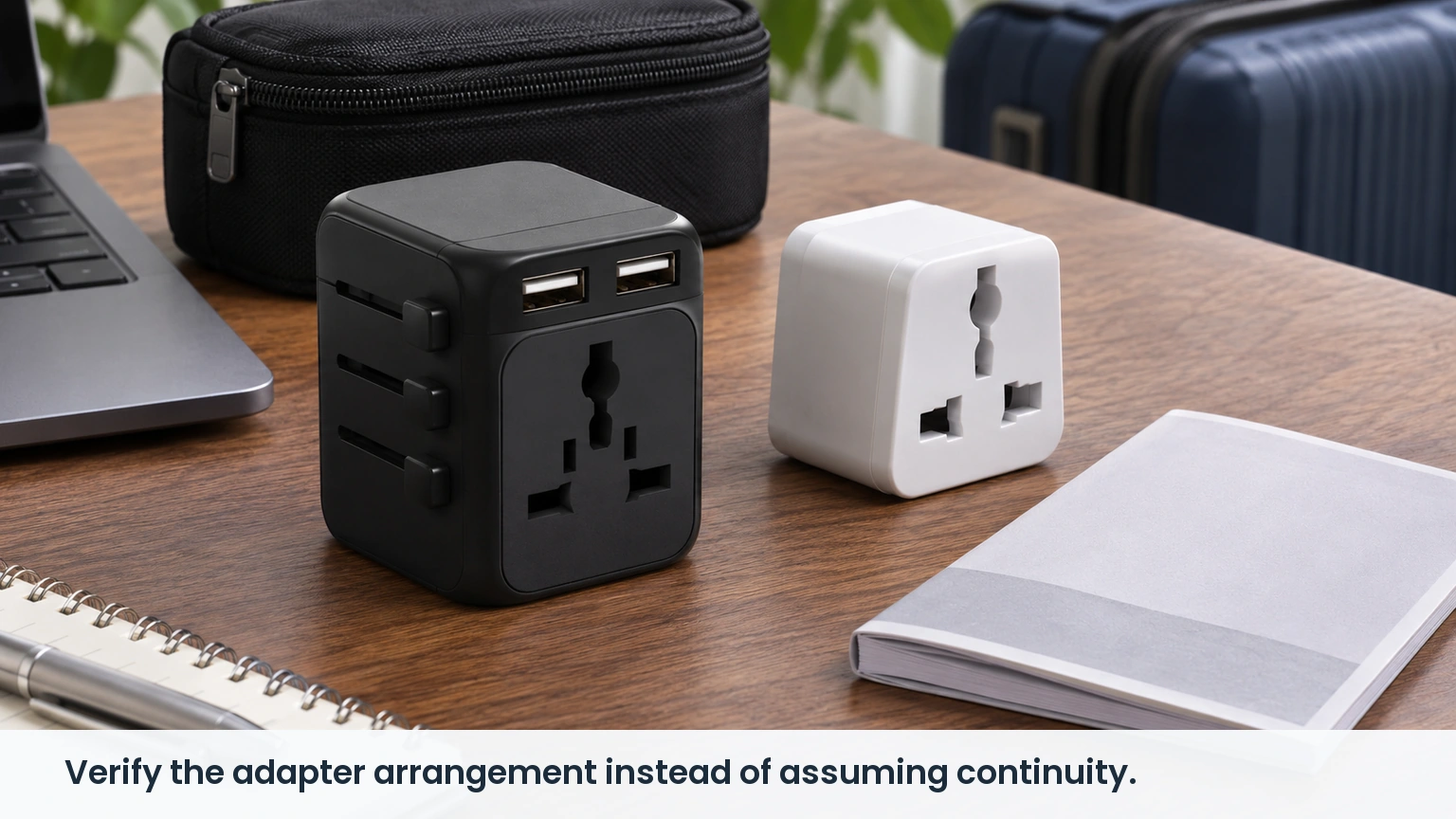
How do polarity, grounding and voltage differ?
| Question | What can be observed | What observation cannot prove |
|---|---|---|
| Is the interface polarized? | Unequal blade or slot widths | Correct live and neutral wiring |
| Is a grounding position present? | Third pin or contact opening | Continuity and effectiveness of the earth path |
| Does the appliance accept the voltage? | Input range on its label | Actual condition of the hotel supply |
| Is the connection mechanically sound? | No obvious looseness or damage | Every hidden contact and termination is sound |
Which equipment needs a different pre-use check?
| Equipment | Main check | Common mistaken assumption |
|---|---|---|
| Wide-input phone charger | Label range, permitted plug and sound outlet | Every charger has the same input range |
| Grounded laptop power supply | Required earth connection | A two-pin adapter preserves grounding |
| Polarized household appliance | Permitted orientation and supply range | Making the wider blade fit resolves compatibility |
| High-power grooming equipment | Current demand and designated outlet | A shaver outlet is a general-purpose supply |
For hotels, a useful maintenance record identifies the room, outlet location, reported symptom and completed assessment. Replacing a visibly worn accessory without documenting the cause can leave the same uncertainty for the next guest. The full cost includes investigation, room availability and verified handover, not merely the replacement faceplate.
What should procurement verify for the Mexican market?
The applicable Mexican NOM requirements and exact product documentation need checking. NEMA configuration information identifies an interface; it is not a substitute for destination conformity or installation verification. CE, RoHS or GCC documents serve different purposes and should not be used as proof that a socket is accepted in Mexico.
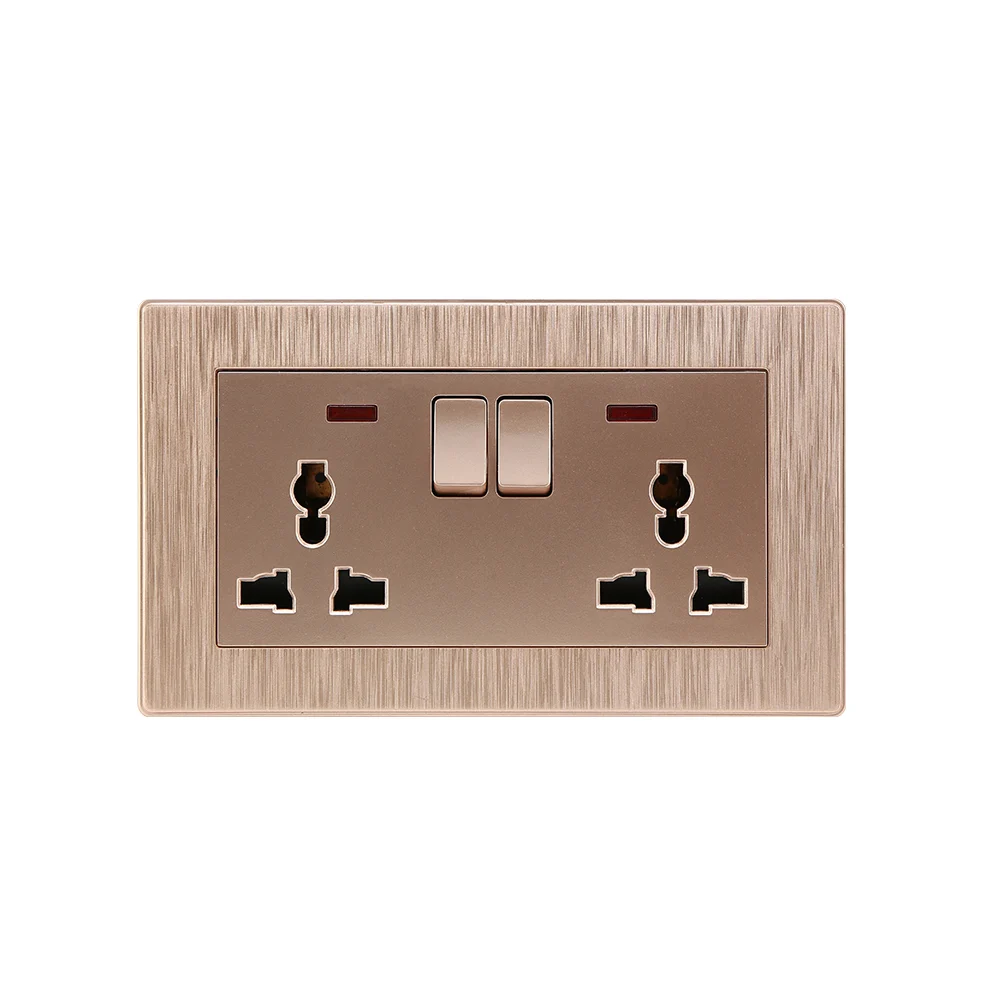
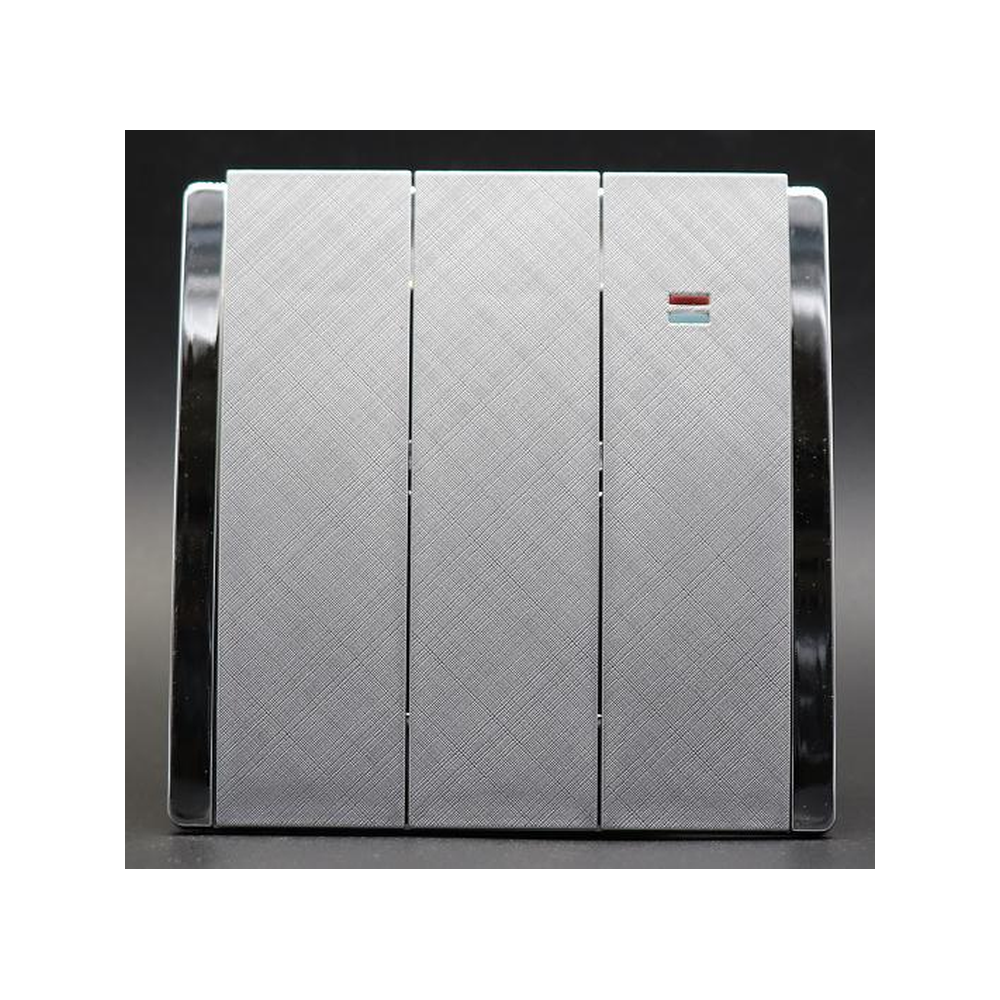
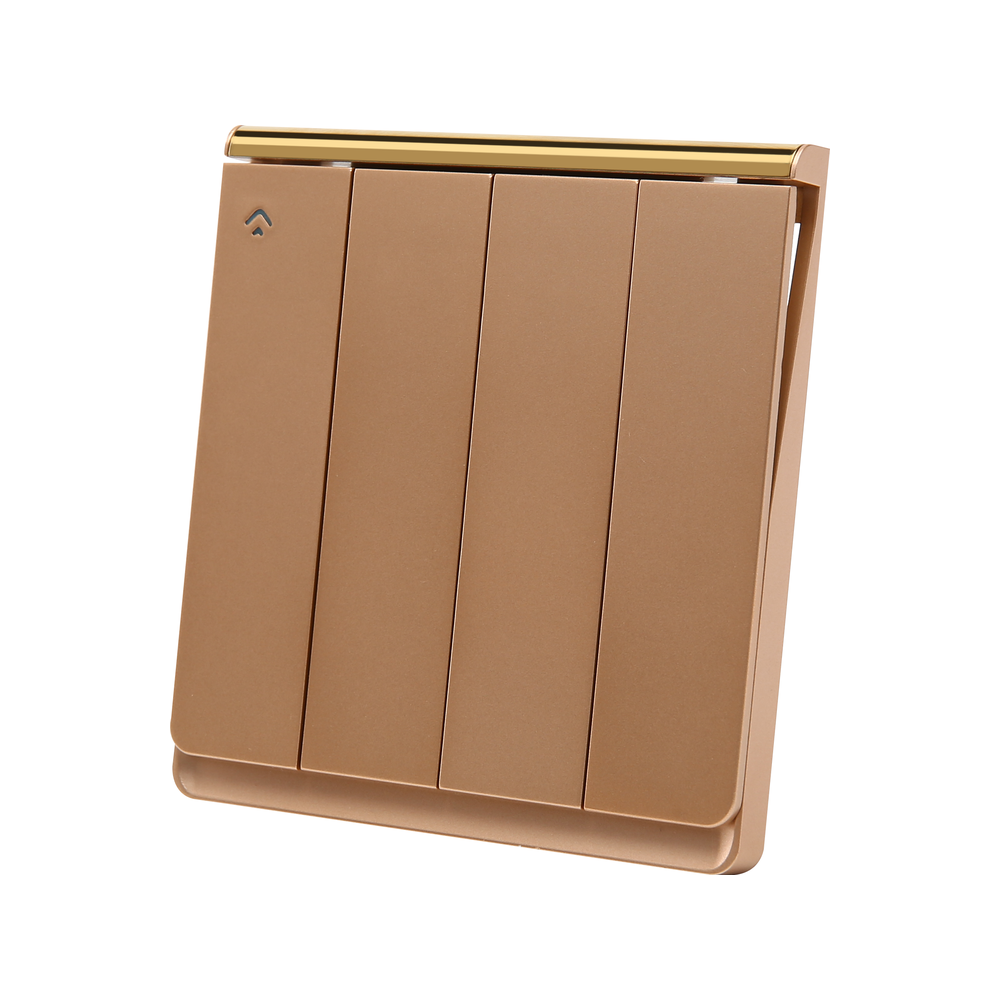
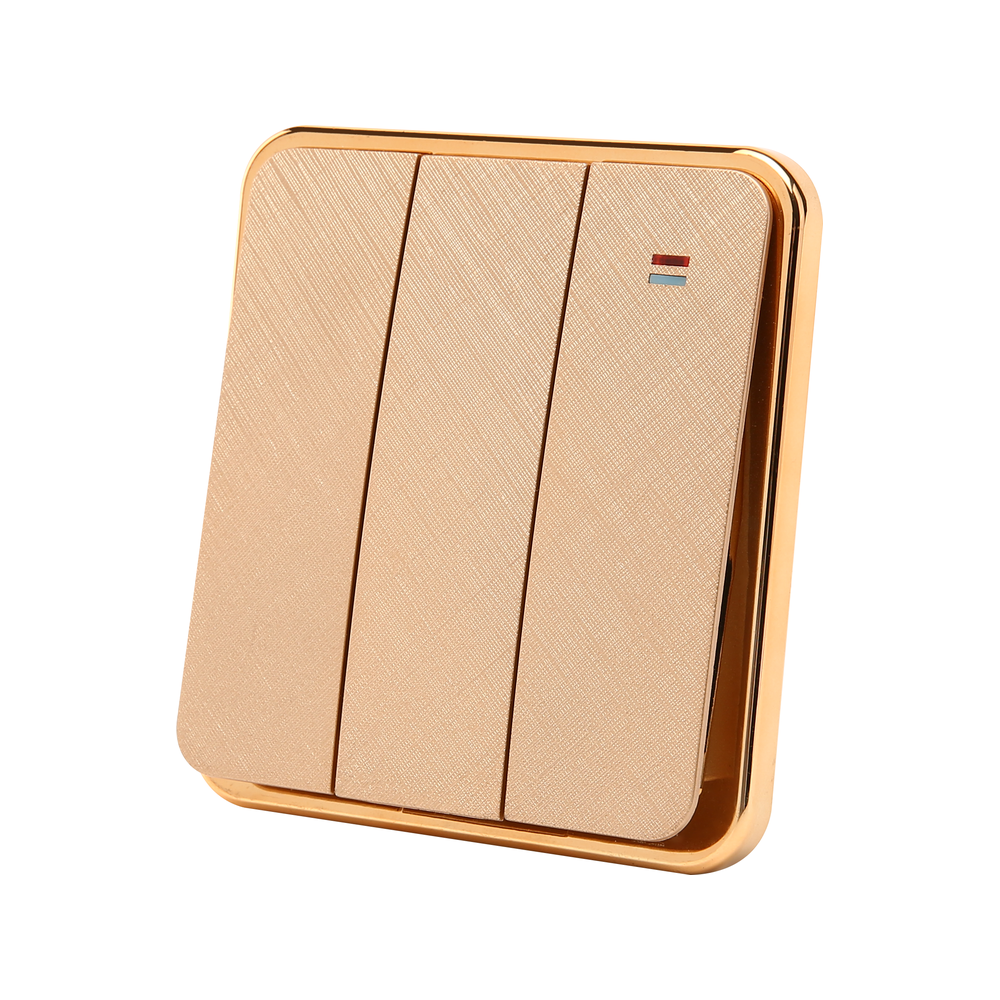
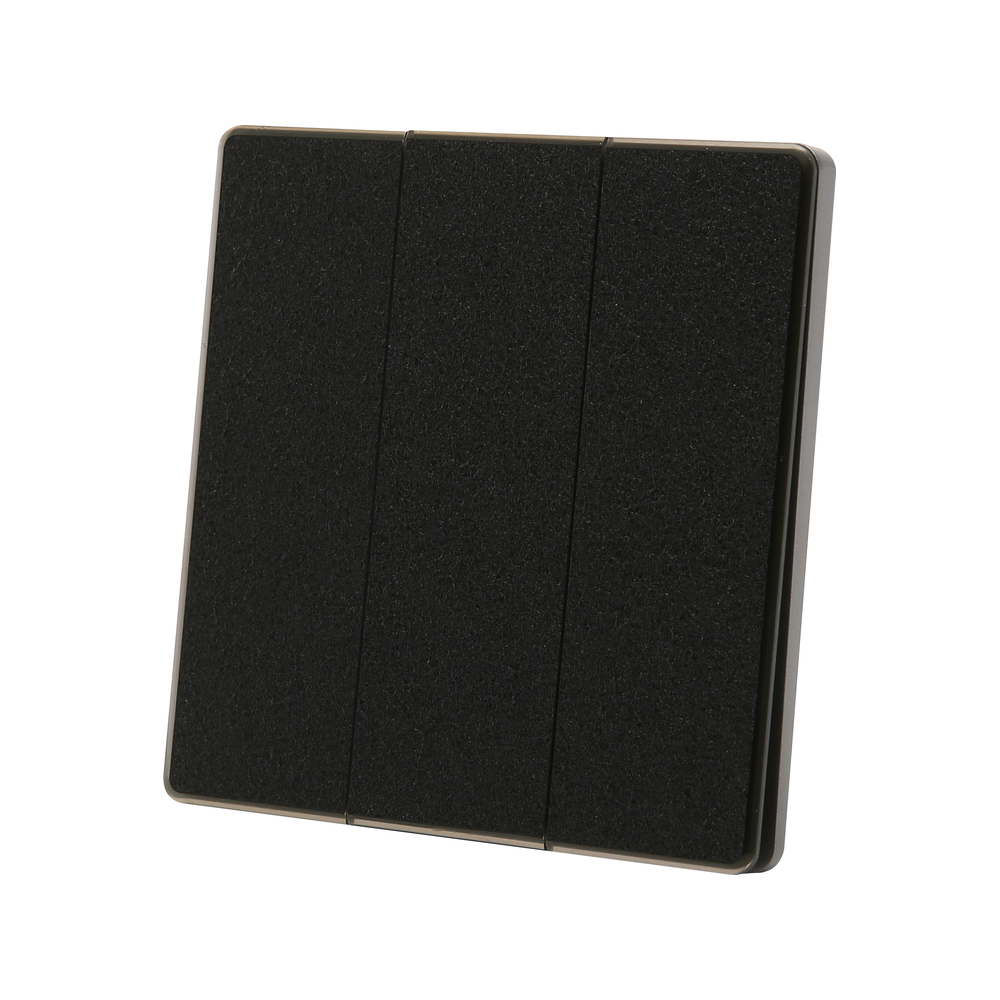
For a refurbishment, ask the responsible electrician to define the required accessory and circuit work. The specification should include model identification, ratings, mounting compatibility and the required tests. A generic photograph cannot establish polarity, grounding or current capacity for a complete room installation.
How can a hotel reduce guest connection problems?
- Provide clear guidance on the designated charging and grooming outlets.
- Remove loose, scorched or damaged connections from service pending assessment.
- Keep appliance input requirements with the room equipment schedule.
- Purchase accessories against verified local requirements and record completed work.
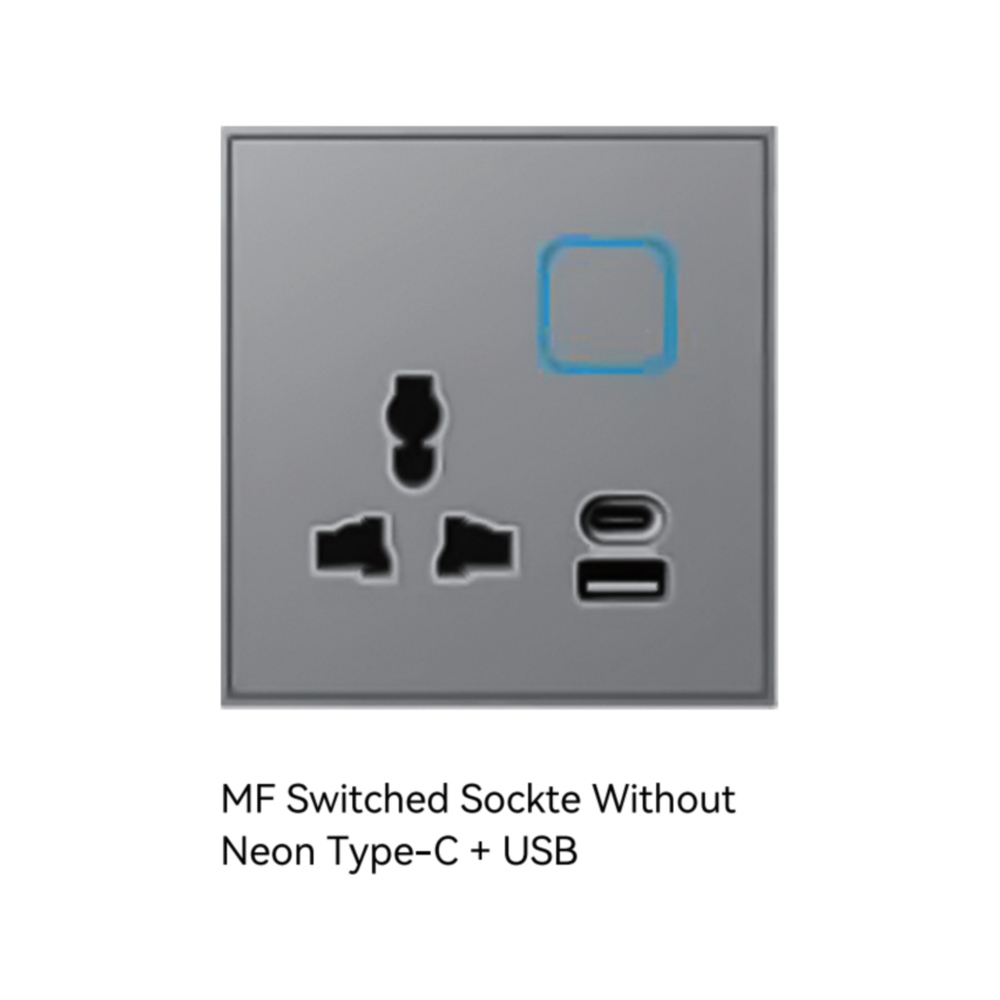
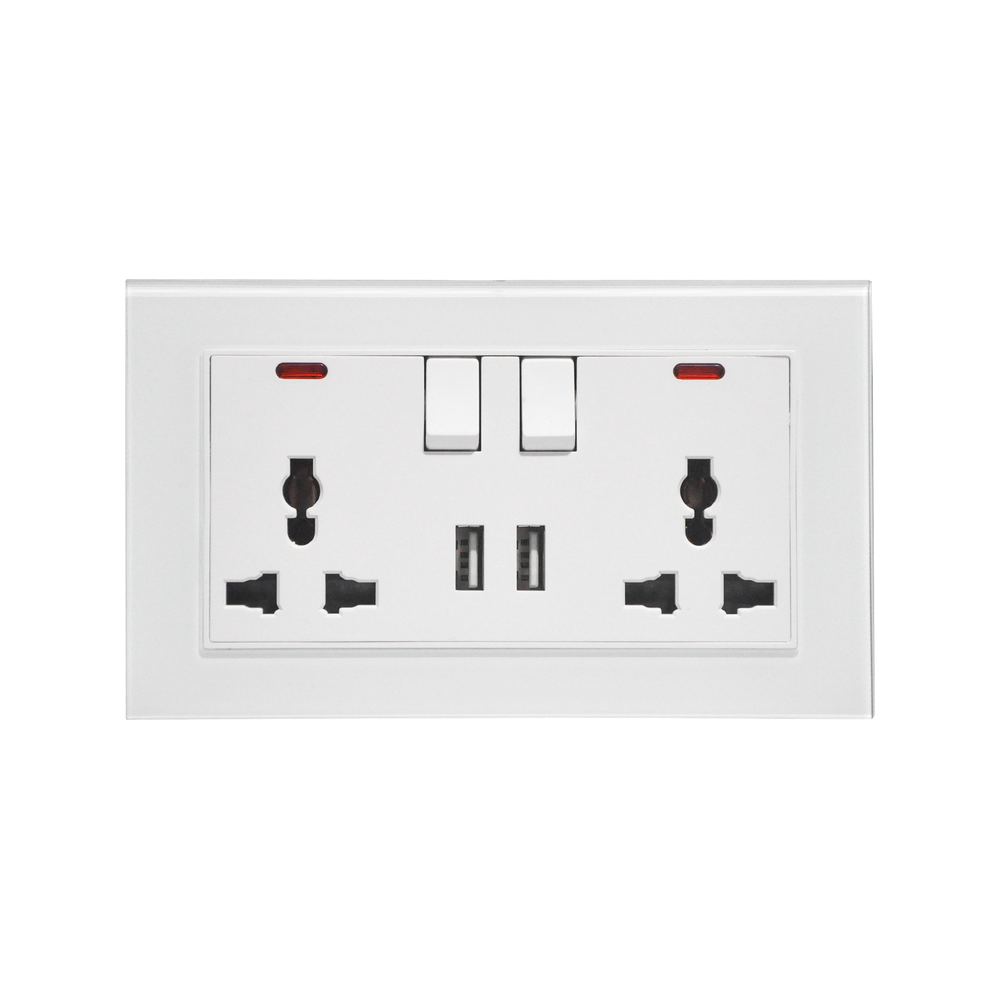
ABUK’s wall socket accessories can be reviewed for a documented project; sample appearance does not establish Mexican approval. The damaged electrical outlet guide explains why visible warning signs take priority over trying another adapter.
Frequently asked questions
How can you tell if an outlet is polarized?
A familiar polarized two-slot outlet has one wider slot. This identifies its intended geometry, not proof of correct wiring.
Are electrical outlets different in Mexico?
Type A and Type B are common, resembling US interfaces. Individual installations, grounding and condition can vary.
What type of electrical plug do you need for Mexico?
Usually a compatible Type A or Type B arrangement, depending on the appliance. Its voltage range, polarity and grounding needs must also be satisfied.
Do the United States and Mexico use the same voltage?
The commonly cited nominal values are 120V in the United States and 127V in Mexico, both at 60Hz. Check the equipment’s accepted range.
Are all Mexican outlets grounded?
No. Two-slot outlets do not provide the Type B grounding contact, and a third opening alone does not prove a working earth path.
Does a travel adapter preserve plug polarity?
It depends on the exact adapter and connection arrangement. Verify the manufacturer’s permitted use; never assume a universal adapter preserves every required connection.
References
- World Standards: Mexican plug configurations and supply
- HSE: general electrical safety principles
- London Fire Brigade: damaged connections and electrical equipment
A connection should preserve the appliance’s intended protection, not merely accept its pins. Discuss a documented socket specification with ABUK before choosing accessories for a refurbishment.