
 Wenzhou Lita Electric Co., Ltd.
Are USB Wall Sockets Safe?
When a hotel maintenance manager in Manchester encountered slow charging after a bedroom refurbishment, the new sockets initially looked like the problem. In this hypothetical example, the team had accepted a quotation showing two USB ports and expected both to charge laptops; the first guest complaints arrived that evening. The missing detail was the output specification, not necessarily a faulty accessory.
Summary: Properly specified and installed USB wall sockets can be safe; port shape alone proves neither safety nor charging performance. USB-IF’s Power Delivery 3.1 specification permits up to 240W, but that is a protocol ceiling, not the rating of every outlet. Buyers should verify the exact model’s electrical conformity, supported charging profiles, shared output and installation requirements.
USB wall sockets combine a mains accessory with an electronic power supply. Unlike an ordinary socket, they contain components that convert AC into lower-voltage DC; selection therefore involves both the building installation and the devices being charged.
What makes a USB wall socket safe for everyday charging?
The conversion circuit needs appropriate insulation, temperature management and protection against electrical faults. A description saying “overload protected” is not enough: procurement teams need the model identification, rated input, output specification and conformity documents for the destination market. Legrand’s USB safety guidance describes protection and compatibility features in its own products; those features cannot automatically be attributed to another manufacturer.
Three protections deserve separate questions: output overcurrent protection, thermal protection and protection against transient overvoltage. They address different events. A USB charging controller does not establish that an accessory is a building surge protective device, and a branch-circuit breaker does not verify the performance of its USB electronics.
Installation also matters. A compliant accessory can still be unsuitable for a shallow box, damaged wiring or a location outside its environmental rating. HSE guidance emphasizes competent electrical work; a successful phone charge is not an installation test.
Does the USB port shape establish its charging power?
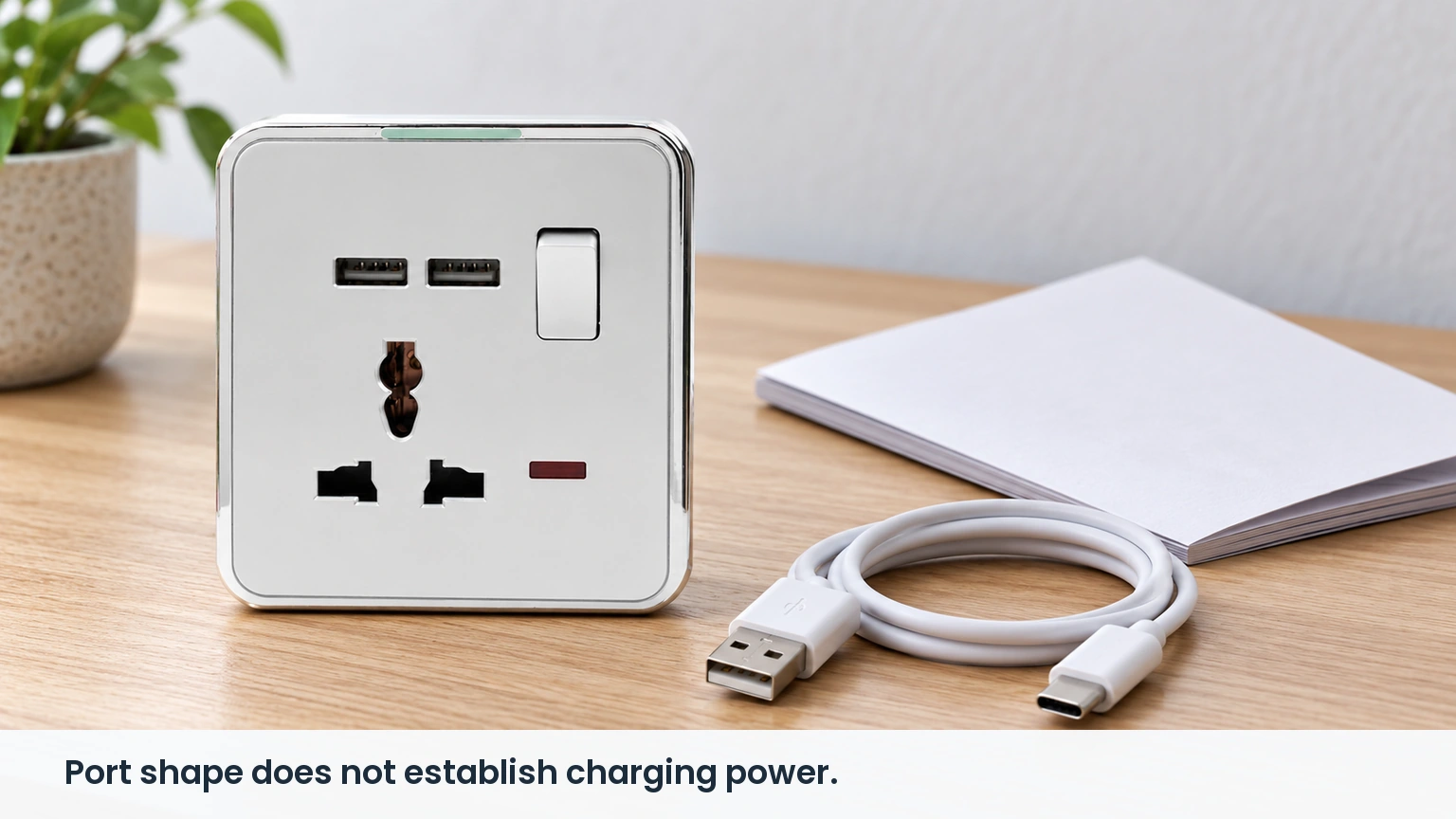
No. USB-C describes a connector system; USB-C Power Delivery describes a negotiated power capability that must be supported by the source, cable and connected device. USB-IF identifies up to 240W for PD 3.1, but a particular wall accessory may provide much less and may omit the profiles a laptop requires.
For illustration, 5V × 3A equals 15W, while 20V × 3A equals 60W. These are arithmetic examples, not ratings for the product pictured. A charger offering only the first profile cannot become a 60W laptop supply simply because the cable fits.
Multiport output needs a second check. A published total may be shared across ports; connecting another device can change the available charging power. Buyers should request the simultaneous-output table and test representative devices before repeating an accessory across hundreds of rooms.
How should a warm USB socket be assessed?
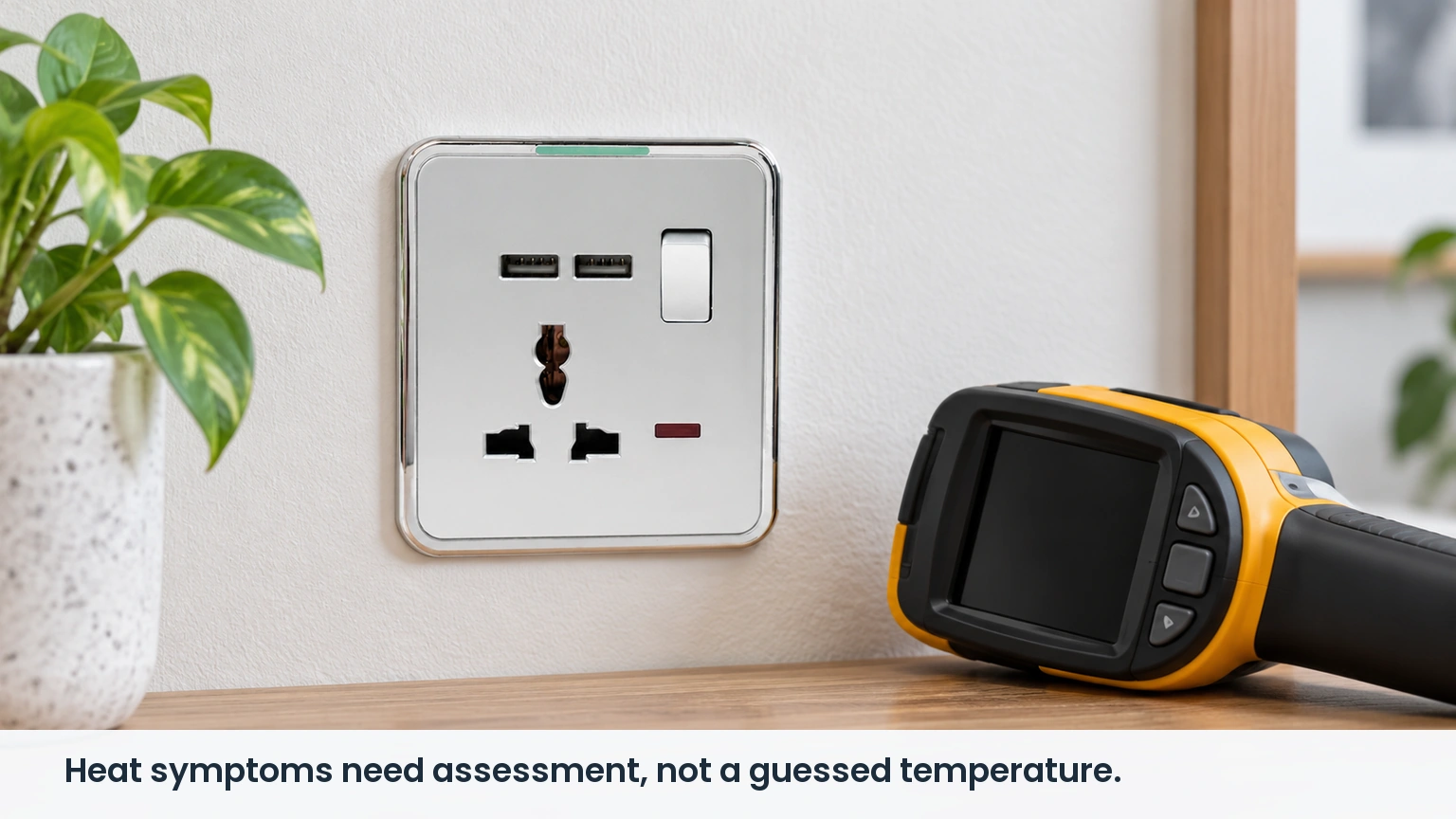
Power conversion produces heat, so warmth alone does not diagnose a failure. Equally, there is no reliable universal finger-touch temperature that proves every installed model safe. Assessment should follow the manufacturer’s limits, loading conditions and installation instructions; HSE’s electrical guidance supports taking damaged or suspect equipment out of use rather than relying on appearance.
A useful distinction is between warmth during charging and a new symptom: discoloration, an unusual smell, crackling, loose plug retention or repeated charging interruptions. Stop using a suspect accessory and arrange competent assessment; smoke or active burning requires the appropriate emergency response. Do not keep reconnecting devices to reproduce a dangerous fault.
Repeated complaints from one room and similar complaints across ten rooms suggest different investigations. The first may involve local wiring, a damaged cable or an individual unit; the second may indicate an unsuitable specification or installation method. That is a diagnostic starting point, not proof of a cause.
When does integrated USB charging cost more than it saves?
An integrated outlet removes a loose charger and can make a bedside area easier to use. Its hidden cost is serviceability: replacing obsolete or failed charging electronics may require electrical labor and room downtime. USB-IF’s evolving charging specifications make a replaceable charging module or accessible conventional socket worth considering for long refurbishment cycles.
Standby consumption should be obtained from the actual datasheet or measured appropriately. A hypothetical 0.2W standby load uses 0.2 × 8,760 ÷ 1,000 = 1.752kWh per year. Across a large estate it adds up, but installation labor and replacement visits may matter more. This example is not a measured claim about any particular model.
A practical cost comparison adds purchase price, installation, standby energy and expected replacement labor over the same service period. An assumed failure rate should remain a scenario until maintenance records support it; otherwise a precise-looking return-on-investment figure is misleading.
Which charging arrangement best fits the room?
| Arrangement | Main benefit | Question before purchase |
|---|---|---|
| Integrated USB-A | Convenient for compatible existing cables | Does its documented output meet the device requirement? |
| Integrated USB-C PD | Negotiated charging where supported | Which profiles remain available with all ports occupied? |
| Ordinary socket plus removable charger | Charger can be changed separately | Is there space for the adapter without obstructing adjacent outlets? |
How should the specification change by application?
| Application | Likely priority | Often missed |
|---|---|---|
| Hotel bedside | Simple access and broad device support | Guests may expect laptop charging from any USB-C port |
| Office workstation | Confirmed laptop charging profile | Shared output when a second device connects |
| Rental housing | Maintainability and clear instructions | Access and labor needed when electronics require replacement |
| Public waiting area | Robustness and inspectability | Damaged ports and unsupported assumptions about data isolation |
Which conformity documents should the buyer request?
The mains accessory and integrated electronics need assessment under the rules applicable to that exact product and destination. CE marking, where legally applicable, is a conformity marking rather than a universal third-party safety certificate. RoHS concerns restricted substances; it does not establish charging speed or surge protection. GCC-market requirements also depend on the product and country.
USB-IF certification and logos address specified USB program requirements; they do not replace national installation requirements. Buyers should match every declaration or report to the ordered model, including variants with different charging outputs.
What should be confirmed before ordering USB sockets?
- List the devices, cables and simultaneous charging combinations that actually need support.
- Obtain per-port and total output specifications, installation depth and service instructions.
- Trial the intended installation with representative devices before a bulk rollout.
- Agree spare-part availability and responsibility for replacement labor.
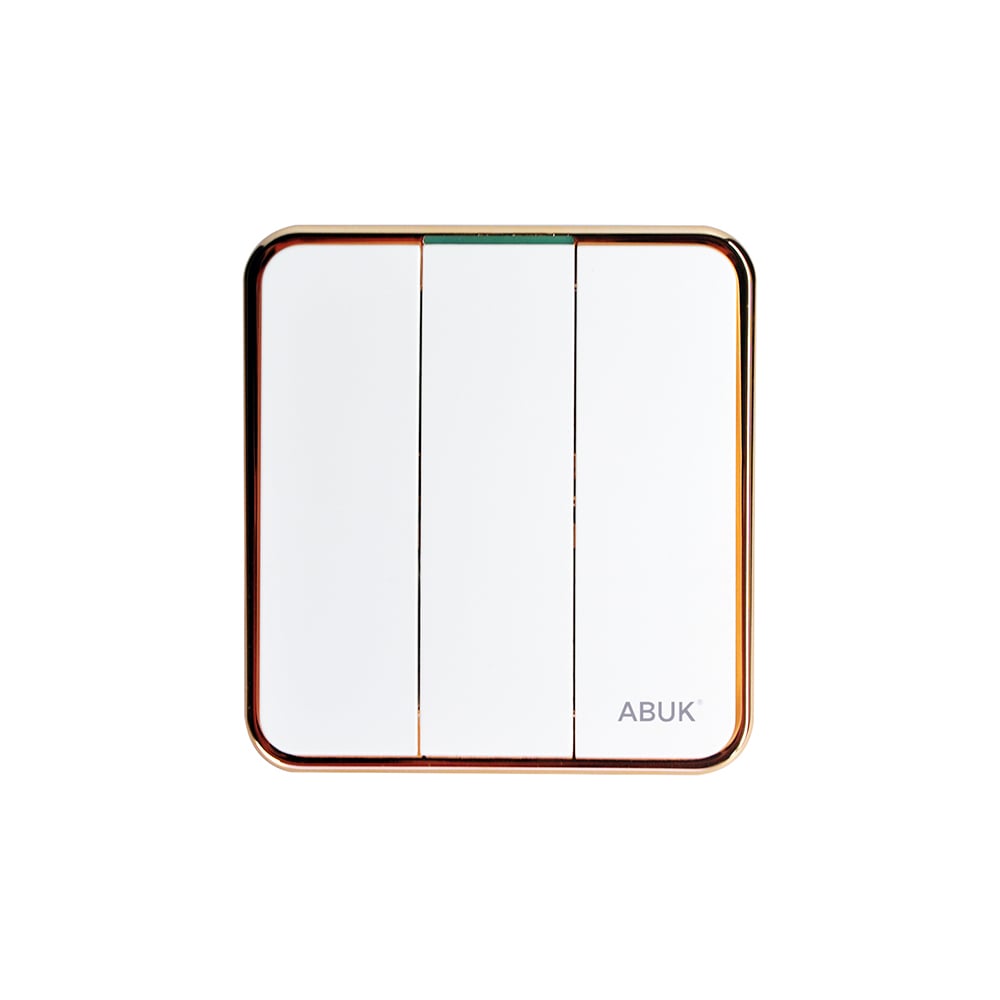
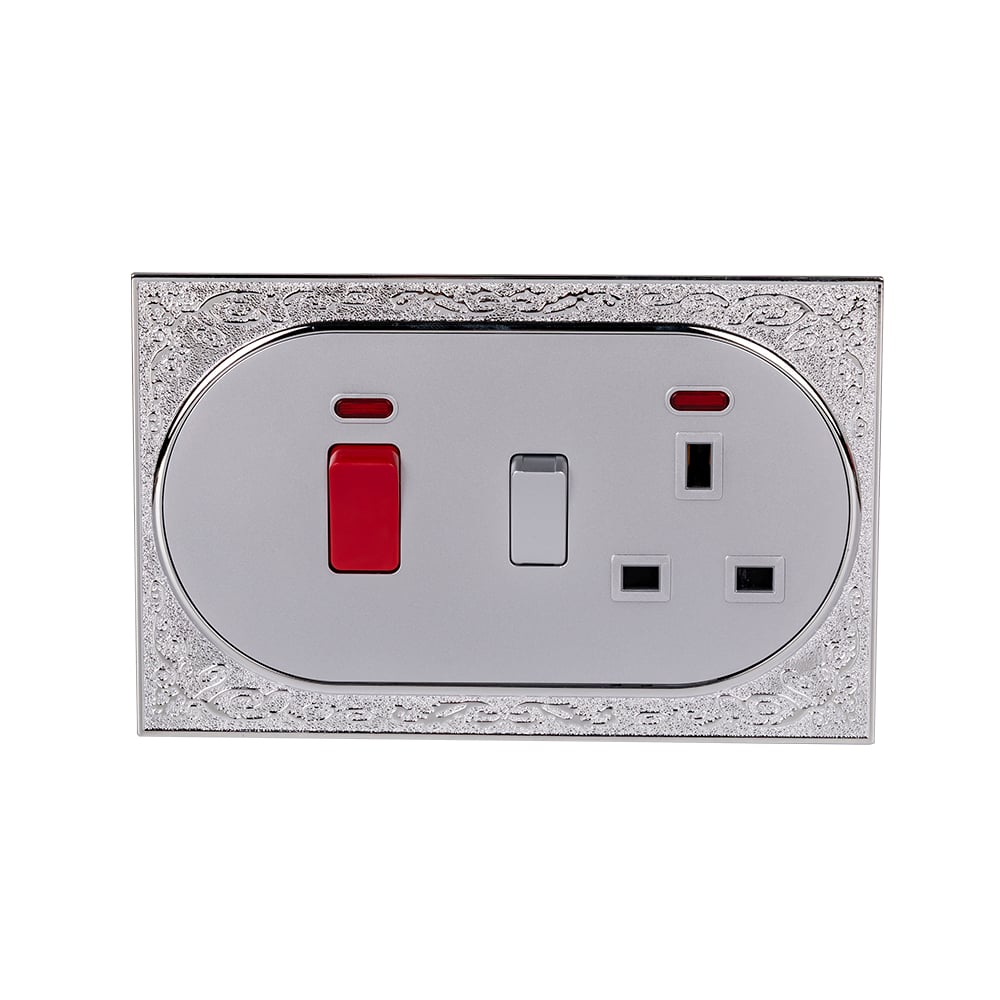
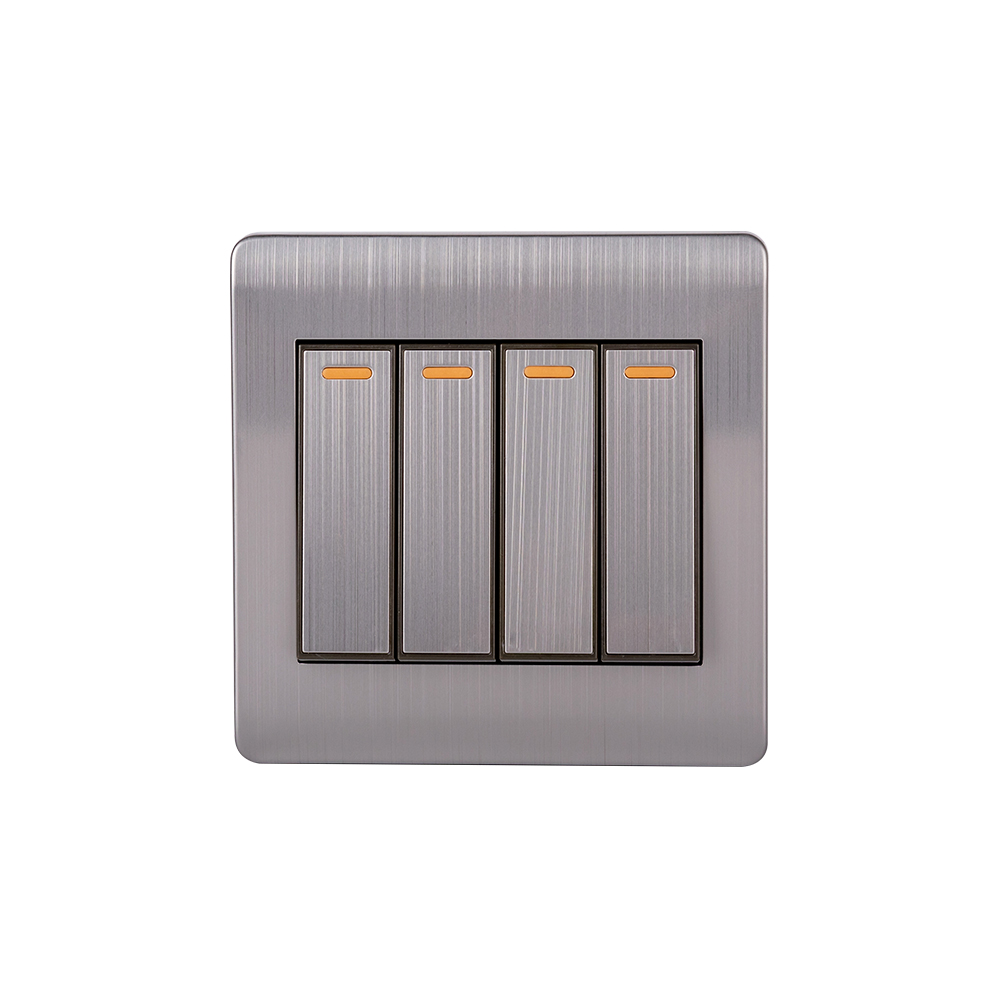
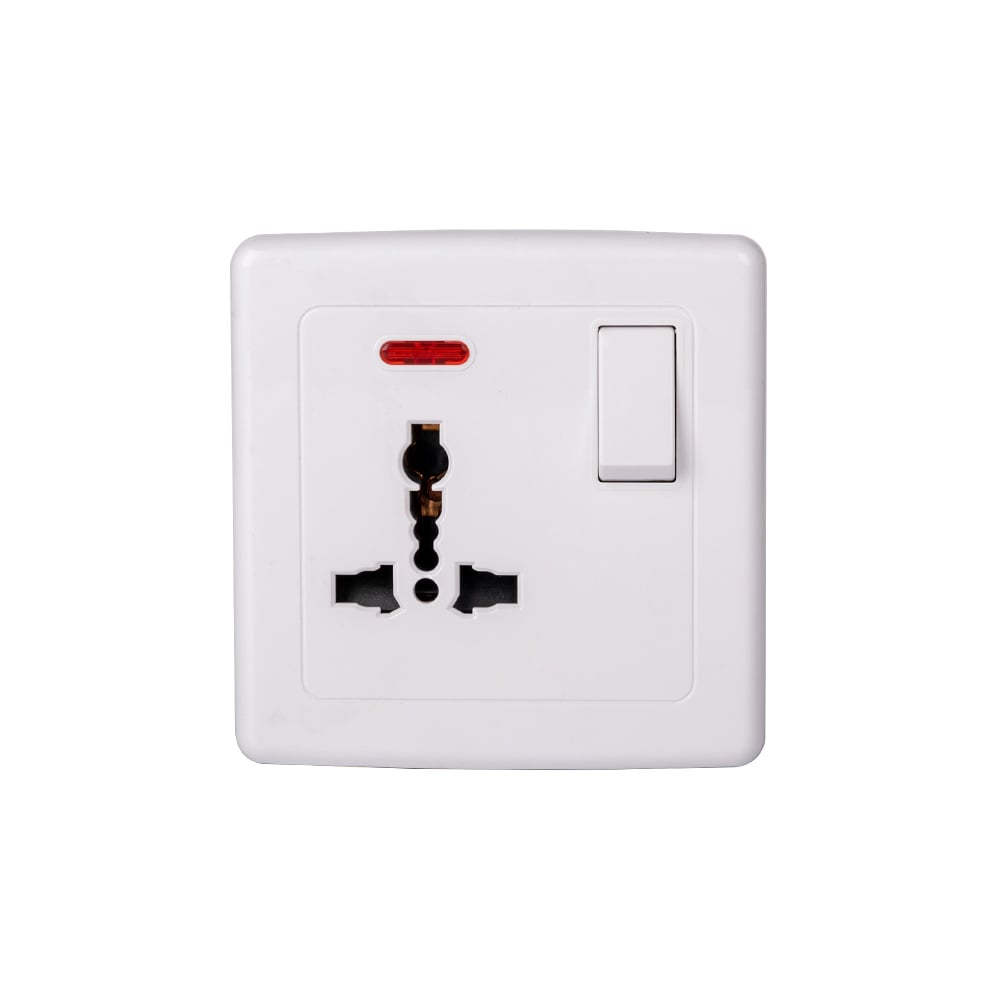
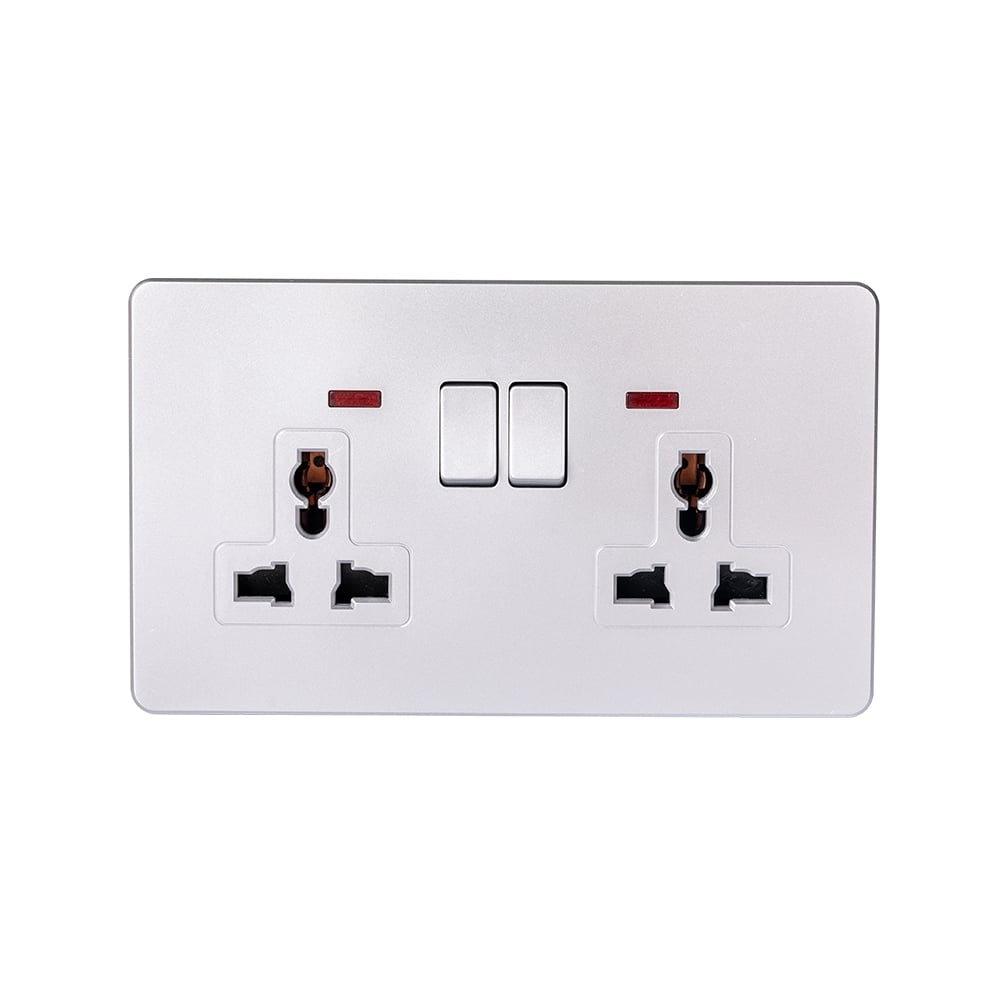
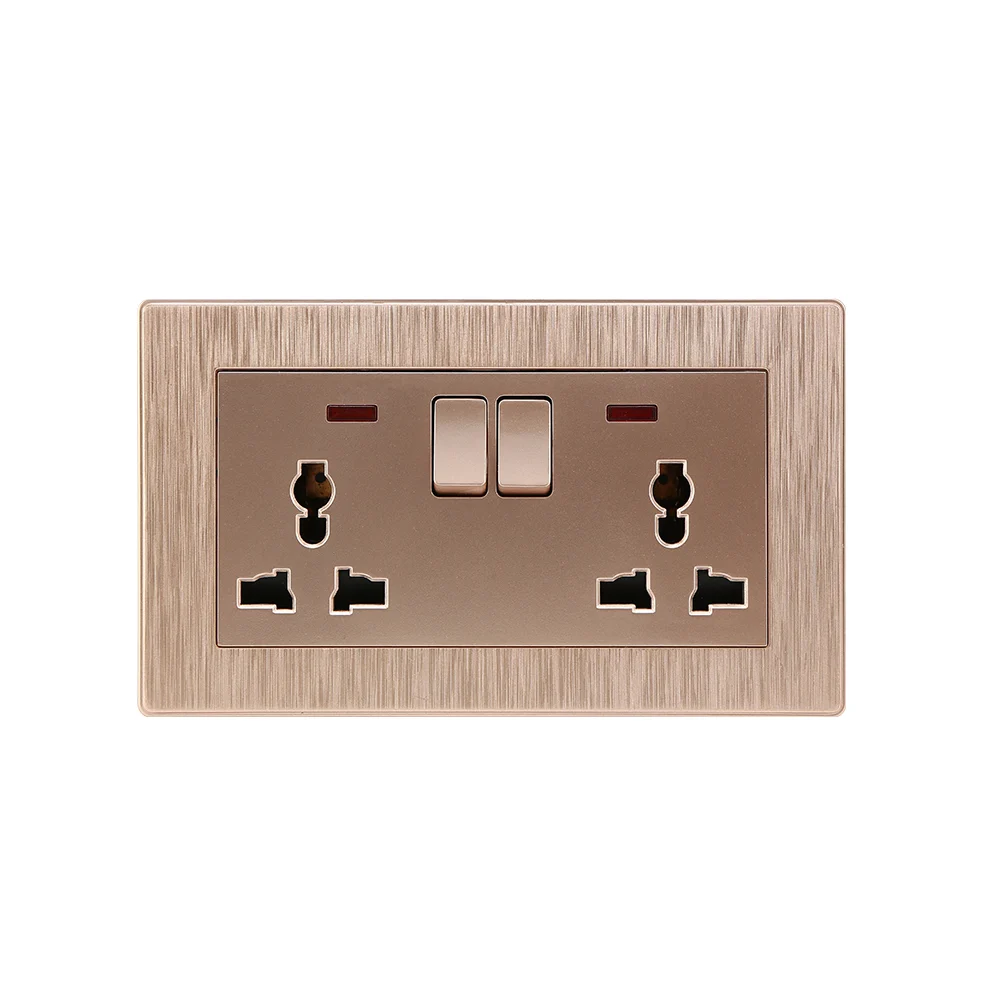
ABUK provides wall switches, sockets and related electrical accessories; buyers evaluating USB wall sockets should request the exact model’s output and destination-specific documentation. Existing damage should be addressed before an upgrade; the guide to faulty wall sockets explains the immediate response.
Frequently asked questions
Are USB wall sockets safe?
They can be, when the exact model is suitable for the market, correctly installed and used within its ratings. A familiar connector or an attractive faceplate is not evidence of electrical conformity.
Do USB wall sockets overheat or waste power?
They generate some heat and may consume standby power. Both are model-dependent. New discoloration, odor or intermittent operation needs assessment; standby cost should be calculated from documented or measured consumption.
Are USB-C wall outlets better than USB-A models?
They may support newer devices and higher charging power, but only with the necessary protocol, profiles and cable. USB-C without an adequate output specification is not automatically an upgrade.
How long do USB wall sockets last?
There is no defensible universal lifespan. Loading, installation temperature, component design and use affect service life; warranty terms and replacement arrangements are more useful than an unsupported number of years.
References
- USB-IF: USB charger and Power Delivery specifications
- Legrand: USB wall outlet safety guidance
- HSE: electrical safety questions
The best charging point is one whose limits are understood before the first guest plugs in. ABUK’s electrical accessories can be considered against a documented room specification; send the device and installation requirements when requesting a suitable model.