
 Wenzhou Lita Electric Co., Ltd.
Can I Plug a Generator Into a Wall Socket?
When a homeowner in Houston encountered an outage, a small portable generator seemed to offer a quick way to restore the refrigerator and lights. In this hypothetical scenario, a connector bought online appeared to fit an ordinary outlet, but the electrician reviewing the plan stopped the connection before use. The problem was the proposed backfeed arrangement, not a shortage of generator power.
Summary: A generator must not supply house wiring through an ordinary wall socket. The US Consumer Product Safety Commission explicitly warns against this practice because it can electrocute utility workers and neighbors and bypass protection. A fixed-wiring connection needs professionally selected transfer equipment, a suitable inlet and coordinated protection; a portable appliance connection is a different arrangement.
An outage does not make the electrical installation safe to improvise. The supply can return unexpectedly, and a generator can energize conductors that other people believe are dead.
Why is backfeeding through a wall socket dangerous?
A normal wall socket is an outlet for supplying an appliance. Feeding energy backward through it can energize household wiring and, without the necessary separation, the utility network. CPSC’s generator safety alert identifies the danger to people beyond the property, not only to whoever handles the cord.
A male-to-male cord adds another immediate hazard: exposed plug pins can become live. It is not a safe substitute for an inlet, regardless of the advertised current rating. This article does not provide instructions for making or using one.
Turning off a main breaker by hand does not turn an improvised connection into an approved transfer arrangement. A safe design must address foreseeable mistakes, restoration of utility power, circuit protection and the installed equipment’s instructions. The consequences are too serious to depend on remembering a sequence during an emergency.
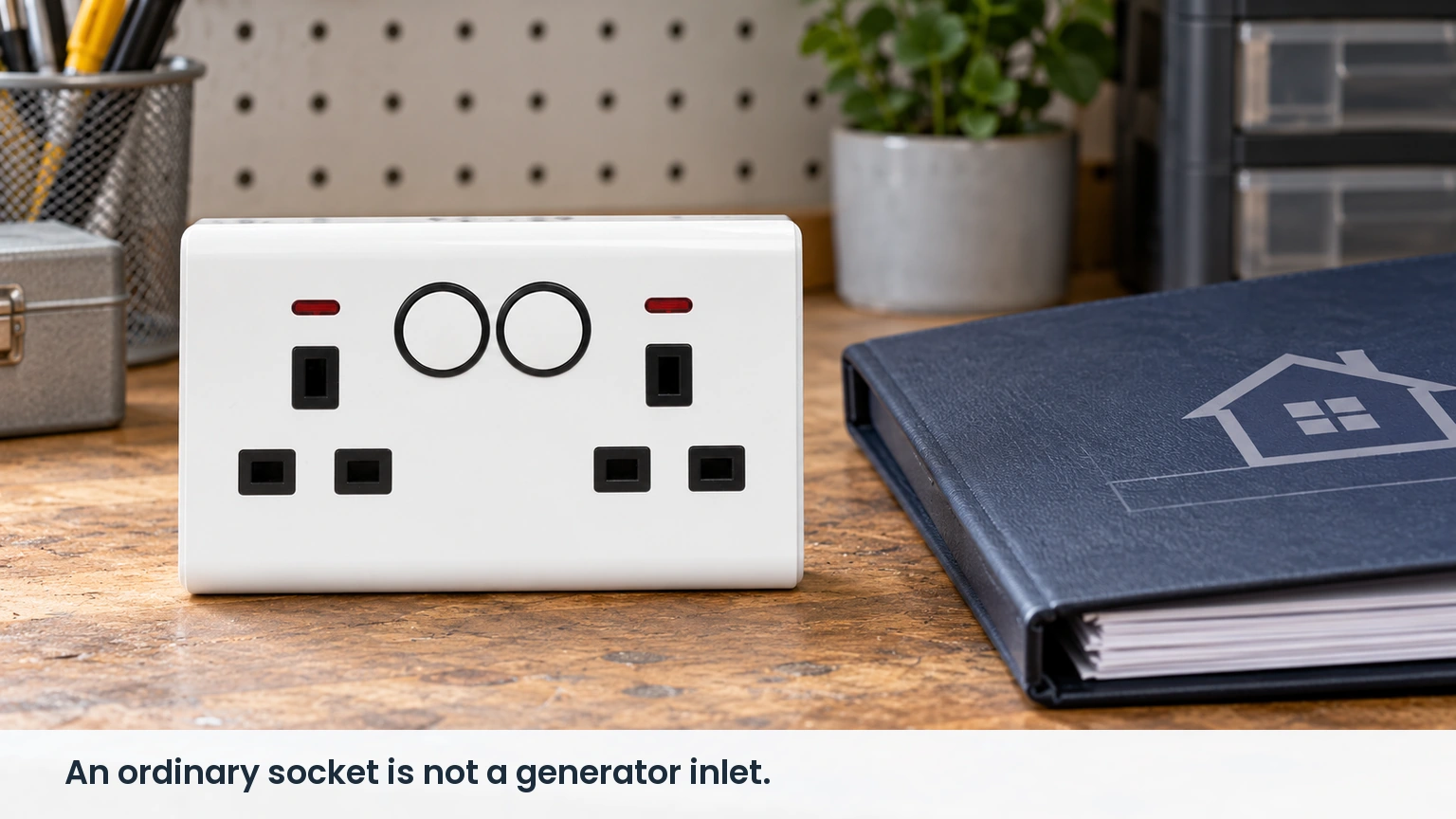
Why is an ordinary socket not a generator inlet?
A purpose-designed inlet provides the connection point for an external source in a correctly designed system. It does not perform every safety function by itself. Transfer equipment controls the relationship between the alternative supply and the utility; protection and wiring must also be suitable.
For US projects, UL 1008 is a relevant transfer-switch equipment standard to discuss with the installer. It is not a blanket approval for any inlet, panel or interlock sold alongside a generator. An interlock arrangement, where permitted, must be suitable for the specific panel and accepted under the applicable rules.
The electrician needs the actual generator model and output configuration. A 120V-only source and a 120/240V source are not interchangeable merely because an adapter is available. The Department of Energy’s explanation of US household supplies helps distinguish voltage requirements from connector convenience.
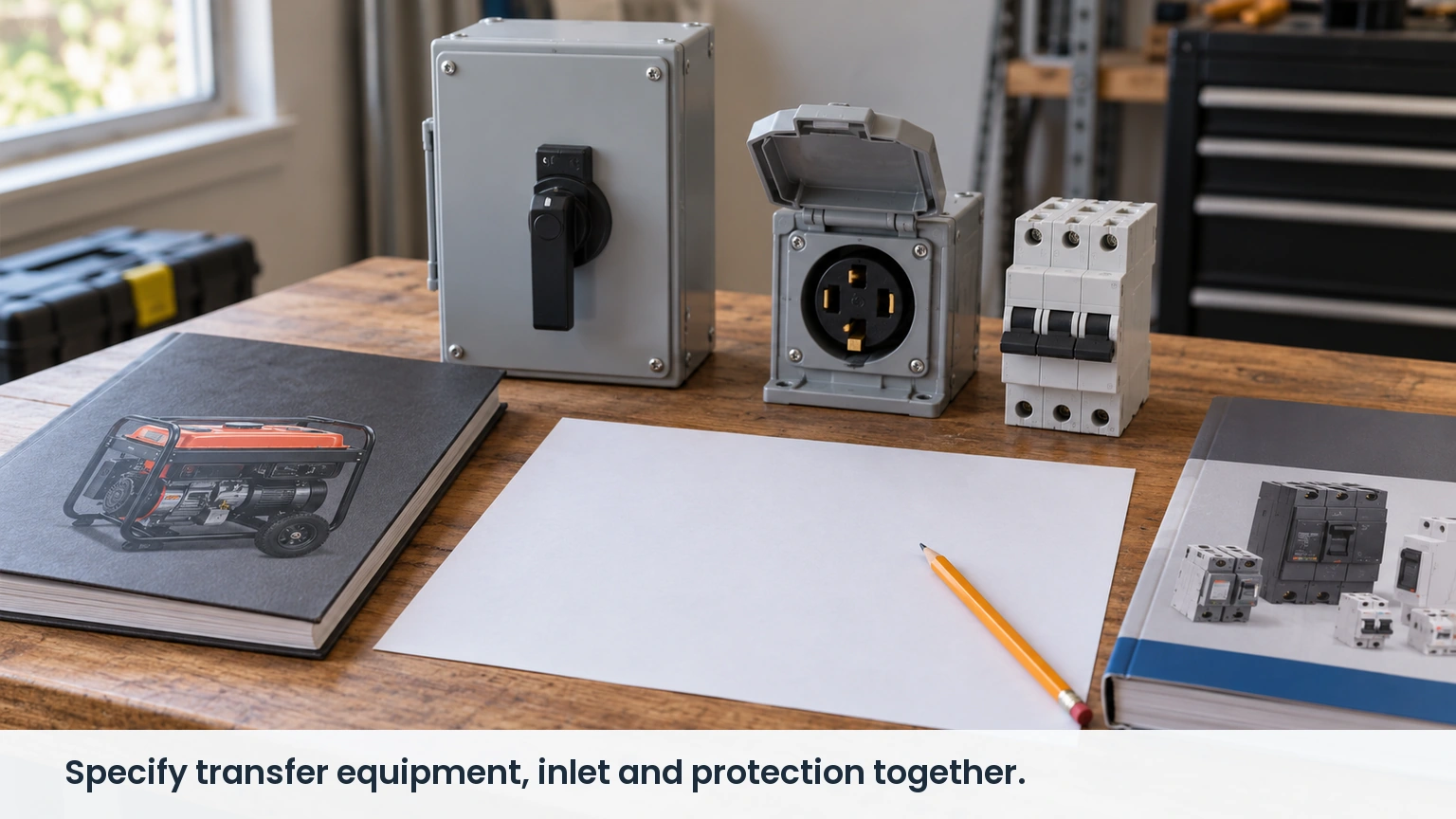
What belongs in a generator connection specification?
The specification should treat the generator, inlet, transfer arrangement and protective devices as a system. It must establish the loads to be served, the source voltage, continuous and starting requirements, environmental conditions and operation instructions. Buying those parts independently can leave compatibility gaps discovered only during installation.
A simple load example shows why the appliance list matters: two 600W loads total 1,200W in steady operation, before accounting for starting demands and any other loads. Those numbers are hypothetical; a refrigerator or pump must be assessed from its actual characteristics, not a generic multiplier copied from a shopping guide.
Neutral and earthing arrangements need specific review. Whether a neutral is switched, how the generator is configured and how protective devices operate depend on the complete system. Removing a bonding connection or adding an earth rod based on generic online advice can create a different hazard; the responsible electrician should determine the arrangement.
Can appliances be supplied without connecting the house wiring?
Where the generator and appliance instructions permit, individual appliances can be supplied directly using suitable outdoor-rated extension cords. CPSC says the cord’s wattage rating should exceed the total connected load and that cords should be undamaged, with required grounding intact. This does not authorize connecting a generator to a building outlet.
Generator location is equally important. It must run outdoors, away from openings and with exhaust directed away from buildings; never inside a garage or shed, even with doors open. CPSC’s alert warns that dangerous carbon monoxide can accumulate within minutes. Follow current manufacturer and local placement requirements, and use appropriate CO alarms.
Wet weather does not justify moving the engine indoors. The weather-protection arrangement must avoid electrical exposure while preserving safe outdoor ventilation. Fuel handling also deserves a planned location: shut the engine down and let it cool before refueling, as CPSC advises.
How do the available connection approaches compare?
| Approach | What it serves | Assessment |
|---|---|---|
| Generator plugged into an ordinary outlet | Uncontrolled backfeed into house wiring | Do not use |
| Direct appliance connection with suitable cords | Selected portable loads | Follow generator, appliance and cord requirements |
| Inlet with professionally designed transfer equipment | Specified building circuits | Requires coordinated design, installation and verification |
| Installed standby system | Loads selected for the permanent system | Requires equipment, fuel, siting and maintenance planning |
Which project details change the cost most?
| Requirement | Why it changes the project | Useful information to provide |
|---|---|---|
| Selected circuits versus broad backup | Changes transfer equipment and load management | Priority appliance list |
| Long inlet-to-panel route | Adds wiring, containment and installation work | Proposed outdoor position and panel location |
| Motor starting loads | May constrain generator sizing | Actual appliance data |
| Existing panel condition | May require repairs or different equipment | Panel identification and inspection findings |
The useful cost comparison includes installation, permits where required, inspection and periodic exercising. A cheap cord is not a lower-cost version of a compliant fixed-wiring system; it performs a different, potentially dangerous function. Expected outage losses can inform the budget, but they should come from the property’s actual operations.
Which rules apply to a backup-power connection?
The adopted electrical code, local authority and equipment instructions determine acceptable installation details. UL 1008 addresses transfer-switch equipment in relevant US applications; it does not replace local approval. HSE guidance, although written for the UK, reinforces the general need for competent work and effective isolation.
CE, RoHS or GCC documentation for an accessory does not approve a generator backfeed scheme. Product conformity, circuit design and safe operation are separate responsibilities; the project file should identify who checks each one.
What should the buyer prepare before requesting a quote?
- Record generator make, model, output configuration and instructions.
- List essential loads and whether any are fixed equipment.
- Provide the panel location, proposed generator position and cable-route constraints.
- Request an operating explanation, verification records and maintenance responsibilities.
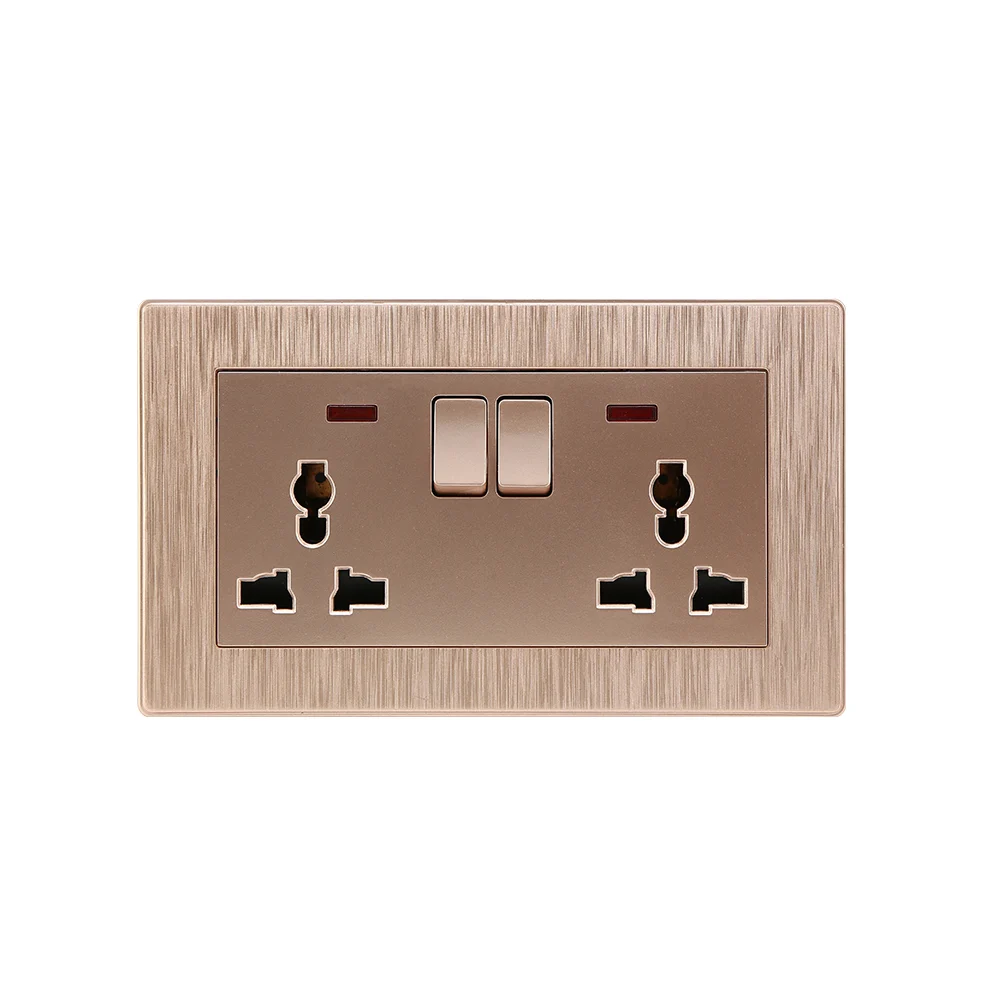
ABUK supplies electrical socket outlets and related accessories; ordinary outlets should remain within their intended role. Existing damaged home electrical outlets need separate assessment before any backup-power project proceeds.
Frequently asked questions
Can I plug a generator into a wall socket?
No. Supplying house wiring through an ordinary outlet is dangerous backfeeding. A building connection needs suitable transfer equipment and professional design.
Why is backfeeding a wall socket dangerous?
It can energize wiring and utility infrastructure unexpectedly, expose live connector pins and bypass protection. People outside the home may also be put at risk.
What transfer switch is needed for generator power?
The selection depends on the generator, loads, panel, neutral arrangement and local rules. A qualified installer should specify equipment for the complete system rather than choose solely by advertised amperage.
Can a generator inlet replace a wall socket connection?
A proper inlet can form part of an approved connection, but an inlet alone is insufficient. It must be integrated with suitable transfer equipment, wiring and protection.
References
- CPSC: Portable Generator Hazards
- US Department of Energy: Electricity 101
- HSE: electrical safety and competent work
Reliable backup starts with knowing exactly where the alternative supply may go—and where it must not. ABUK’s electrical product range can support accessory procurement within a defined project. Share the approved accessory specification when requesting product information.