
 Wenzhou Lita Electric Co., Ltd.

2 Prong Vs 3 Prong Outlet: Benefits & Differences
When a project manager in Kuala Lumpur, Malaysia, encountered a confusing outlet selection problem during a serviced apartment renovation, he assumed the choice was simple. After reviewing a few online wiring tutorials and comparing supplier quotations, he approved a batch of basic 2 prong outlet units for rooms that would later use laptops, monitors, phone chargers, mini-fridges, and cleaning equipment. Within the first inspection cycle, the electrical consultant rejected part of the installation; several appliance suppliers also warned that their grounded plugs could not be safely connected without adapters. The result was immediate rework, additional labor cost, and a delayed handover. The hidden truth was not that the outlets were defective—it was that the project team had confused plug compatibility with grounding requirements, and the real question was whether the building needed a 2 prong vs 3 prong outlet strategy from the beginning.
Summary: A 2 prong outlet provides live and neutral connections only, while a 3 prong outlet adds a grounding path that improves fault protection for appliances with metal housings or sensitive electronics. For commercial projects, the honest answer is simple: use grounded outlets wherever codes, appliance specifications, or tenant safety expectations require them. Buyers should verify voltage, grounding method, socket type, load rating, and CE/RoHS/GCC compliance before procurement.
In modern electrical projects, outlets are not minor accessories; they are the final safety interface between the building wiring system and the user. A 2 hole outlet may still appear in older buildings or low-load applications, but global safety practice increasingly favors grounded receptacles for areas where electrical faults, leakage current, or equipment damage can create measurable risk. According to the International Electrotechnical Commission, household and similar electrical accessories are governed by technical requirements intended to reduce electric shock, overheating, and abnormal operation risks. For B2B buyers, distributors, and engineering contractors, understanding 2 prong vs 3 prong outlets is a technical, compliance, and lifecycle-cost decision—not only a design preference.
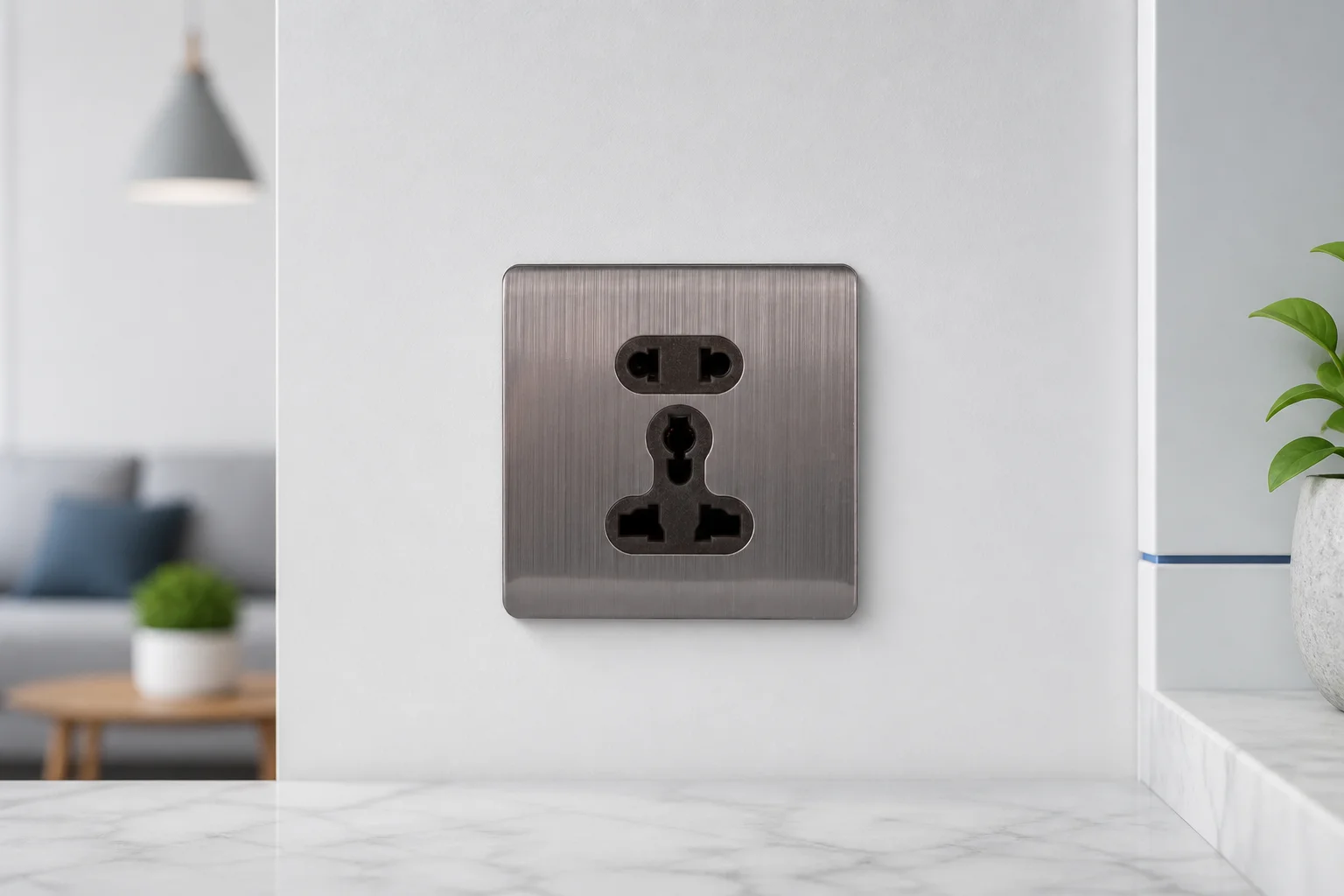
What Is the Technical Difference Between a 2 Prong Outlet and a 3 Prong Outlet?
A 2 prong outlet has two connection points: one for the live conductor and one for the neutral conductor. A three prong outlet adds a third connection point for protective earth, also called grounding. That third contact is the main technical difference.
In basic terms:
- Live conductor: Carries current from the power source to the appliance.
- Neutral conductor: Carries current back to the electrical system.
- Ground conductor: Provides a low-resistance fault path if current leaks to a metal enclosure or abnormal conductive part.
For many IEC-based markets, common low-voltage systems operate around 220–240V AC, while North American systems often use 120V AC for general receptacles. The exact outlet design differs by country, but the safety principle is similar: grounded sockets are required or strongly recommended where the connected appliance requires protective earthing.
Relevant standards and frameworks may include:
- IEC 60884-1 for plugs and socket-outlets for household and similar purposes.
- IEC 60364 for low-voltage electrical installations.
- BS 1363 for fused plugs and socket-outlets in the UK and related markets.
- NEC Article 406 for receptacle installation rules in the United States.
The key technical point is this: the third prong does not normally carry operating current; it is there for fault protection. That is why a 3 prong outlet is often required for equipment with metal bodies, higher leakage-current profiles, or manufacturer-specified grounding requirements.
How Does Grounding Improve Electrical Safety?
Grounding improves safety by giving fault current a predictable path back to the electrical system, which can help trigger protective devices such as circuit breakers, fuses, or residual-current devices.
A typical scenario:
- A wire inside a metal-cased appliance becomes damaged.
- The live conductor touches the metal body.
- Without grounding, the metal case may become energized.
- With grounding, the fault current flows through the ground conductor.
- A protective device can disconnect the circuit faster.
This is why the three prong outlet is not only about plug shape; it is about fault management. In many building systems, protective devices are designed around measurable disconnection times and fault-current paths. For example, IEC 60364 requires protective measures against electric shock; these measures are based on earthing arrangements, automatic disconnection of supply, and proper coordination of protective conductors.
For B2B buyers, the hidden cost of choosing the wrong outlet type is not just unit price. It may include:
- Failed site inspection.
- Appliance warranty disputes.
- Retrofit labor and wall repair.
- Tenant safety complaints.
- Insurance and liability complications.
- Project delay penalties.
A lower-cost 2 hole outlet may appear attractive during procurement; however, if the application later requires grounding, the total cost of rework can exceed the initial saving many times over.
Where Are 2 Prong Outlets Still Used?
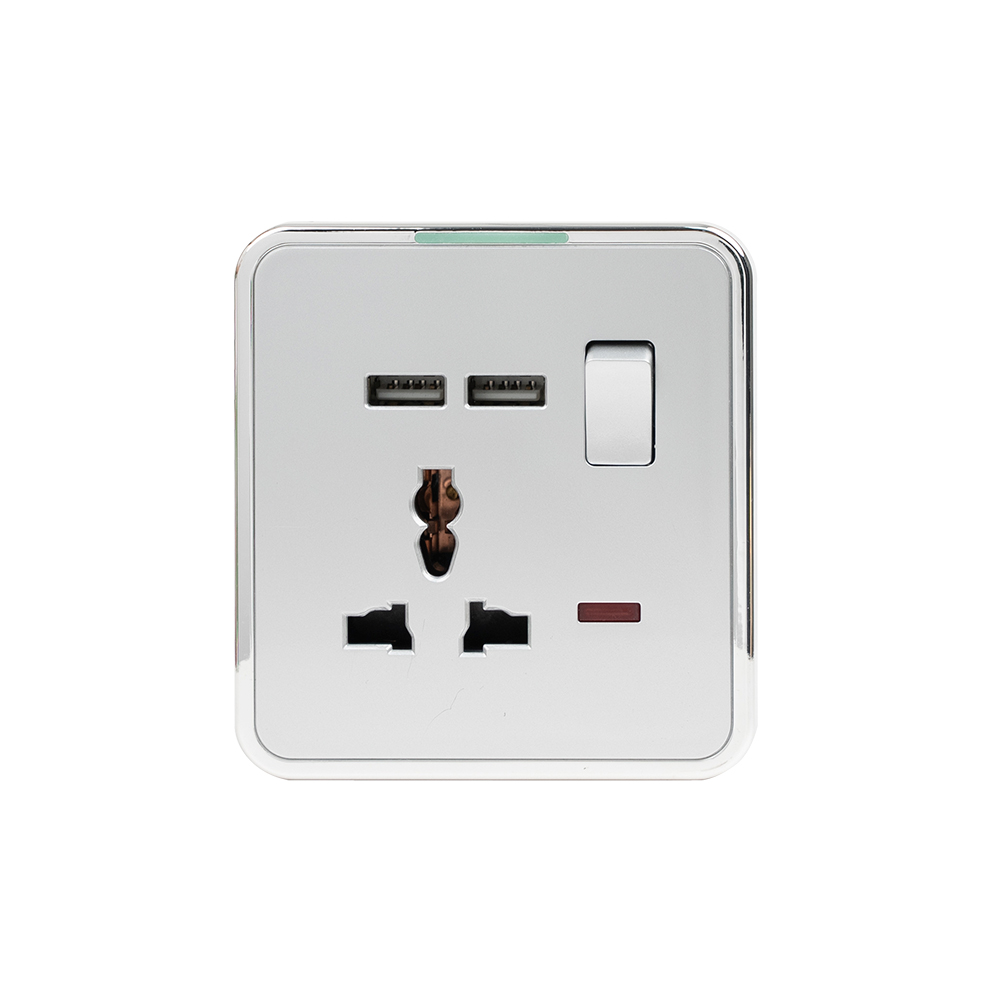
A 2 prong outlet may still be found in older buildings, low-power installations, hotel bedside areas, or markets where certain plug types remain common. It can be appropriate where local code permits it and the connected appliances do not require grounding.
Typical use cases may include:
- Low-power chargers with double-insulated designs.
- Small lamps with non-metal housings.
- Legacy residential renovation areas.
- Certain international plug formats without mandatory earth contact.
- Controlled environments where the load profile is clearly defined.
However, double-insulated appliances are usually marked with a square-within-a-square symbol under IEC practice. If the appliance requires grounding, a 2 prong outlet should not be treated as equivalent just because an adapter can make the plug fit.
For project teams, the practical rule is straightforward: plug compatibility does not equal electrical safety. If a grounded appliance is connected through an ungrounded adapter, the device may power on, but its protective design has been compromised.
When Is a 3 Prong Outlet the Better Choice?
A 3 prong outlet is usually the better choice when the project involves grounded appliances, commercial tenants, office equipment, hospitality facilities, kitchens, workshops, or mixed-use spaces where the final equipment list may change over time.
It is especially important in these situations:
- Appliances with metal casings.
- Desktop computers, monitors, printers, and networking equipment.
- Refrigerators, washing machines, and commercial cleaning devices.
- Kitchen and pantry areas.
- Workshops, maintenance rooms, and utility spaces.
- Hotels, apartments, and offices where user behavior is unpredictable.
From a product-technical standpoint, many modern outlets are rated at 10A, 13A, 15A, or 16A, depending on the regional standard and socket type. The correct choice should consider:
- Nominal voltage.
- Rated current.
- Plug standard.
- Grounding method.
- Mounting box compatibility.
- Flame-retardant material requirements.
- Certification requirements such as CE, RoHS, and GCC.
For long-term project ROI, a grounded outlet strategy often reduces future uncertainty. Even if the first tenant uses only low-power devices, the next tenant may install grounded equipment; selecting a 3 prong outlet during construction can avoid expensive retrofits later.
2 Prong vs 3 Prong Outlet Comparison
The table below compresses the main performance, safety, cost, and compatibility differences into a procurement-friendly format.
| Dimension | 2 Prong Outlet | 3 Prong Outlet |
|---|---|---|
| Conductors Supported | Live + neutral | Live + neutral + ground |
| Grounding Protection | No dedicated grounding path | Dedicated grounding path |
| Typical Use Case | Low-power, double-insulated appliances | Grounded appliances, commercial and mixed-use spaces |
| Safety Level | Acceptable only where permitted and suitable | Higher fault-protection capability |
| Appliance Compatibility | Limited for grounded plugs | Broader compatibility for modern appliances |
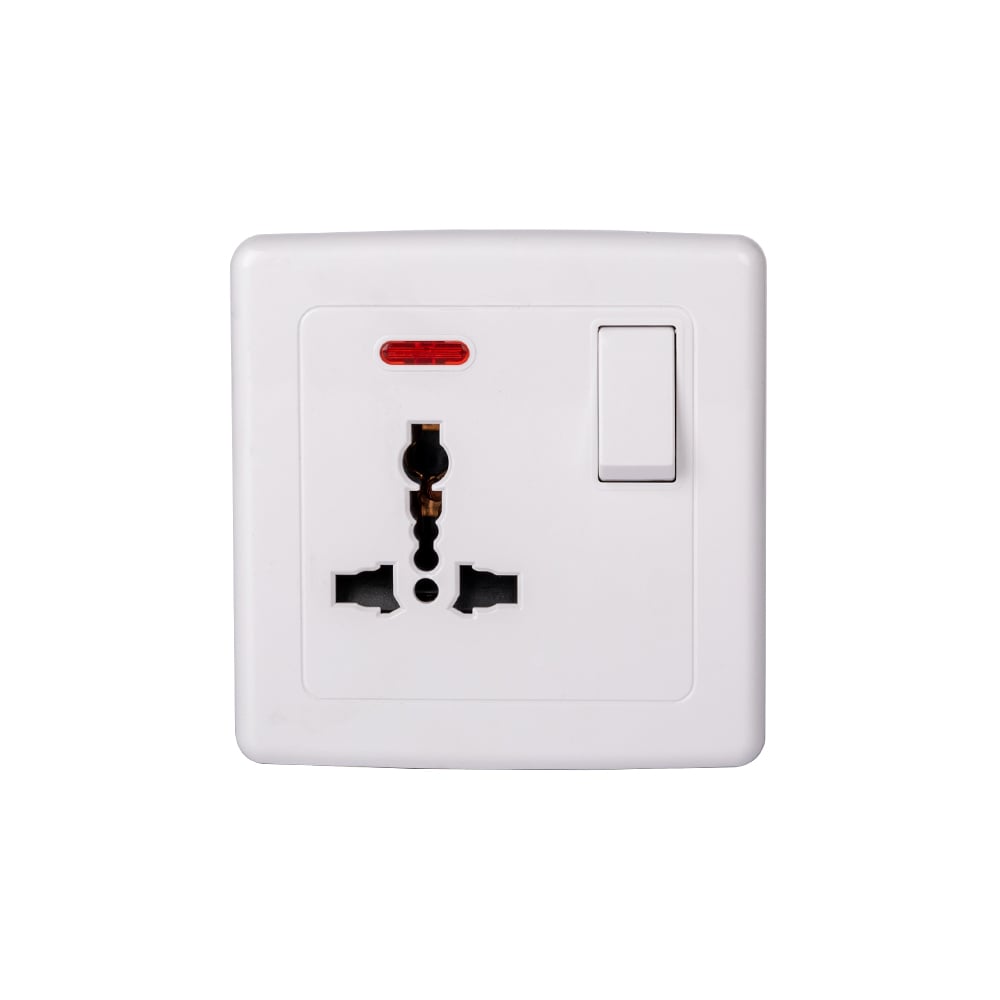
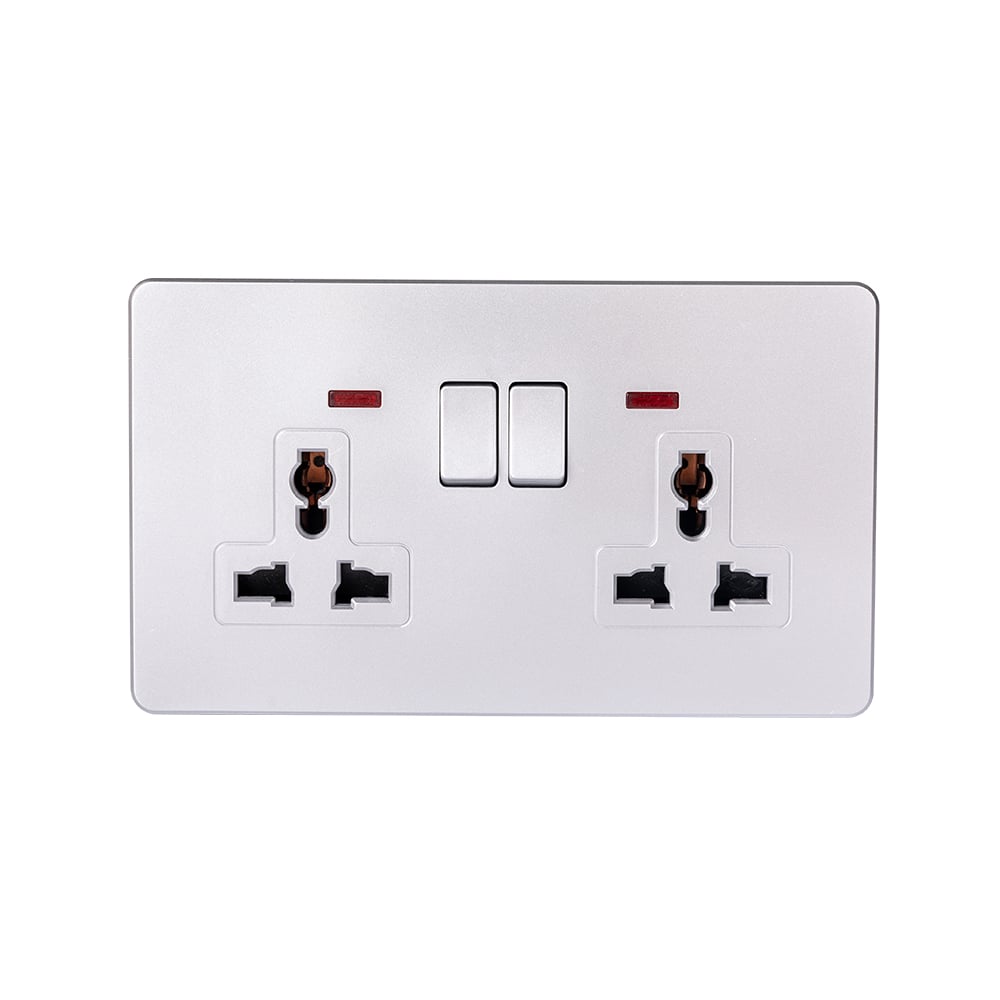
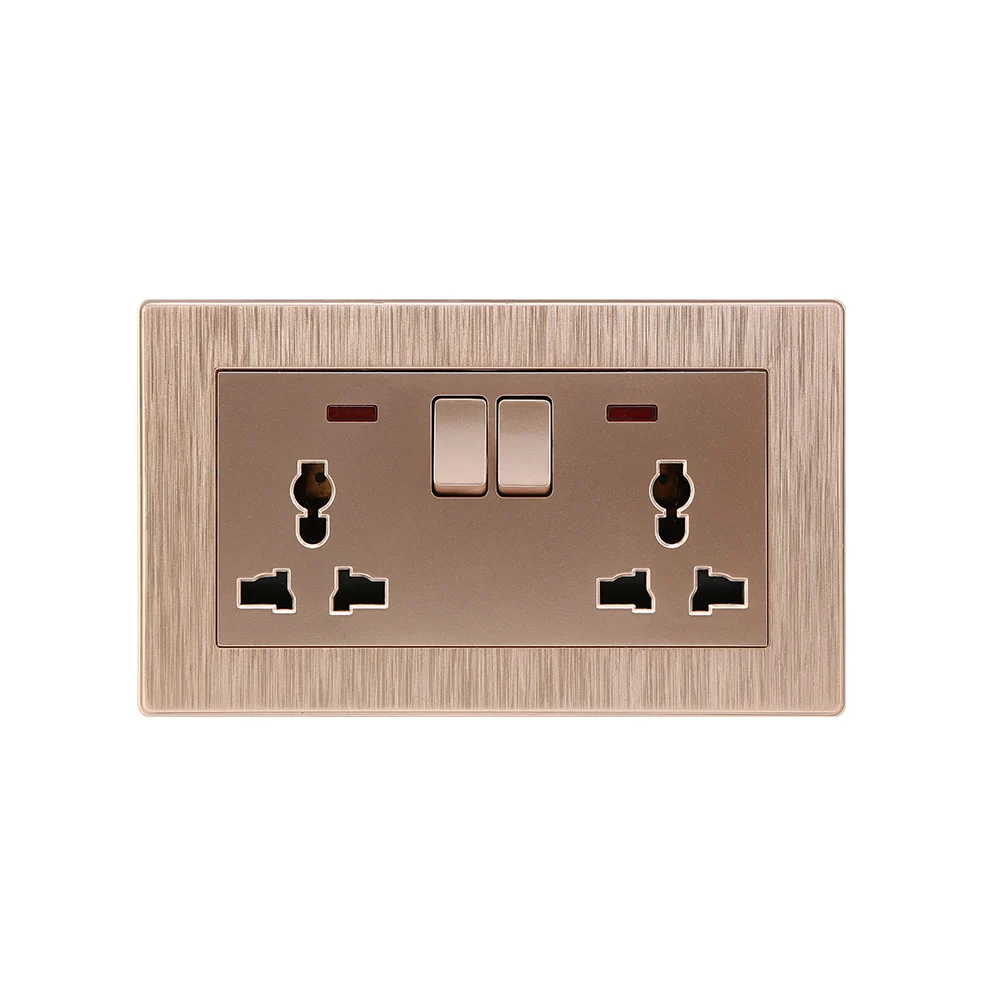
| Common Visual Form | Often a 2 hole outlet | Usually 3-hole or grounded socket format |
| Hidden Cost Risk | Higher if future appliances need grounding | Lower retrofit risk |
| Inspection Risk | Depends heavily on local code and application | Generally better aligned with modern safety expectations |
| Relevant Standards | IEC 60884-1, local wiring rules | IEC 60884-1, IEC 60364, local grounding rules |
| B2B Procurement Priority | Low-cost and legacy compatibility | Safety, compliance, lifecycle value |
The honest answer for commercial buyers is that a 2 prong vs 3 prong decision should not be made only by looking at the wall plate. It should be made by reviewing the load profile, user environment, local code, and grounding architecture of the building.
Application Matrix: Which Outlet Fits Which Project?
Different building environments require different outlet strategies. A single project may even need both types in different zones, provided the design follows local electrical rules.
| Project Area | Typical Devices | Recommended Outlet Strategy | Reason |
|---|---|---|---|
| Hotel bedside area | Phone chargers, lamps | 2 prong or 3 prong depending on market | Low load, but guest compatibility matters |
| Office workstation | Computers, monitors, printers | 3 prong outlet | Grounding and equipment protection |
| Kitchen / pantry | Refrigerators, kettles, microwaves | 3 prong outlet | Higher load and grounded appliances |
| Residential living room | TV, router, chargers | 3 prong outlet preferred | Mixed appliance use |
| Old-building renovation | Legacy wiring | Code-dependent assessment | Grounding may require system upgrade |
| Utility / maintenance room | Tools, cleaning machines | 3 prong outlet | Fault protection and durability |
For B2B projects, the best specification usually includes a room-by-room outlet schedule. This prevents a common procurement mistake: buying one socket type for the entire building without checking how each area will actually be used.
Hidden Costs and ROI of Choosing the Wrong Outlet
Because this is a product technical decision, ROI should be evaluated beyond purchase price. A cheaper outlet can become expensive if it causes rework, failed inspection, or tenant dissatisfaction.
Key cost drivers include:
| Cost Driver | How It Appears | Business Impact |
|---|---|---|
| Rewiring | Ground conductor absent or not terminated | Labor increase and wall repair |
| Inspection failure | Outlet type mismatched with local code | Handover delay |
| Adapter dependence | Users rely on unsafe adapters | Liability and reputation risk |
| Appliance incompatibility | Grounded plug cannot be used correctly | Tenant complaints and warranty issues |
| Future tenant upgrade | New equipment requires grounded outlets | Retrofit cost after occupancy |
In large projects, even a small per-unit decision becomes significant. For example, if a hotel has 300 rooms and each room uses 6 outlets, that is 1,800 outlet positions. A wrong outlet specification can affect procurement, installation labor, and inspection planning at scale. Therefore, we recommend treating socket selection as a system-level design decision rather than a last-minute accessory purchase.
Standards, Compliance, and Commercial Risks
Electrical outlet compliance is market-specific. A product that works physically may still be unsuitable legally if it lacks the required certification or does not match regional plug/socket standards.
For ABUK’s target export markets, key compliance signals include:
- CE: Indicates conformity with applicable European health, safety, and environmental protection requirements.
- RoHS: Restricts hazardous substances in electrical and electronic equipment.
- GCC: Important for Gulf market access and conformity recognition in GCC countries.
Non-compliance can create serious business consequences:
- Customs clearance problems.
- Rejected tenders or failed project approvals.
- Site inspection failure.
- Increased contractor liability.
- Product recall risk.
- Damage to distributor credibility.
A 3 prong outlet with grounding capability still needs correct certification, material quality, contact pressure, flame-retardant performance, and rated-current suitability. Grounding alone does not make an outlet compliant; compliance depends on the complete product design and the applicable market standard.
Selection Guide: How to Choose the Right Outlet for B2B Projects
When selecting between a 2 prong outlet and a 3 prong outlet, we recommend a practical five-step approach:
- Start with the destination market.
Confirm the country’s voltage, plug type, grounding rules, and certification requirements before requesting a quotation. - Map the real appliance load.
Do not classify all rooms the same way; kitchens, offices, workshops, and guest rooms have different safety requirements. - Check grounding availability.
A grounded outlet must connect to a valid protective earth conductor. Installing a 3-hole faceplate without real grounding creates a false sense of safety. - Verify current rating and material quality.
Common socket ratings such as 10A, 13A, 15A, and 16A should be matched with the intended circuit and local standard. - Request certification documents early.
The procurement team should verify CE, RoHS, GCC, and related documents before mass ordering, not after shipment arrival.
ABUK provides mechanical wall switches and socket solutions with CE, RoHS, and GCC certification for B2B buyers, engineering contractors, and electrical distributors. For projects that need consistent visual design, stable contact performance, and region-aware compliance, ABUK helps procurement teams align outlet selection with real installation conditions rather than guesswork.
Frequently Asked Questions
Are 2 prong or 3 prong outlets better?
For most modern commercial and residential projects, 3 prong outlets are generally better because they provide a dedicated grounding path for fault protection. However, a 2 prong outlet may still be acceptable for low-power, double-insulated appliances where local electrical codes allow it. The better choice depends on the appliance type, grounding system, and regional compliance requirements.
When did 3 prong outlets become standard?
In many markets, grounded 3 prong outlets became common as electrical codes evolved during the mid-to-late 20th century. In the United States, grounded receptacles became widely required in new residential construction after the National Electrical Code began emphasizing grounding for branch circuits in the 1960s. Other countries adopted grounded outlet systems on different timelines based on local wiring regulations.
What is a 3 prong plug used for?
A 3 prong plug is used for appliances and equipment that require a protective earth connection. Common examples include refrigerators, washing machines, desktop computers, monitors, power tools, and devices with metal enclosures. The third prong helps direct fault current safely to ground if an internal fault occurs.
Which countries use 3 prong outlets?
Many countries use 3 prong or grounded outlet systems, but the plug shape differs by region. The UK, Ireland, Singapore, Malaysia, Hong Kong, and several Gulf countries commonly use Type G outlets. The United States, Canada, Mexico, and Japan commonly use grounded Type B outlets. Australia and New Zealand use grounded Type I outlets, while many European countries use grounded Type E or Type F socket systems.
Is it safe to plug a 2 prong into a 3 prong outlet?
Yes, it is generally safe to plug a 2 prong appliance into a properly installed 3 prong outlet, as long as the appliance is designed as a two-prong or double-insulated device. The outlet’s grounding contact simply remains unused. Buyers should still verify voltage compatibility, plug type, and local safety requirements before use.
What is a 3 prong outlet called?
A 3 prong outlet is commonly called a grounded outlet, grounding receptacle, earthed socket, or three-pin socket, depending on the region. In North America, it is often called a grounded receptacle or Type B outlet. In UK-related markets, the common grounded format is often referred to as a Type G socket.
How to convert 2 hole outlet to 3 hole outlet?
To convert a 2 hole outlet to a 3-hole outlet, the safest method is to install a proper grounding conductor and replace the old receptacle with a compliant grounded outlet. In some regions, approved alternatives such as GFCI/RCD protection may be allowed, but these must follow local code and correct labeling requirements. We recommend using a licensed electrician rather than simply replacing the faceplate, because a 3-hole outlet without real grounding can create a false sense of safety.
Are Two-Prong Outlets Safe?
Two-prong outlets can be safe only when used within their intended limits—typically with low-power or double-insulated appliances and where local code permits them. They are not ideal for grounded appliances, metal-cased equipment, office electronics, kitchens, workshops, or commercial spaces with changing equipment needs. For modern B2B projects, grounded outlets are usually the safer and more future-ready choice.
{
“@context”: “https://schema.org”,
“@type”: “FAQPage”,
“mainEntity”: [
{
“@type”: “Question”,
“name”: “Are 2 prong or 3 prong outlets better?”,
“acceptedAnswer”: {
“@type”: “Answer”,
“text”: “For most modern commercial and residential projects, 3 prong outlets are generally better because they provide a dedicated grounding path for fault protection. However, a 2 prong outlet may still be acceptable for low-power, double-insulated appliances where local electrical codes allow it. The better choice depends on the appliance type, grounding system, and regional compliance requirements.”
}
},
{
“@type”: “Question”,
“name”: “When did 3 prong outlets become standard?”,
“acceptedAnswer”: {
“@type”: “Answer”,
“text”: “In many markets, grounded 3 prong outlets became common as electrical codes evolved during the mid-to-late 20th century. In the United States, grounded receptacles became widely required in new residential construction after the National Electrical Code began emphasizing grounding for branch circuits in the 1960s. Other countries adopted grounded outlet systems on different timelines based on local wiring regulations.”
}
},
{
“@type”: “Question”,
“name”: “What is a 3 prong plug used for?”,
“acceptedAnswer”: {
“@type”: “Answer”,
“text”: “A 3 prong plug is used for appliances and equipment that require a protective earth connection. Common examples include refrigerators, washing machines, desktop computers, monitors, power tools, and devices with metal enclosures. The third prong helps direct fault current safely to ground if an internal fault occurs.”
}
},
{
“@type”: “Question”,
“name”: “Which countries use 3 prong outlets?”,
“acceptedAnswer”: {
“@type”: “Answer”,
“text”: “Many countries use 3 prong or grounded outlet systems, but the plug shape differs by region. The UK, Ireland, Singapore, Malaysia, Hong Kong, and several Gulf countries commonly use Type G outlets. The United States, Canada, Mexico, and Japan commonly use grounded Type B outlets. Australia and New Zealand use grounded Type I outlets, while many European countries use grounded Type E or Type F socket systems.”
}
},
{
“@type”: “Question”,
“name”: “Is it safe to plug a 2 prong into a 3 prong outlet?”,
“acceptedAnswer”: {
“@type”: “Answer”,
“text”: “Yes, it is generally safe to plug a 2 prong appliance into a properly installed 3 prong outlet, as long as the appliance is designed as a two-prong or double-insulated device. The outlet’s grounding contact simply remains unused. Buyers should still verify voltage compatibility, plug type, and local safety requirements before use.”
}
},
{
“@type”: “Question”,
“name”: “What is a 3 prong outlet called?”,
“acceptedAnswer”: {
“@type”: “Answer”,
“text”: “A 3 prong outlet is commonly called a grounded outlet, grounding receptacle, earthed socket, or three-pin socket, depending on the region. In North America, it is often called a grounded receptacle or Type B outlet. In UK-related markets, the common grounded format is often referred to as a Type G socket.”
}
},
{
“@type”: “Question”,
“name”: “How to convert 2 hole outlet to 3 hole outlet?”,
“acceptedAnswer”: {
“@type”: “Answer”,
“text”: “To convert a 2 hole outlet to a 3-hole outlet, the safest method is to install a proper grounding conductor and replace the old receptacle with a compliant grounded outlet. In some regions, approved alternatives such as GFCI/RCD protection may be allowed, but these must follow local code and correct labeling requirements. We recommend using a licensed electrician rather than simply replacing the faceplate, because a 3-hole outlet without real grounding can create a false sense of safety.”
}
},
{
“@type”: “Question”,
“name”: “Are Two-Prong Outlets Safe?”,
“acceptedAnswer”: {
“@type”: “Answer”,
“text”: “Two-prong outlets can be safe only when used within their intended limits—typically with low-power or double-insulated appliances and where local code permits them. They are not ideal for grounded appliances, metal-cased equipment, office electronics, kitchens, workshops, or commercial spaces with changing equipment needs. For modern B2B projects, grounded outlets are usually the safer and more future-ready choice.”
}
}
]
}
References
- International Electrotechnical Commission — IEC 60884-1, plugs and socket-outlets for household and similar purposes: https://webstore.iec.ch/
- International Electrotechnical Commission — IEC 60364, low-voltage electrical installations: https://webstore.iec.ch/
- National Fire Protection Association — National Electrical Code information: https://www.nfpa.org/
- European Commission — CE marking overview: https://single-market-economy.ec.europa.eu/
- European Commission — RoHS Directive information: https://environment.ec.europa.eu/
A wall outlet is a small component, but it carries a large responsibility: it connects the user’s daily equipment to the building’s entire electrical safety system. The best procurement decision is not simply choosing between two holes and three holes; it is choosing a safe, code-aware, future-ready interface for the people who will live, work, and operate inside the building.
ABUK builds mechanical wall switches and socket solutions for that moment—when a project team needs compliant, reliable, and market-ready electrical accessories without unnecessary complexity. To explore ABUK’s certified wall switch and socket range, visit: https://abukelec.com/wall-switch-socket/