
 Wenzhou Lita Electric Co., Ltd.
Can You Use a French Type E Socket Outdoors?
When a café owner in Lyon encountered a wet patio socket after cleaning, the hinged lid had seemed sufficient protection. In this hypothetical example, an indoor accessory had been selected because the customer’s Type E plug fitted; water around the installation then delayed reopening the terrace. The missing specification concerned the complete outdoor assembly, not the shape of the plug.
Summary: A French Type E socket can be used outdoors only when the exact product and installation are suitable for the exposure. Type E describes the connector; an IP rating describes specified enclosure protection. Legrand offers outdoor IP55 socket assemblies, but that does not make every Type E outlet weatherproof. Confirm installation, in-use protection and the required RCD arrangement.
The France electrical outlet guide explains national plug compatibility. Outdoor selection adds water, dust, mechanical damage, cable routing and maintenance to that basic compatibility check.
What does Type E establish about an outdoor socket?
A French Type E socket provides the familiar earthed connection with an earth pin in the socket. It does not describe the enclosure’s resistance to water or how a cable enters the box. A 16A, 250V accessory rating is likewise an electrical product rating, not proof of outdoor suitability.
A product intended for indoor dry conditions may accept the same plug as an outdoor model. The difference is in the documented assembly and conditions of use. Legrand’s outdoor Plexo guidance, for example, identifies IP55 products and discusses seals, mounting arrangements and protective covers.
The procurement line should therefore include the exact model, enclosure, mounting method and required environmental performance. “French socket with lid” leaves too much unspecified, especially if the mechanism, box and cover can be ordered separately.
Does an IP rating still apply while a plug is inserted?
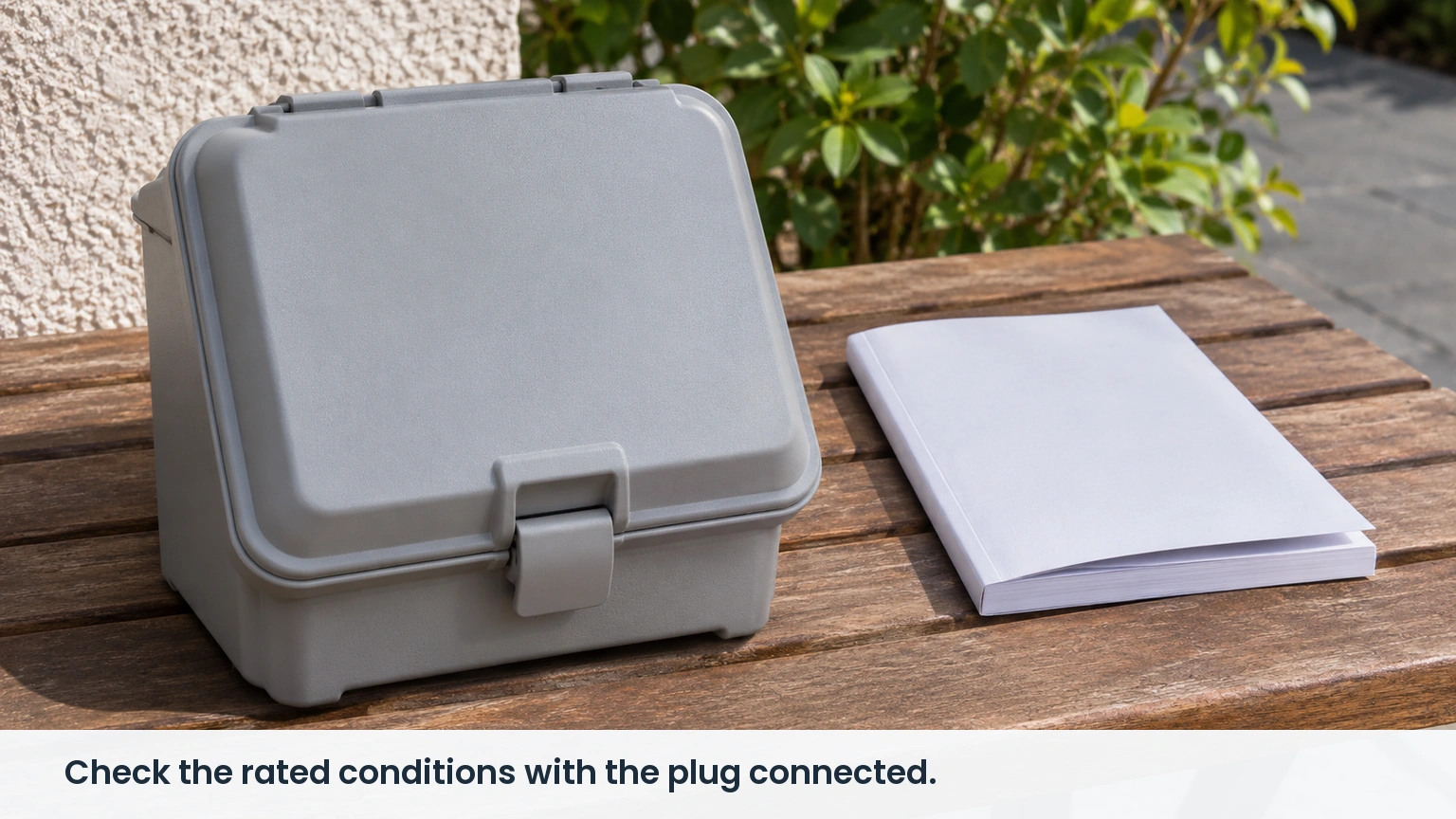
That must be confirmed from the product instructions. IEC 60529’s IP system classifies enclosure protection under defined conditions; a rating given with a lid closed should not automatically be assumed to apply with the lid open and a plug connected.
IP44 includes protection against solid objects of at least 1mm and splashing water. IP55 adds dust protection and protection against water jets under the specified tests. Neither label means protection against every cleaning method, immersion, condensation or environmental condition.
Legrand’s outdoor enclosure guidance explicitly distinguishes water-jet protection from high-pressure cleaning. For a terrace where staff use a pressure washer, the cleaning practice needs to be assessed separately. Simply choosing a higher number without checking the operating conditions can leave the same problem unresolved.
Where can water enter an outdoor socket assembly?
The potential routes include the cover, seals, mounting interface and cable entries. The installer should follow the exact manufacturer’s instructions for orientation, compatible glands or membranes and the permitted cable arrangement. A site-made opening or damaged seal can invalidate assumptions based on the original enclosure rating.
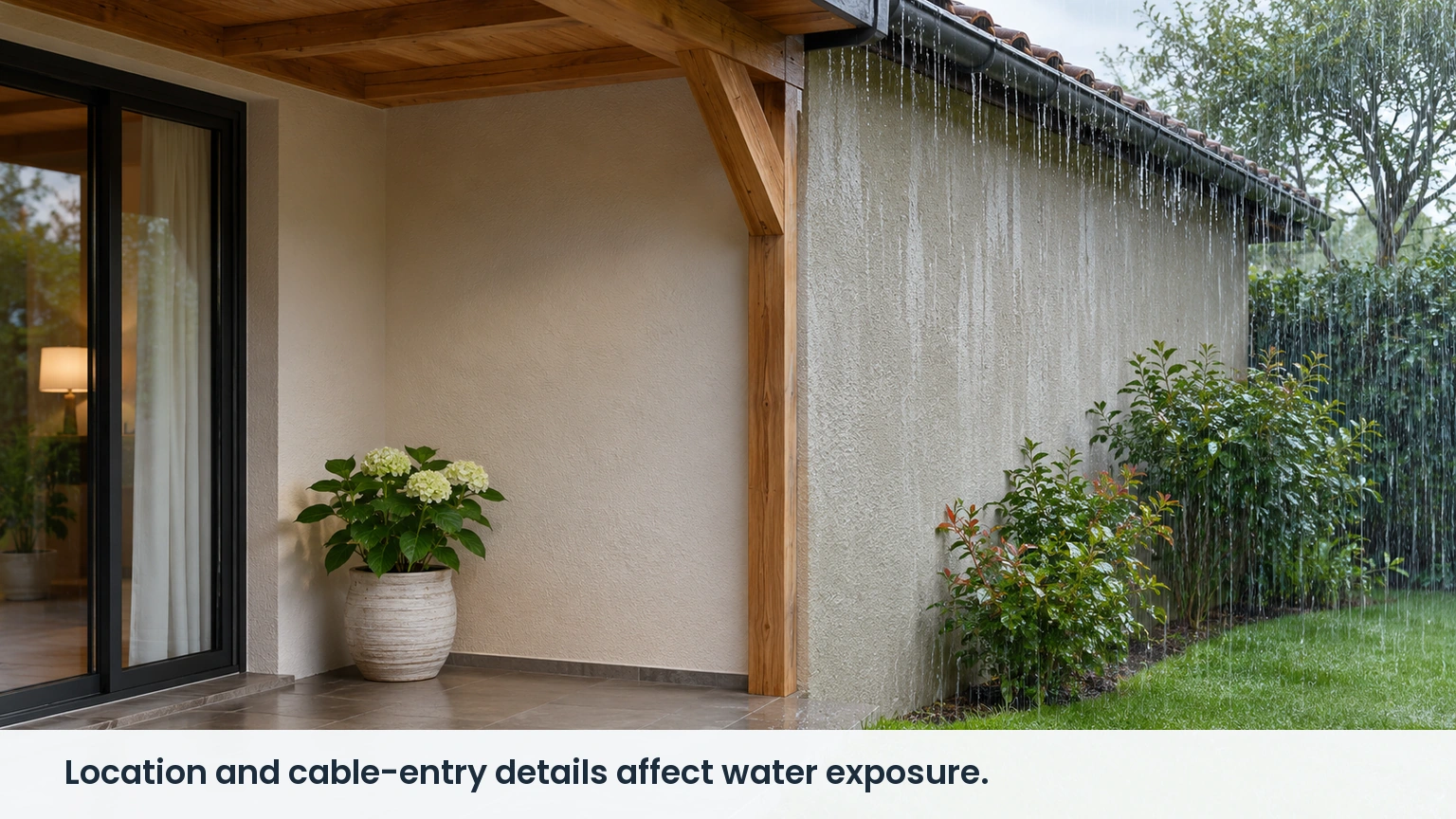
Location changes exposure. A sheltered patio wall and a wall receiving direct rain are different environments; a low point where water pools creates another problem. The electrical designer should account for the actual surroundings rather than apply one nominal mounting height to every outdoor setting.
Legrand’s Plexo guidance offers both flush and surface-mounted arrangements, showing that surface mounting is not inherently unsuitable outdoors. Suitability depends on the complete specified assembly and its installation. Added sealant is not a substitute for using the correct box, cover and entry components.
What does an RCD protect against outdoors?
An RCD detects residual current under its designed operating conditions. It serves a different function from enclosure protection and overcurrent protection. HSE’s general guidance highlights additional protection rated no more than 30mA for situations such as outdoor use; French installations must follow the applicable NF C 15-100 requirements and local design assessment.
A suitable RCD does not make an unsuitable wet socket acceptable. Nor does an IP55 enclosure remove the need for correct earthing and circuit protection. These measures address different hazards and should be specified together.
The electrician should confirm the circuit, protective-device type, test arrangements and any special-location rules. Pools and similar locations need a separate assessment; a general patio guide cannot establish the permitted position of every outlet around water.
How do the common outdoor options compare?
| Option | What it may offer | What must still be confirmed |
|---|---|---|
| Indoor Type E accessory | National plug compatibility | No outdoor suitability should be assumed |
| Documented IP44 assembly | Specified splash protection | Exposure, installation and connected-plug conditions |
| Documented IP55 assembly | Specified dust and water-jet protection | Cleaning limits, seals and permitted installation |
| Complete outdoor connection system | Coordinated socket, enclosure and entries | Circuit protection, location and maintenance |
Which site conditions change the specification?
| Setting | Exposure to discuss | Often missed |
|---|---|---|
| Sheltered residential patio | Wind-driven rain and cleaning splash | The plug may remain inserted overnight |
| Café terrace | Frequent use, cleaning and moving furniture | Damage to covers and trailing leads |
| Garden maintenance point | Soil, moisture and portable equipment | Cable strain and damaged entries |
| Pool or water-feature area | Special electrical-location requirements | A generic outdoor rating is insufficient |
Total installed cost includes enclosure components, cable route, protective devices, inspection and access for maintenance. An inexpensive indoor mechanism can become a costly choice if the installation must be reopened after the first wet-weather problem. Obtain a quote for the complete assembly and work, not the faceplate alone.
Which standards belong in a French outdoor socket specification?
IEC 60529 supplies the IP classification framework, while NF C 15-100 addresses the French low-voltage installation. Product-specific documentation must identify the accessory’s intended use and conditions. An IP test classification is not a certification of an entire terrace installation.
CE and RoHS documentation, where applicable, should match the exact product. Neither establishes weather resistance, and GCC documentation does not replace French requirements. A distributor should also confirm whether a quoted rating applies to a mechanism alone or only to the completed enclosure.
What should be confirmed before an outdoor socket is ordered?
- Describe rain, dust, cleaning methods and whether a plug remains connected.
- Specify the complete mechanism, enclosure, cover and cable-entry arrangement.
- Have an electrician confirm protection, earthing and any special-location rules.
- Plan routine checks for broken lids, damaged seals and loose mounting.
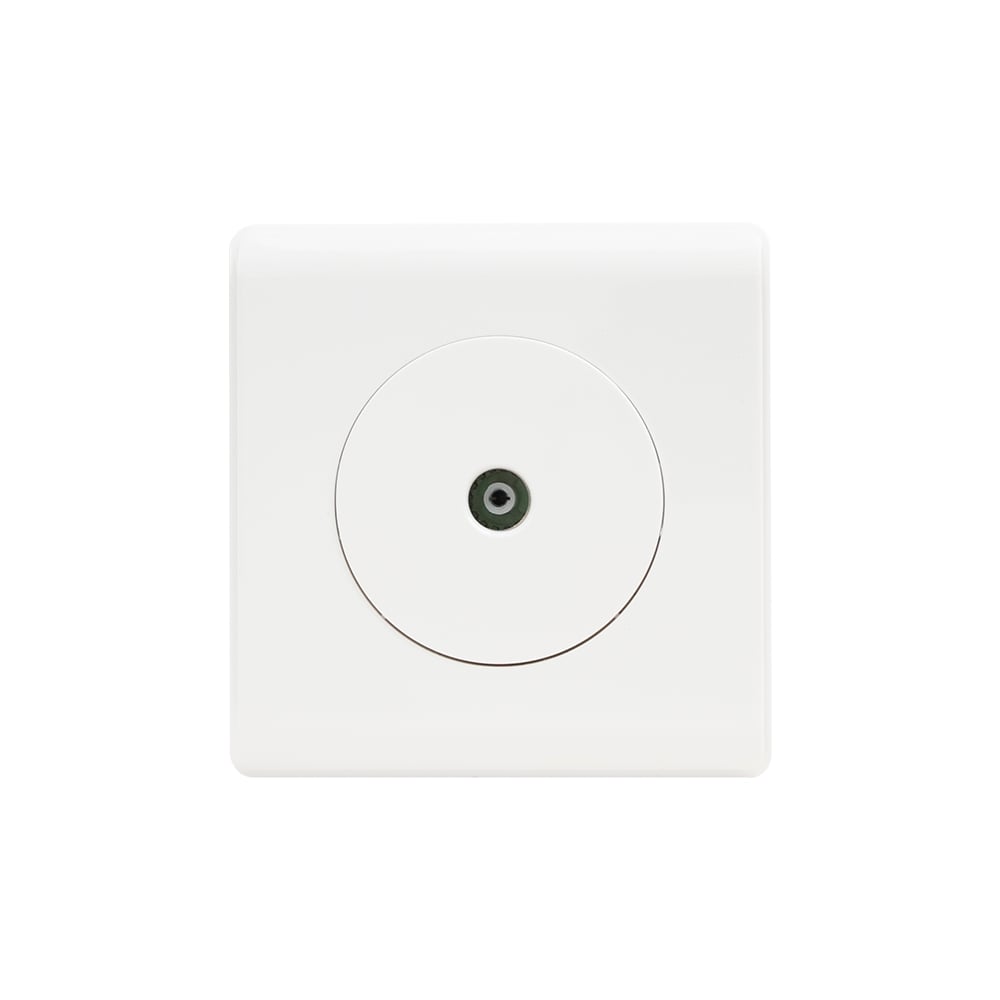
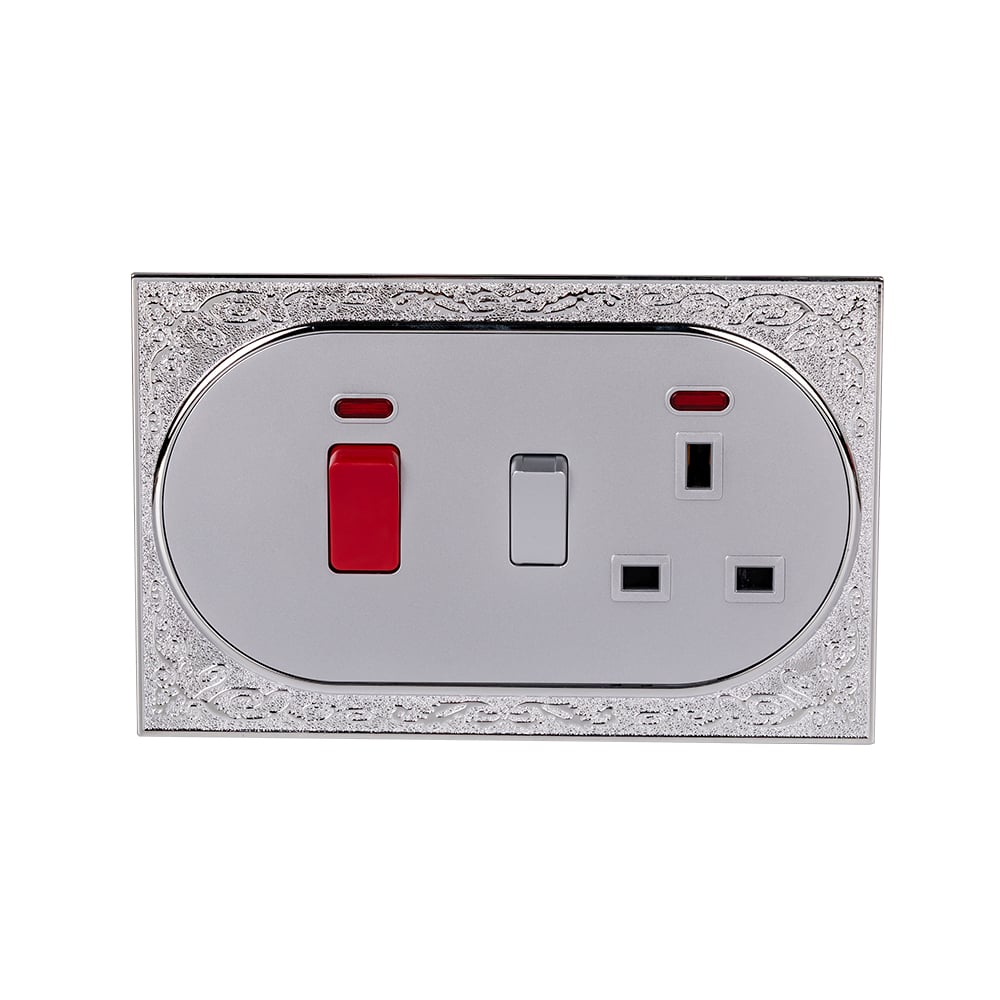
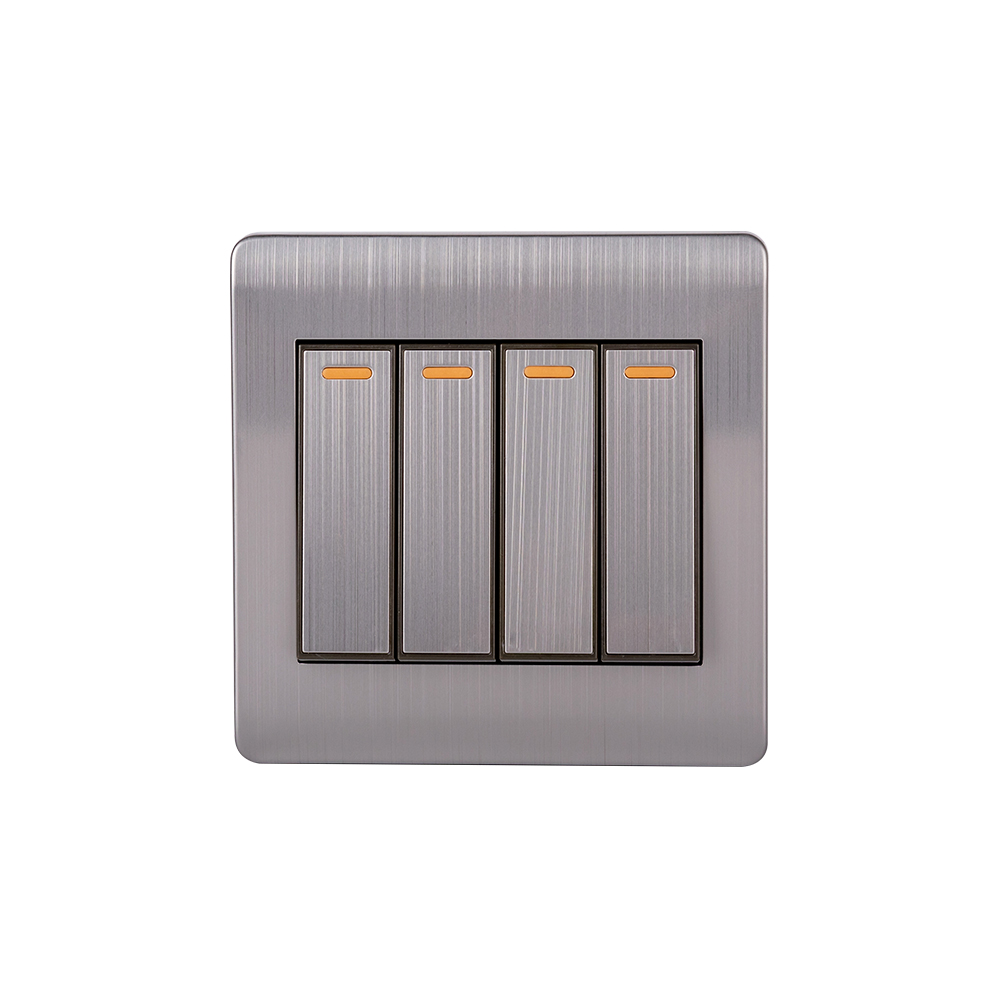
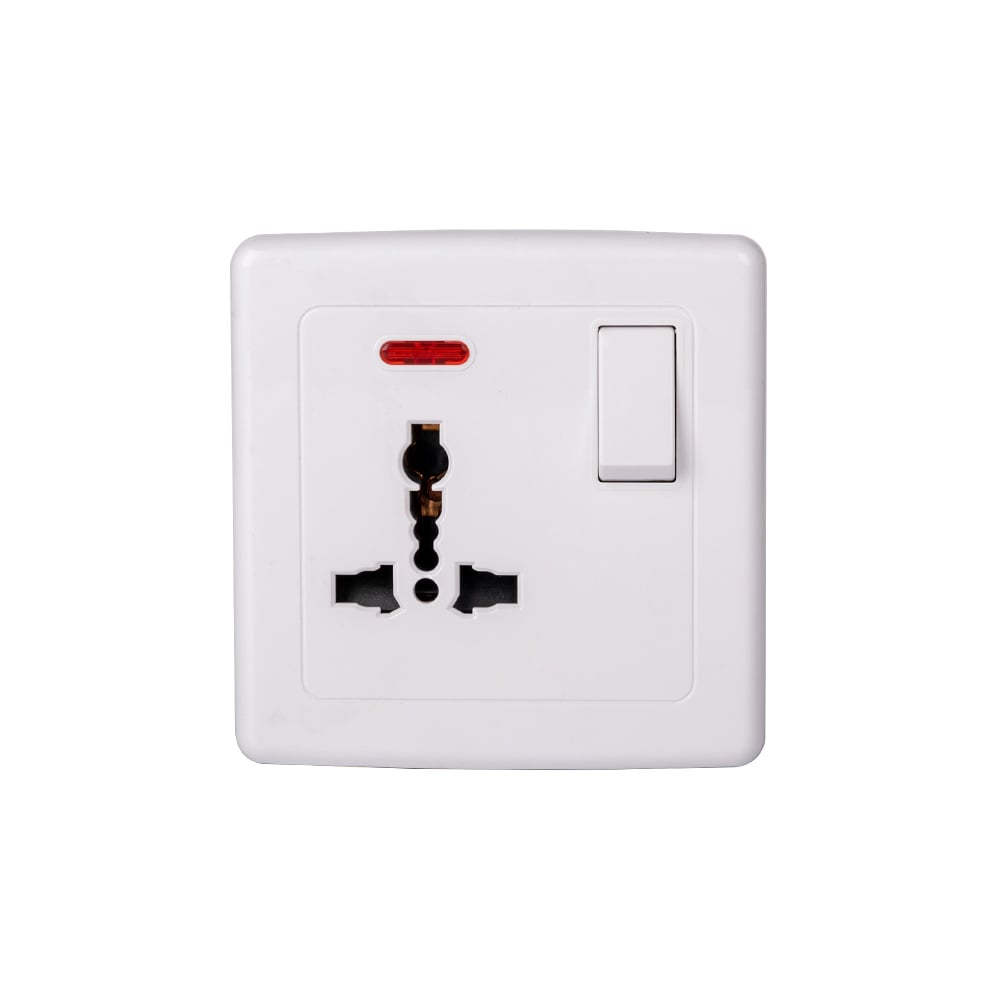
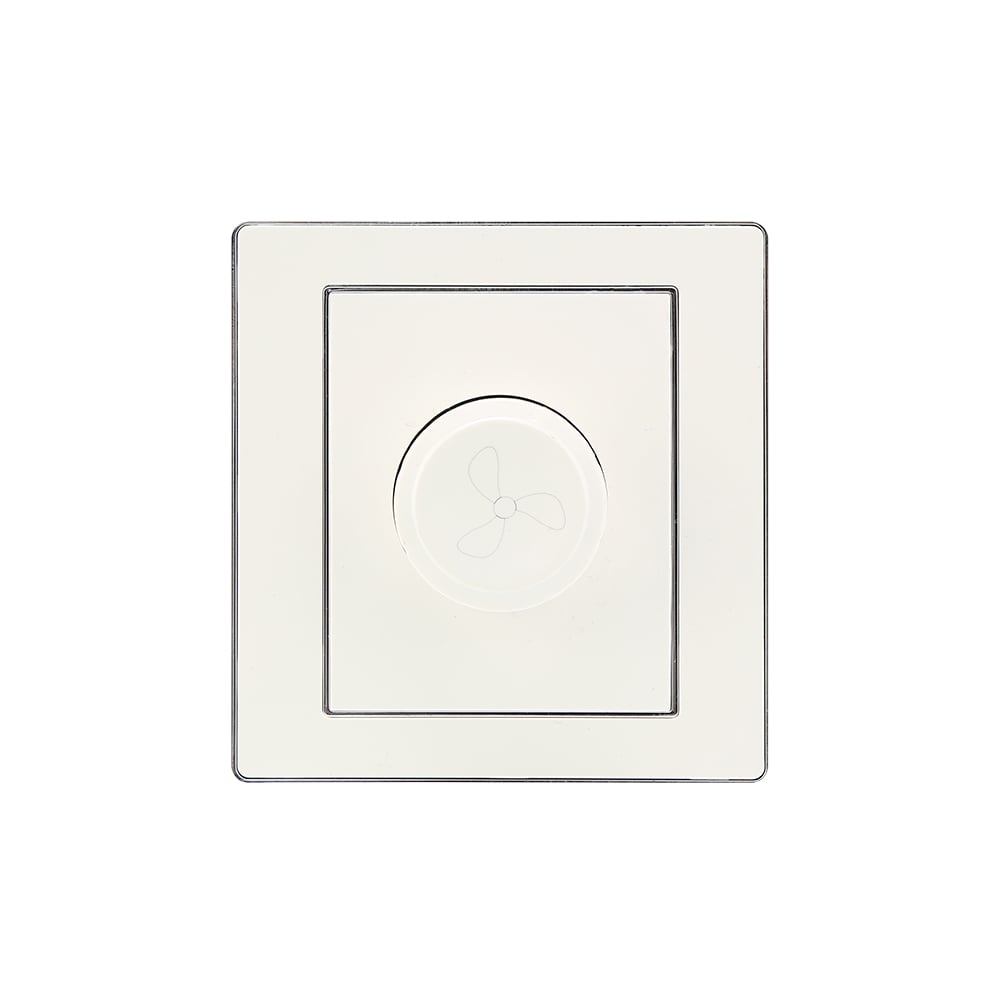
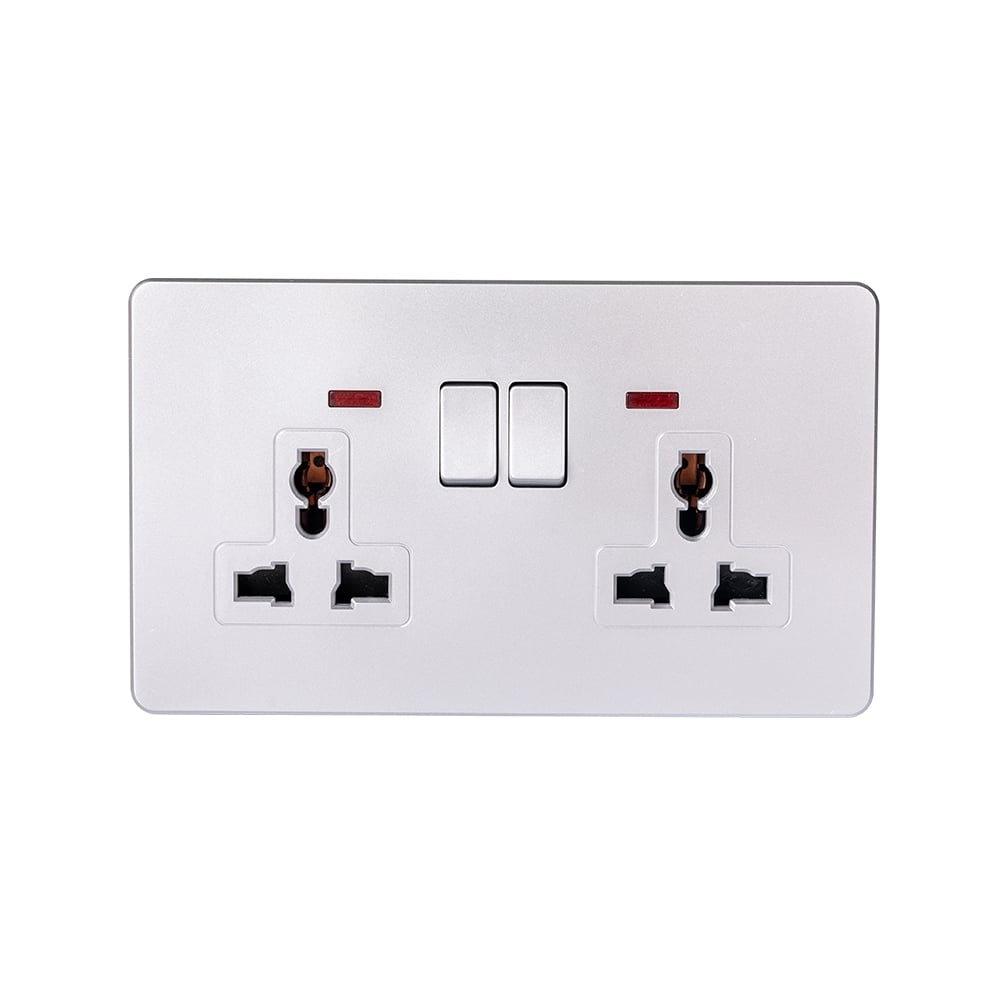
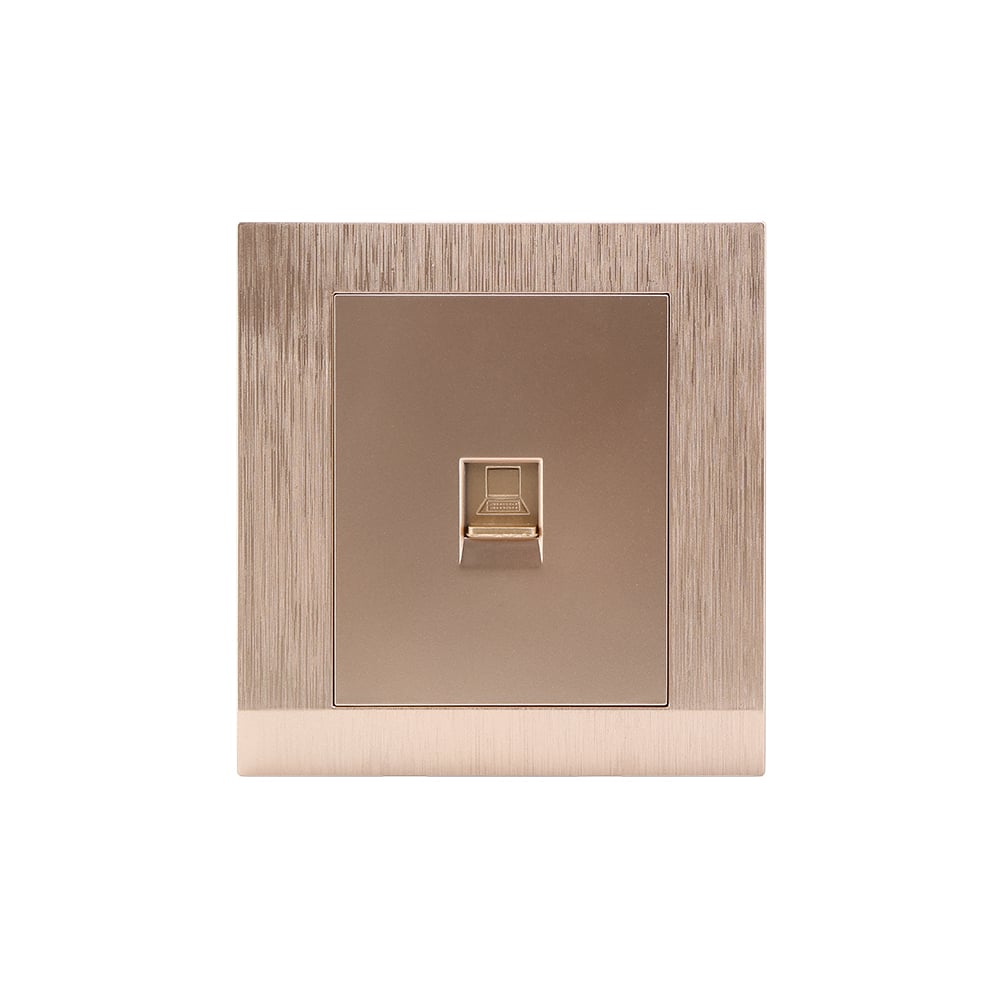
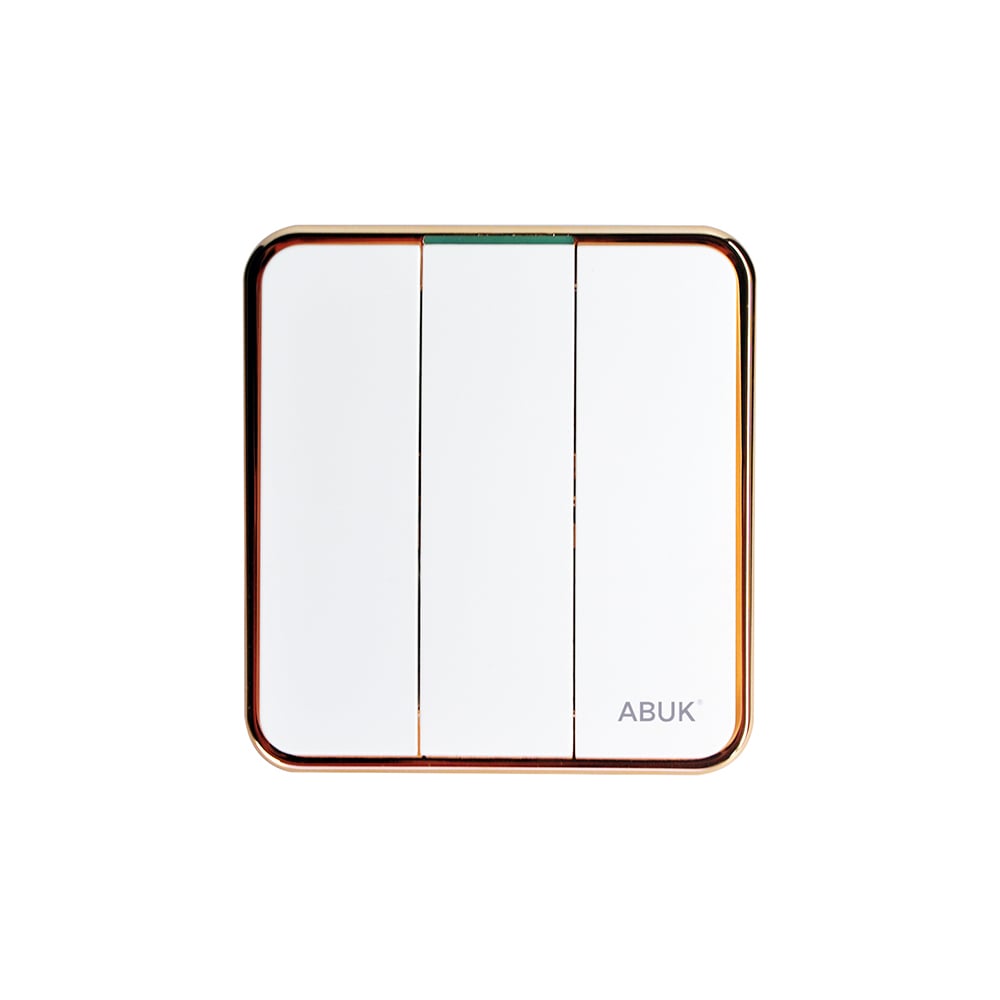
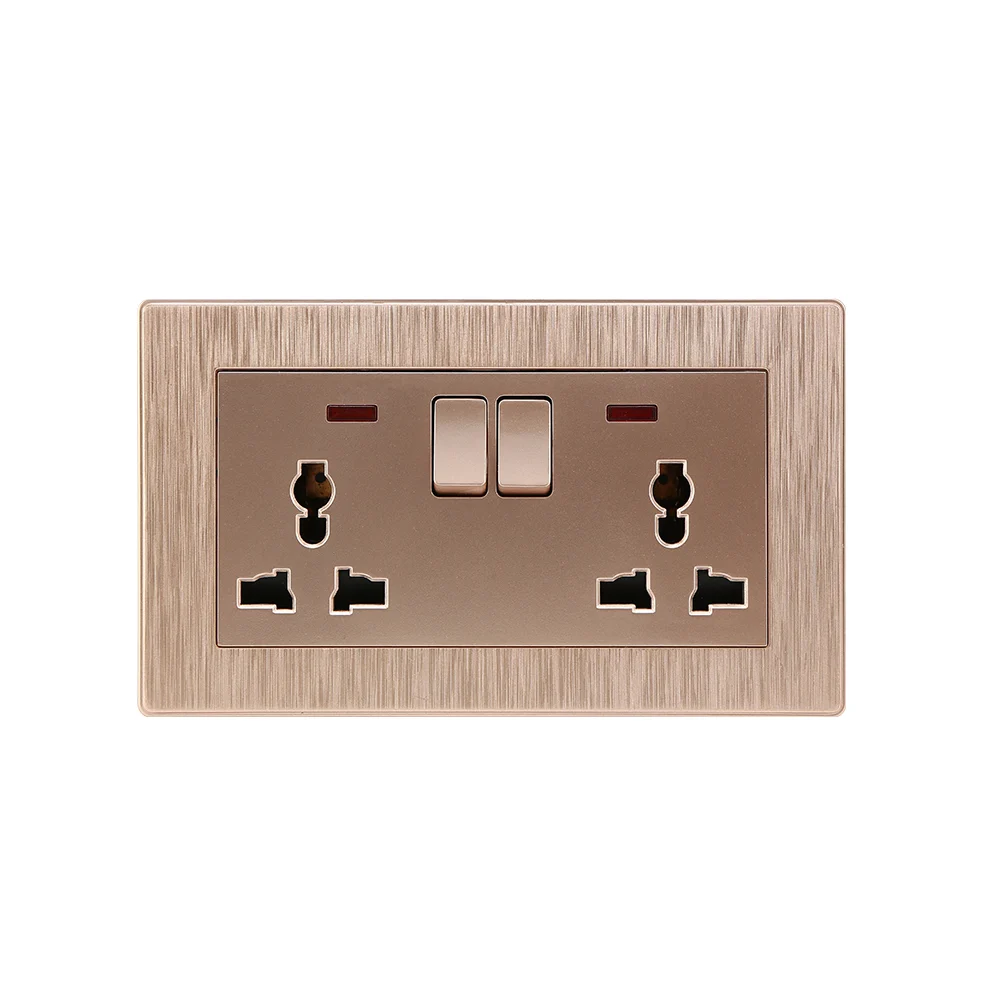
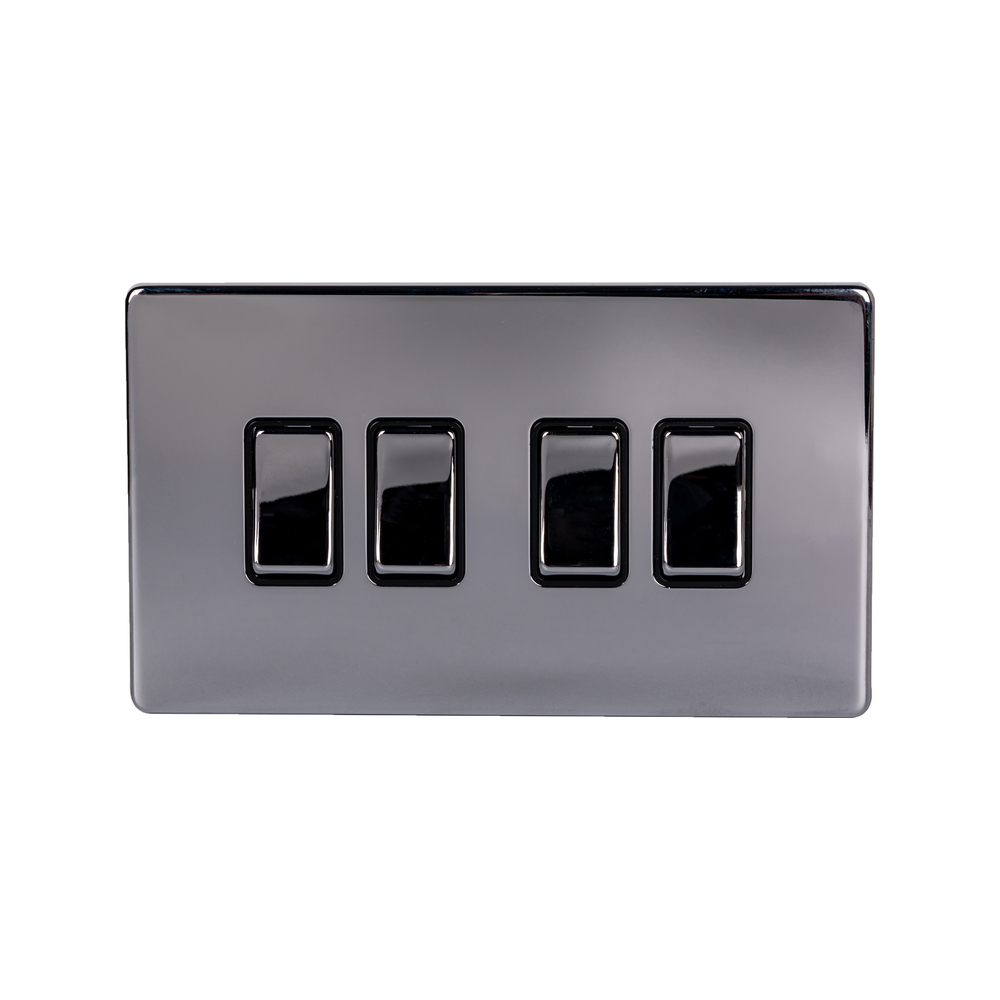
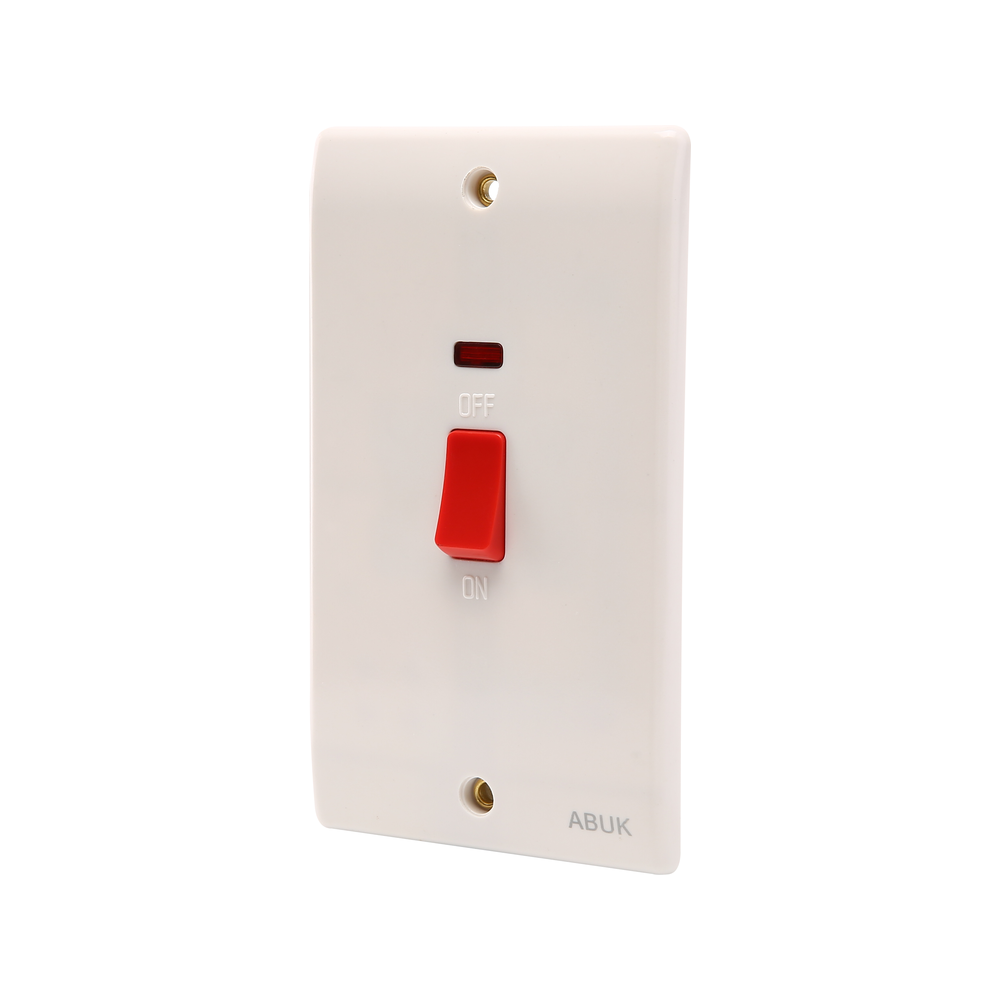
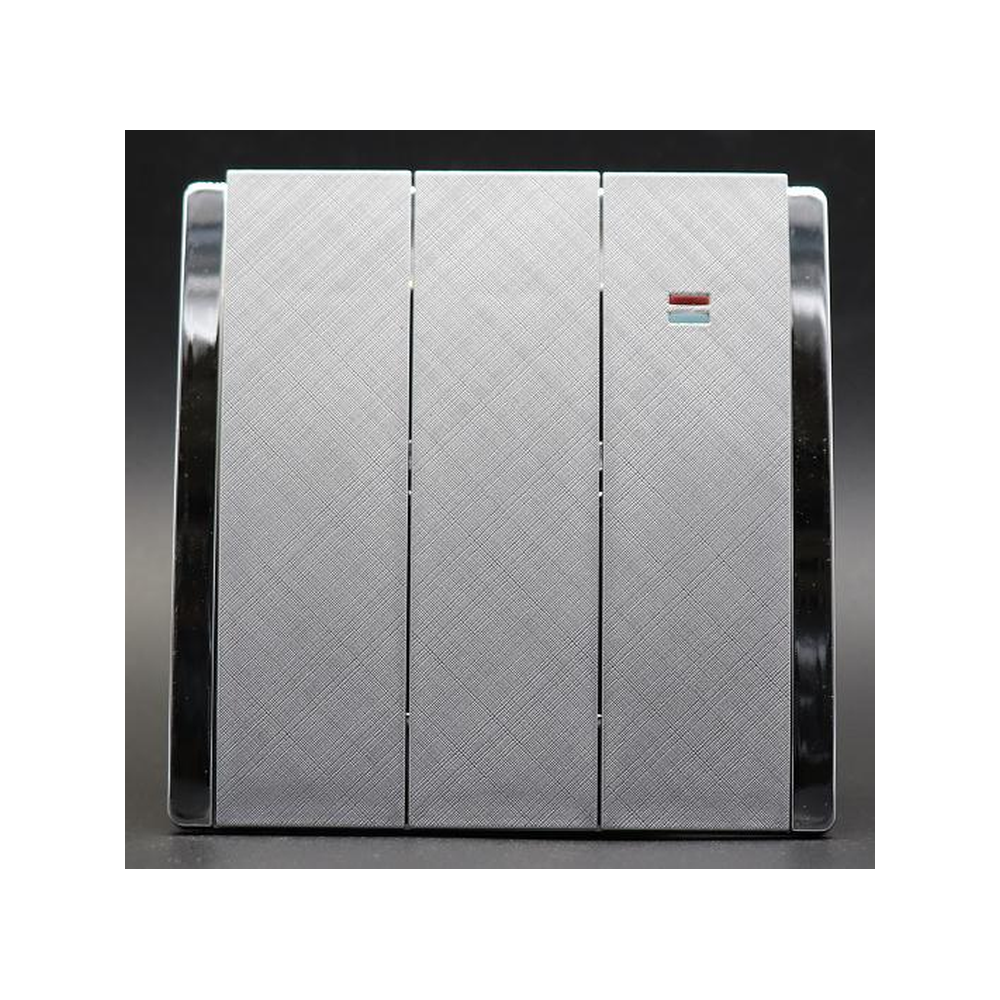
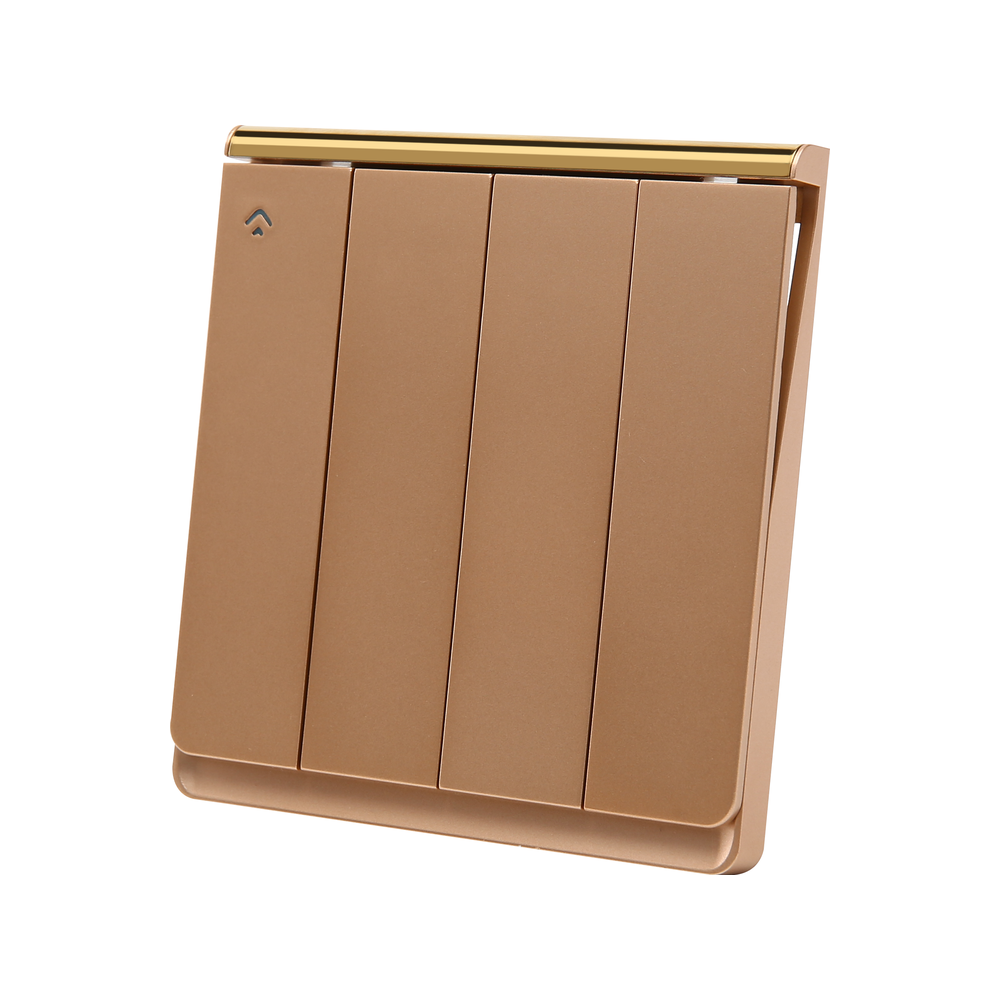
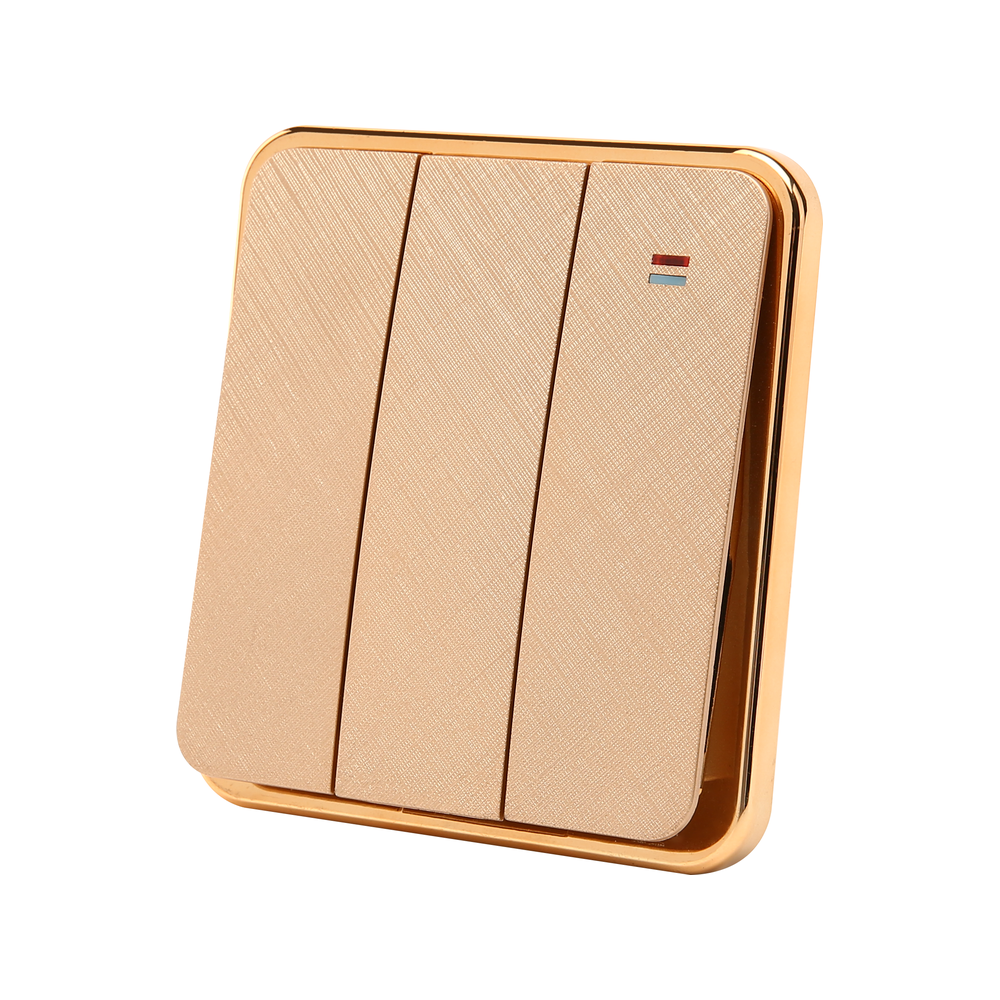
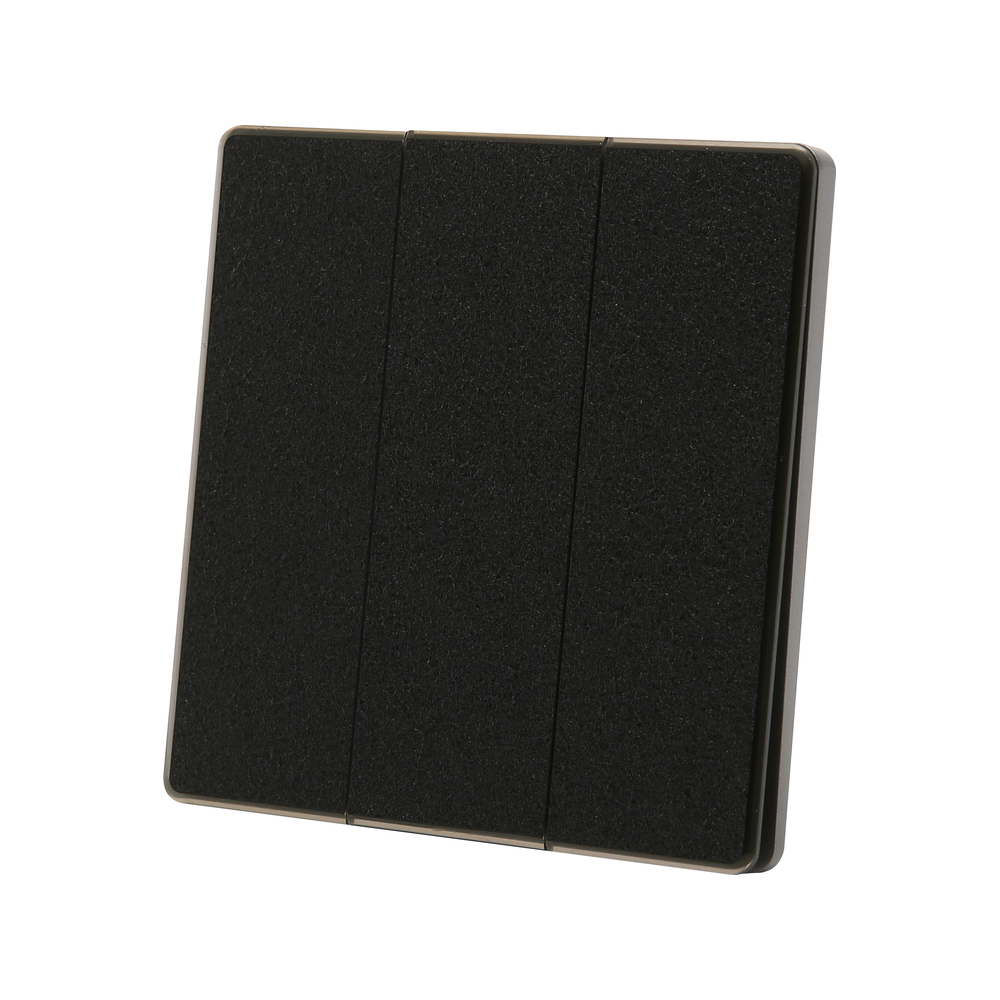
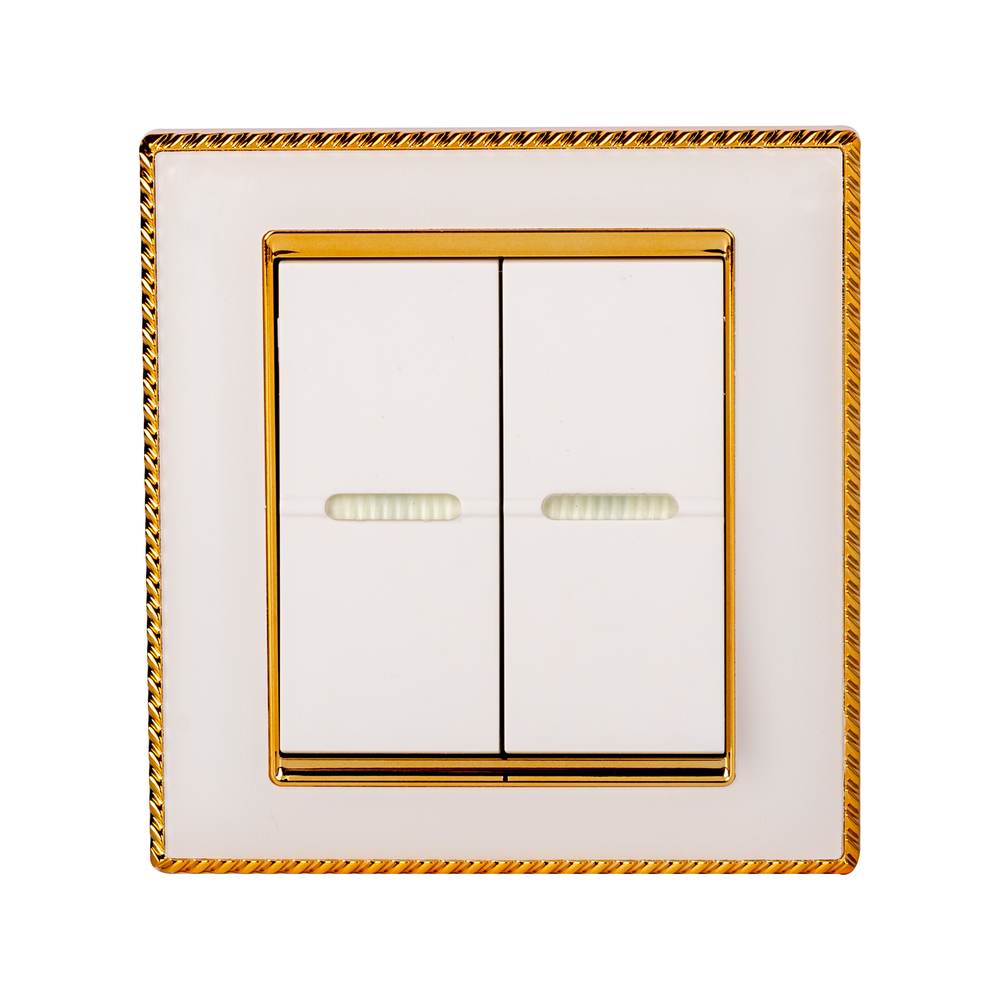
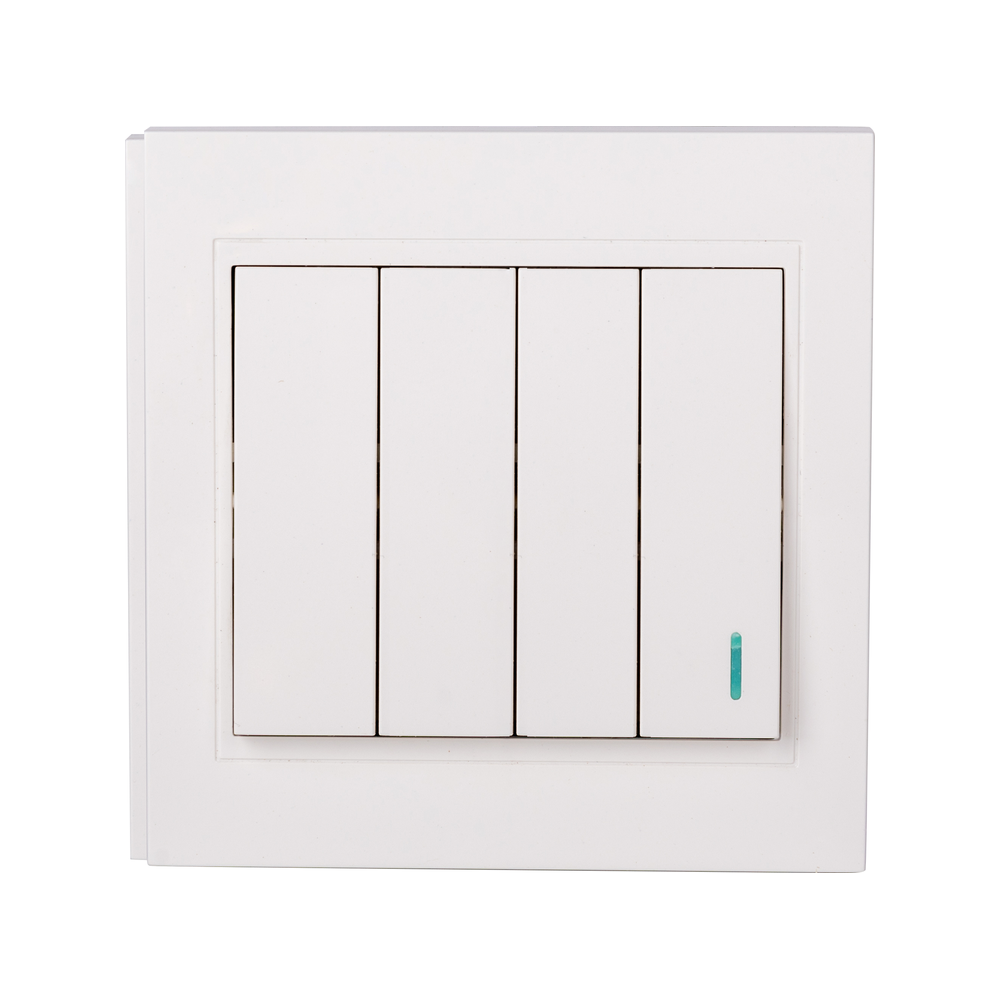
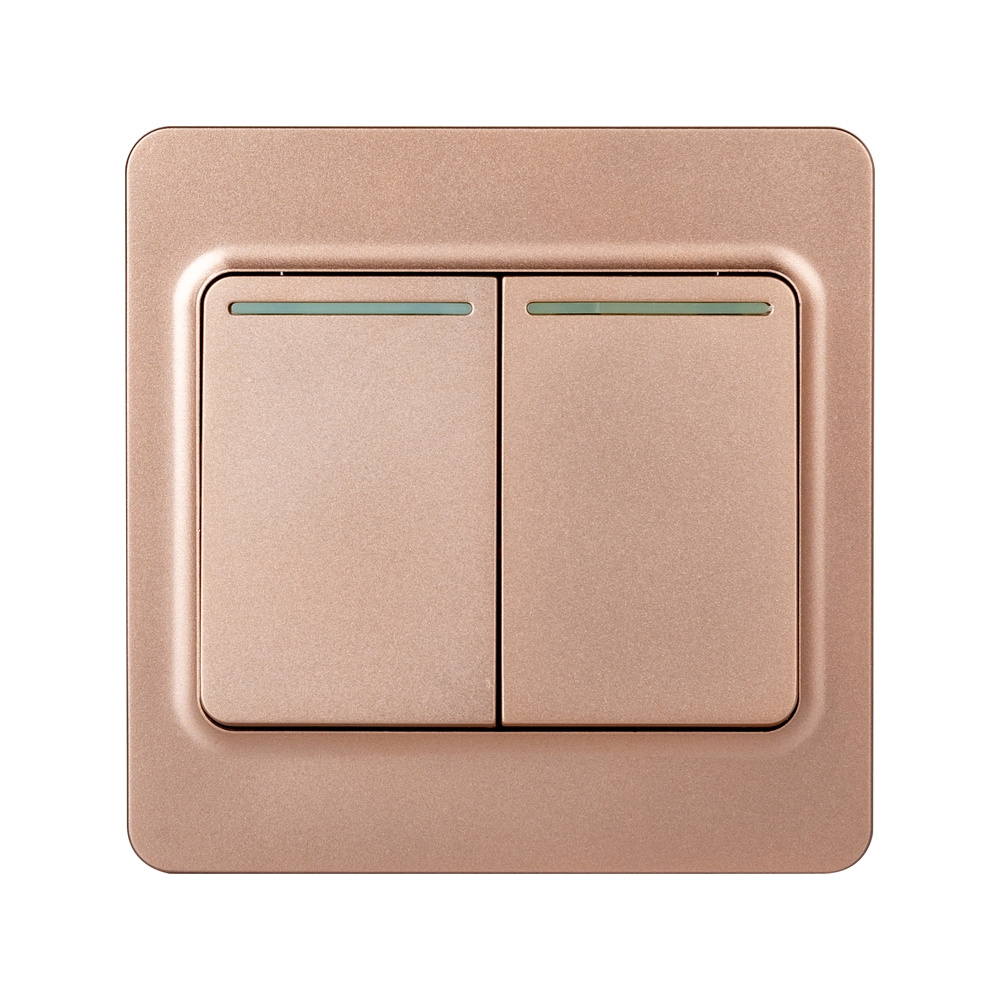
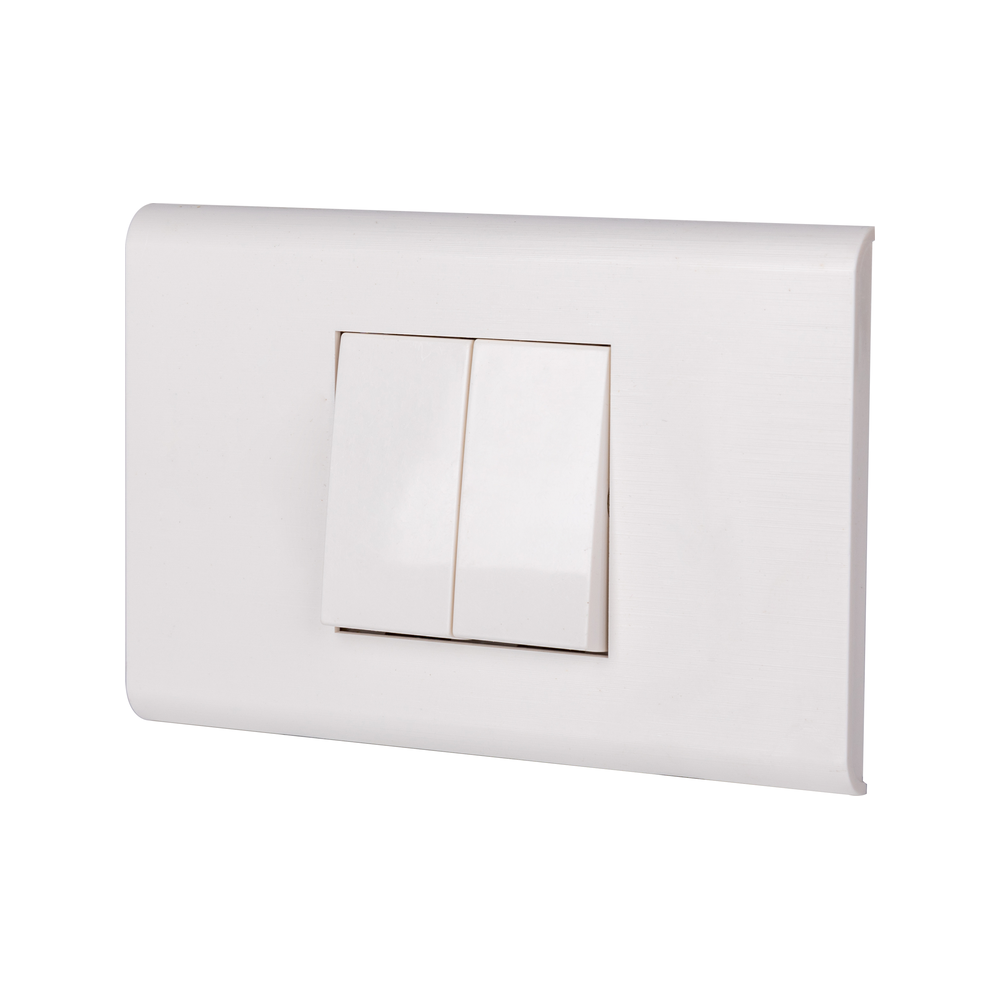
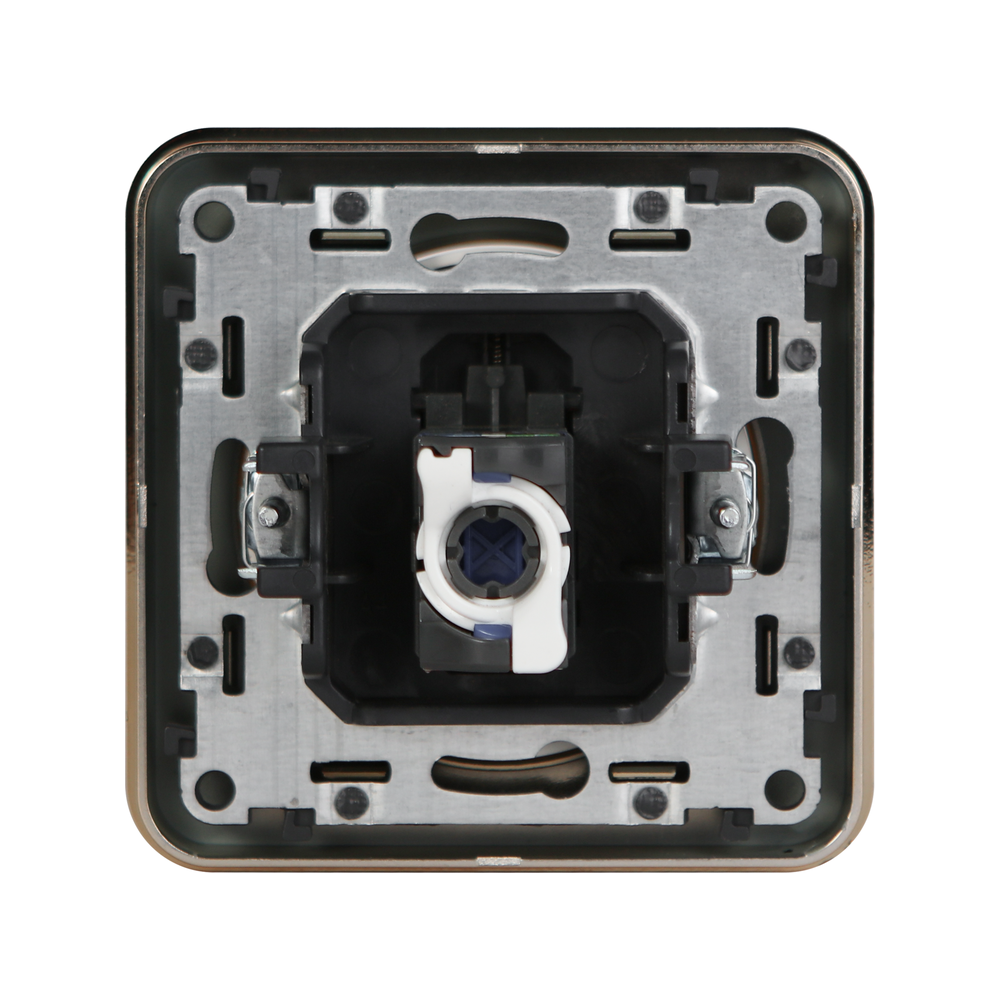
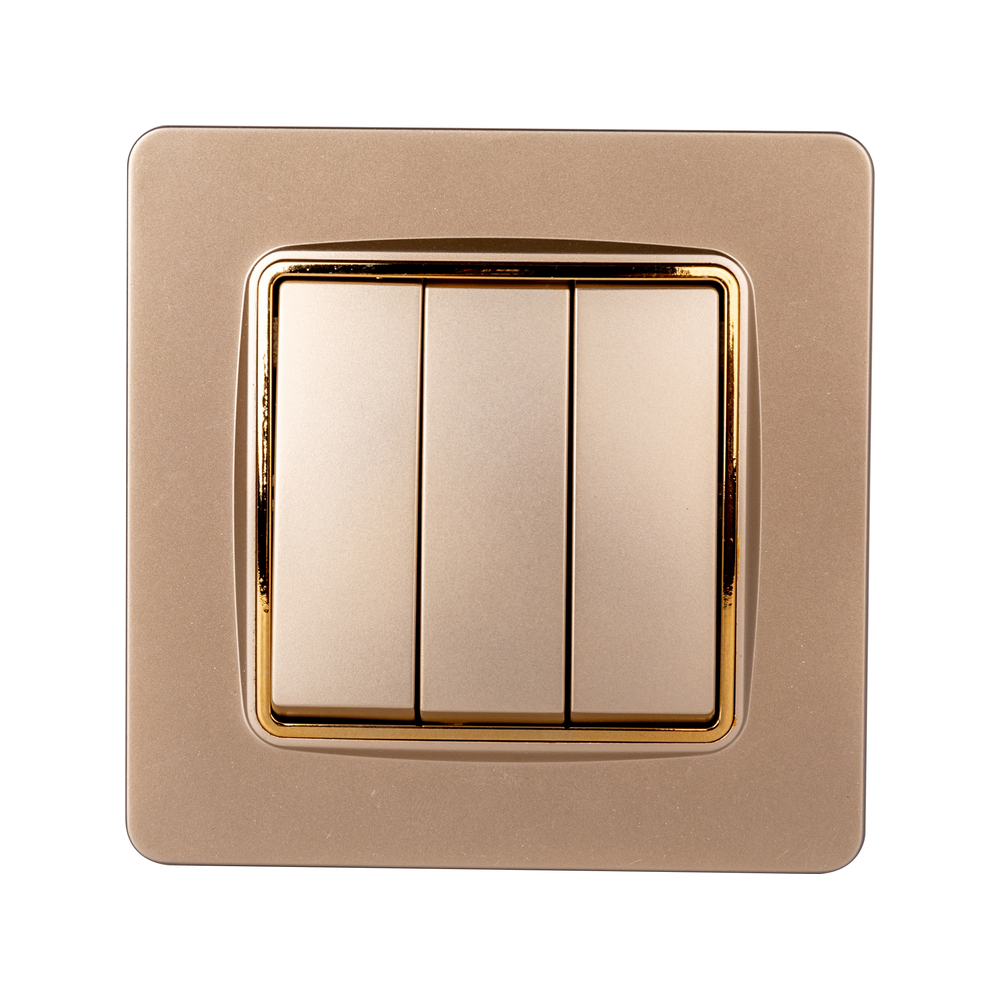
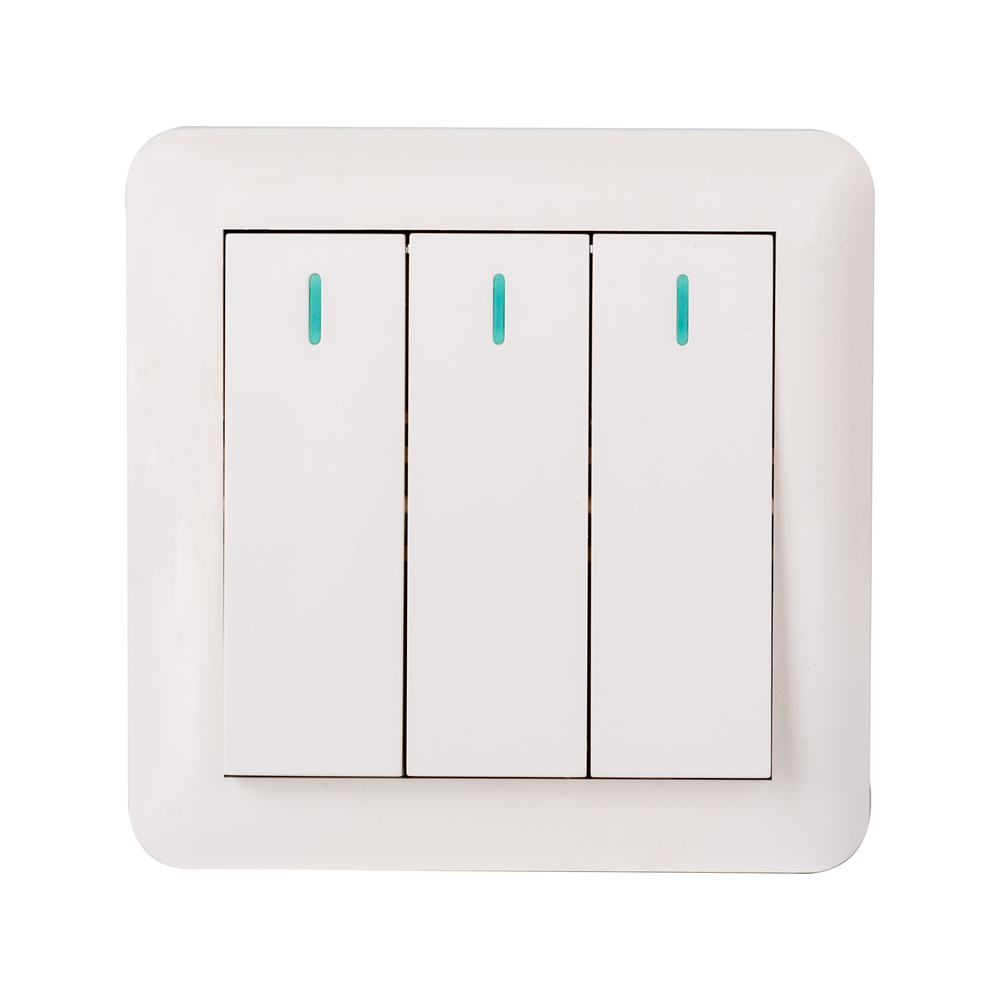
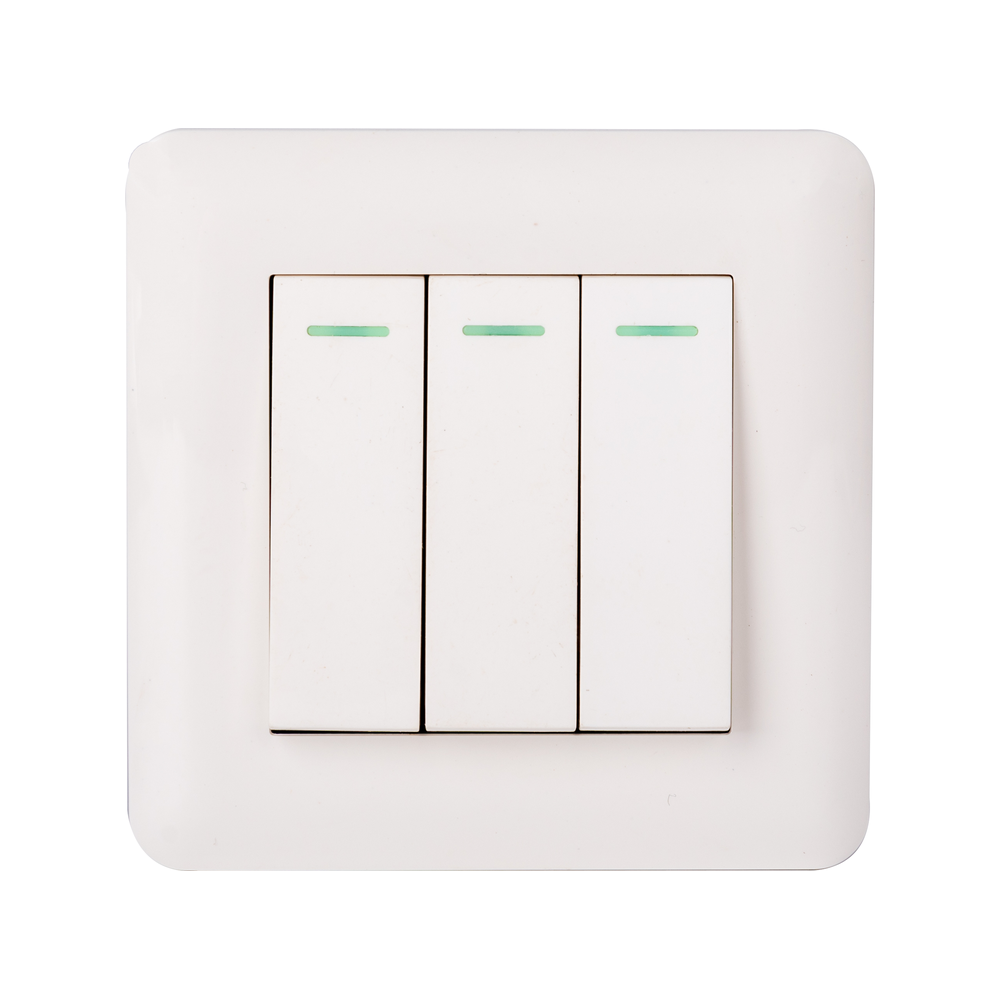
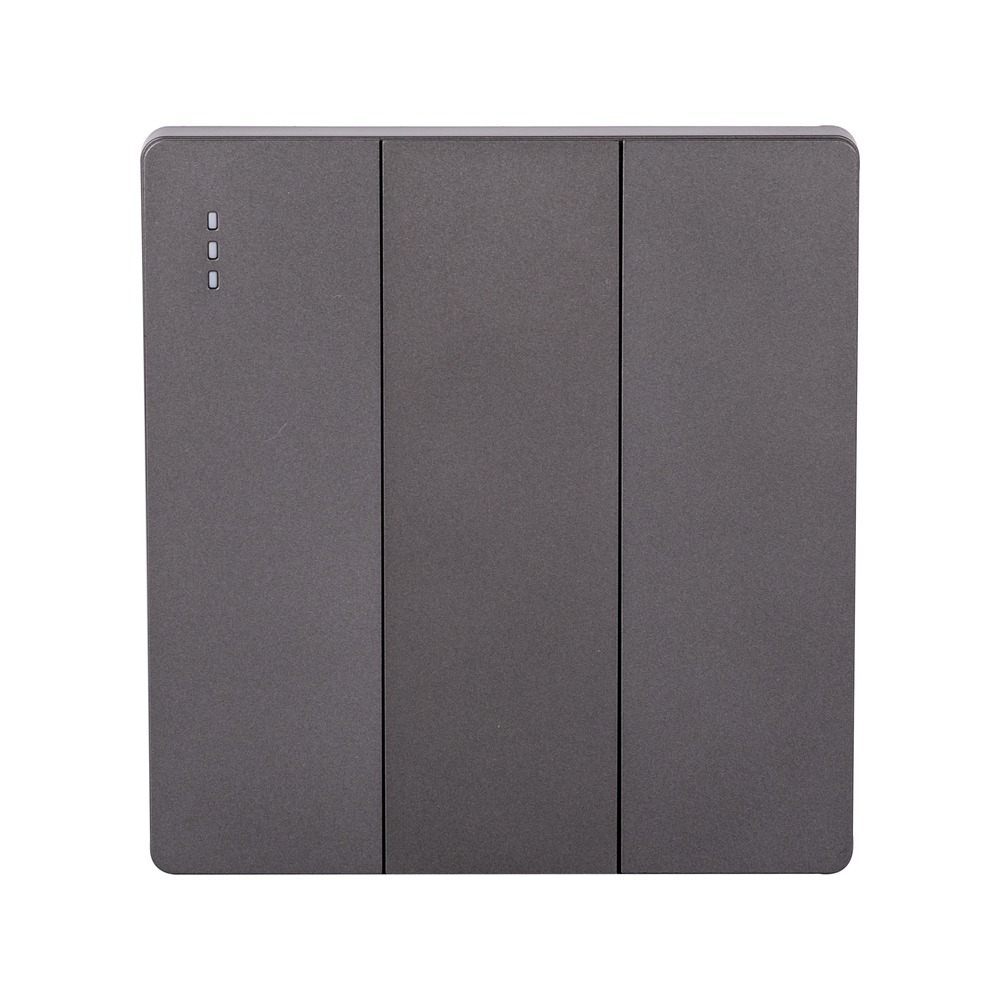
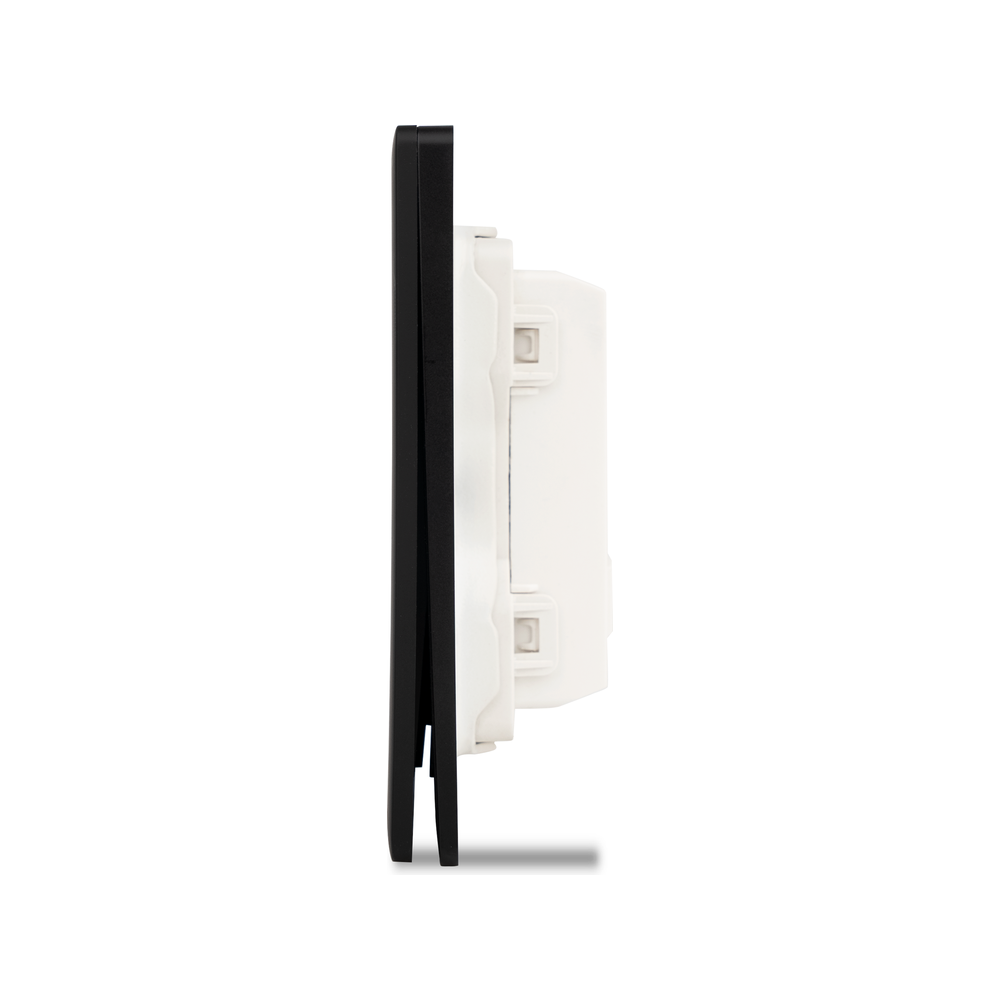
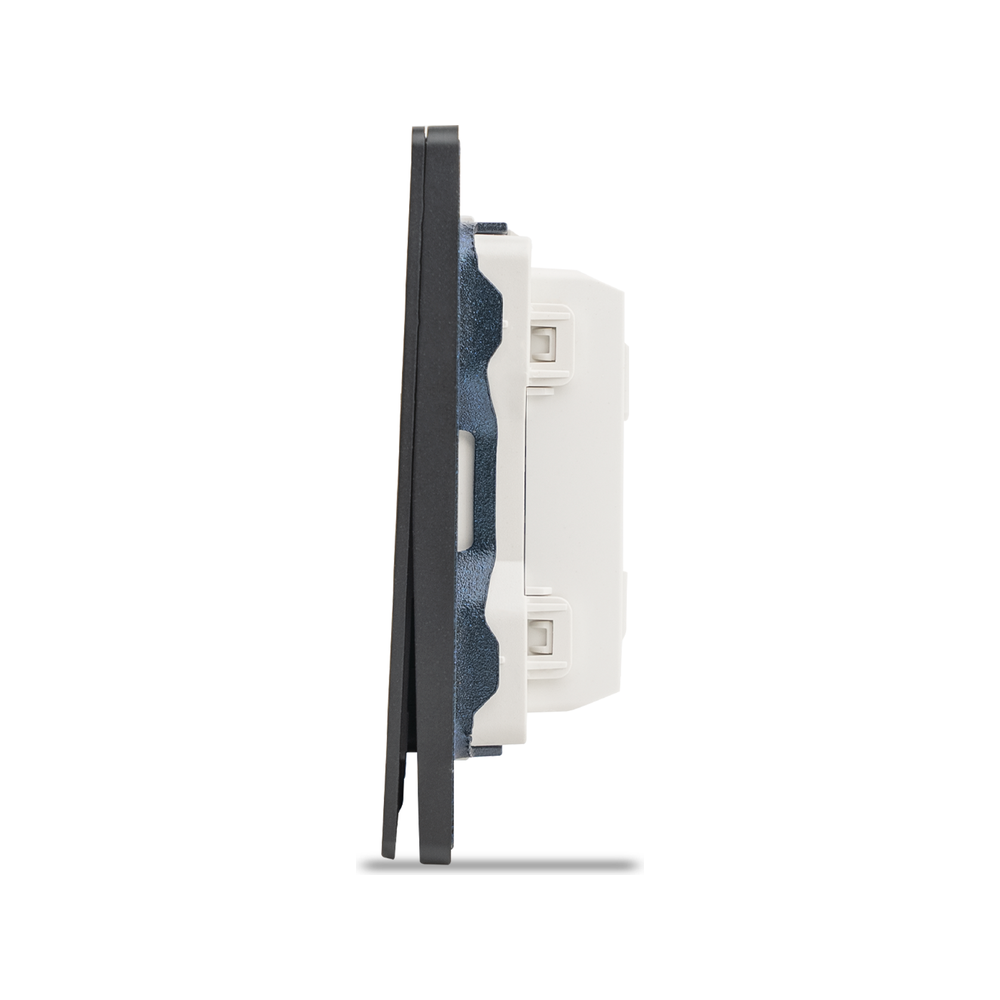
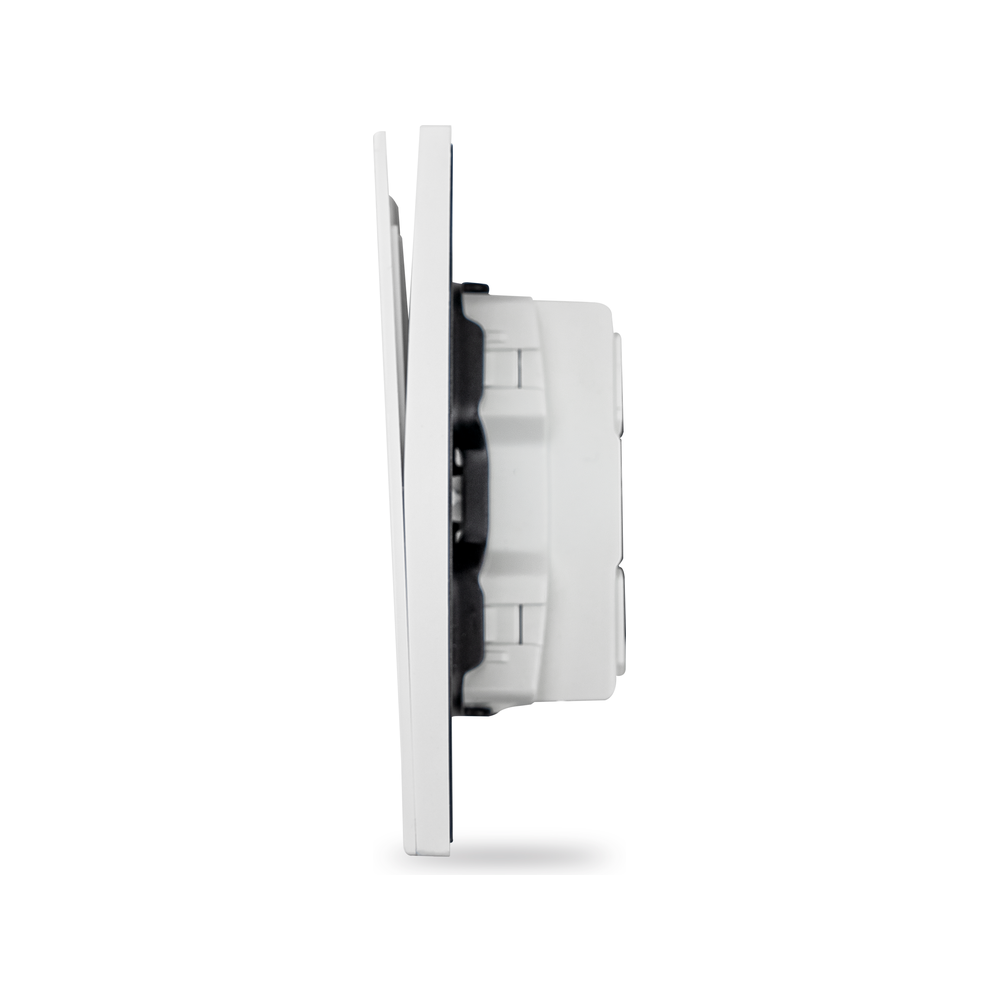
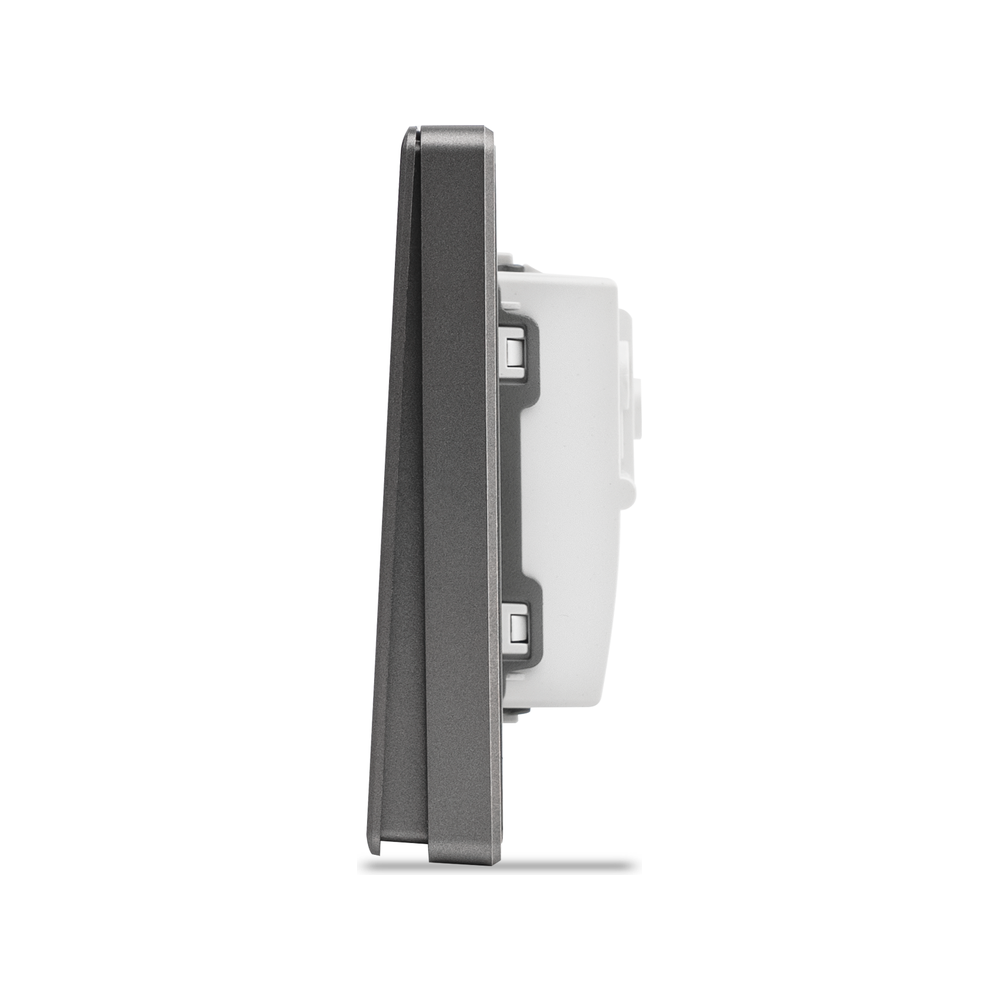
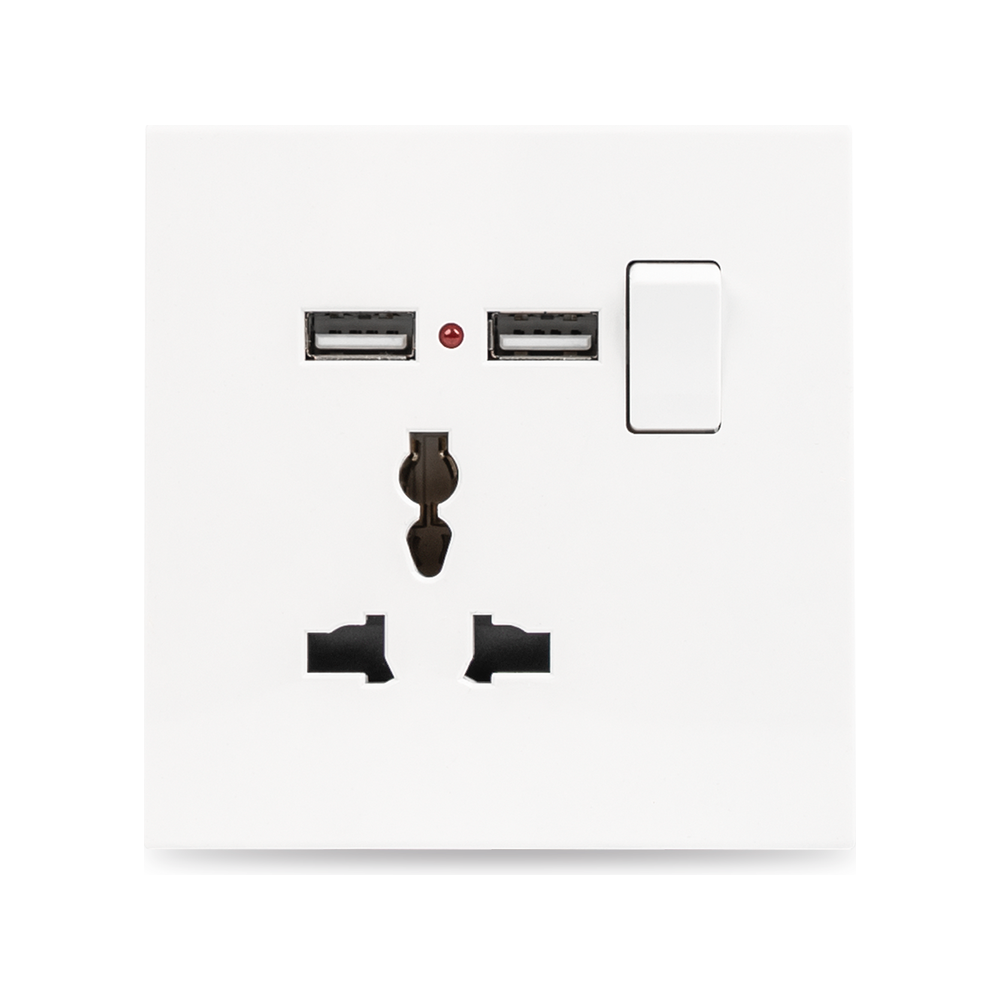
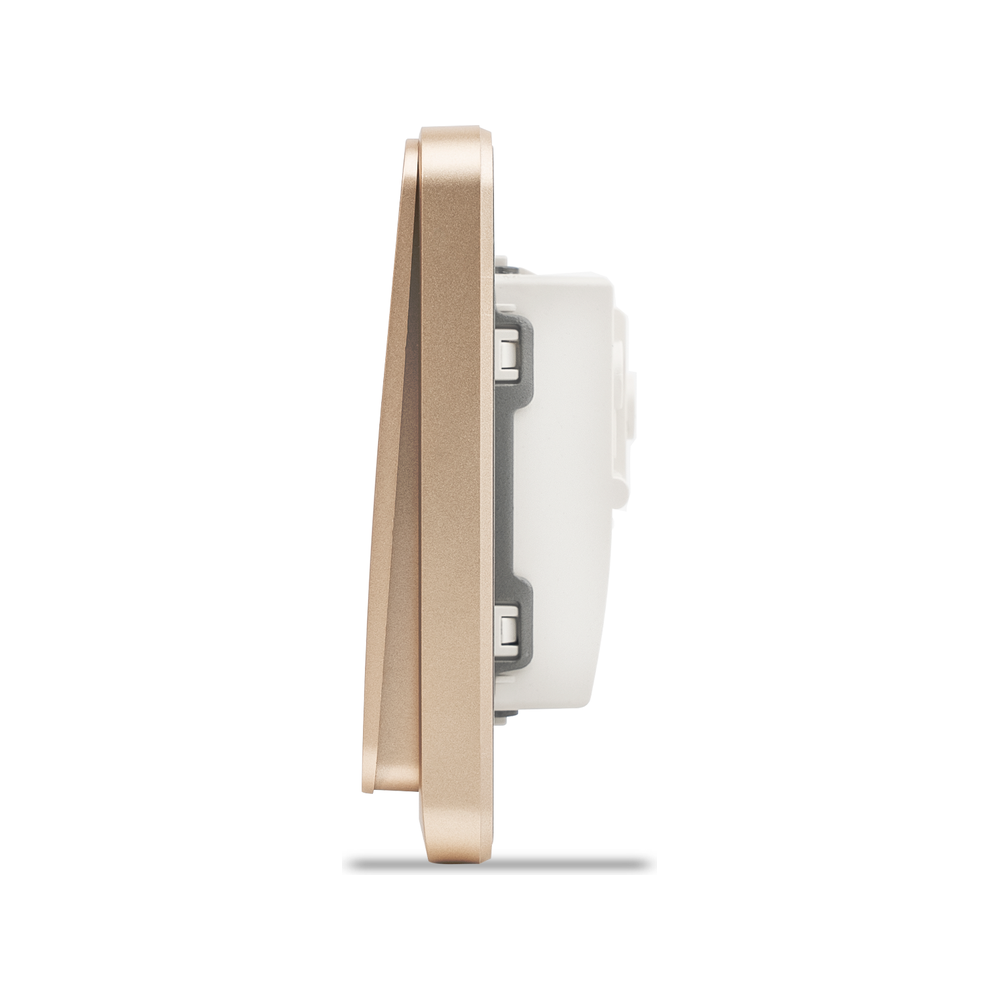
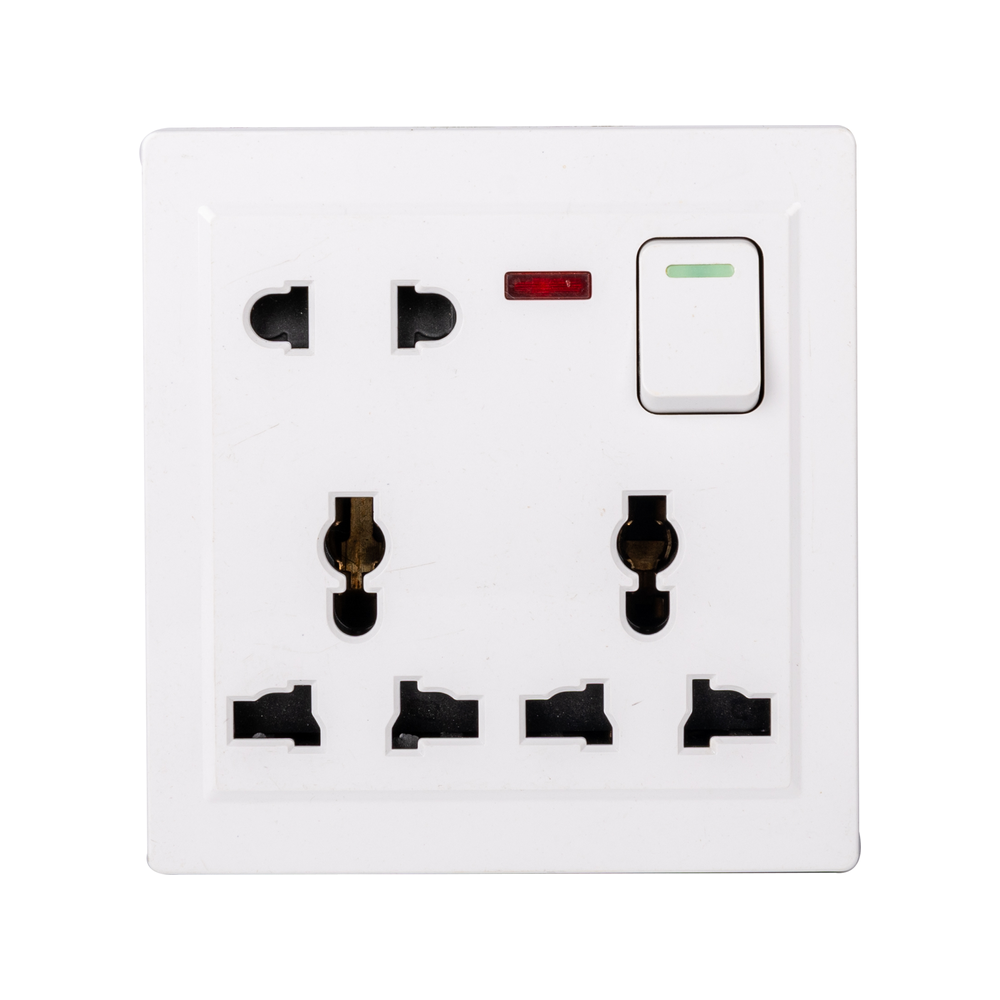
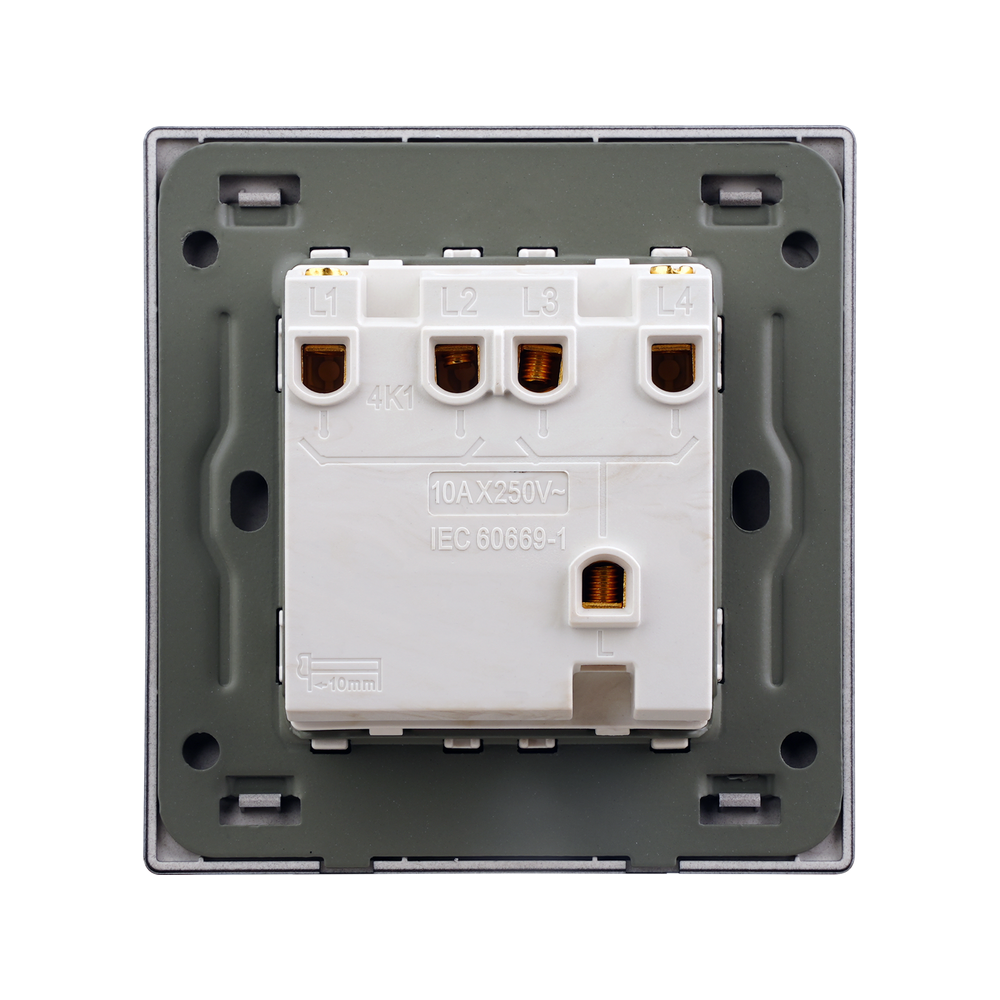
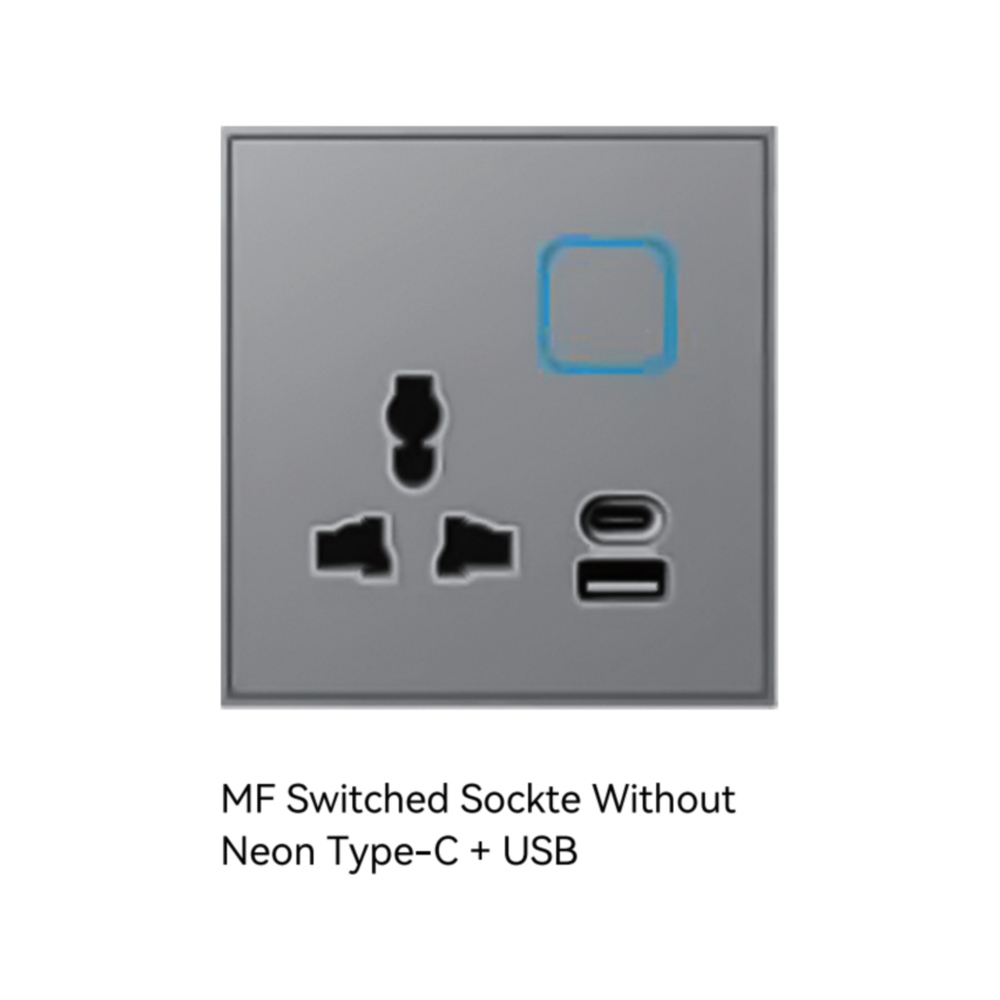
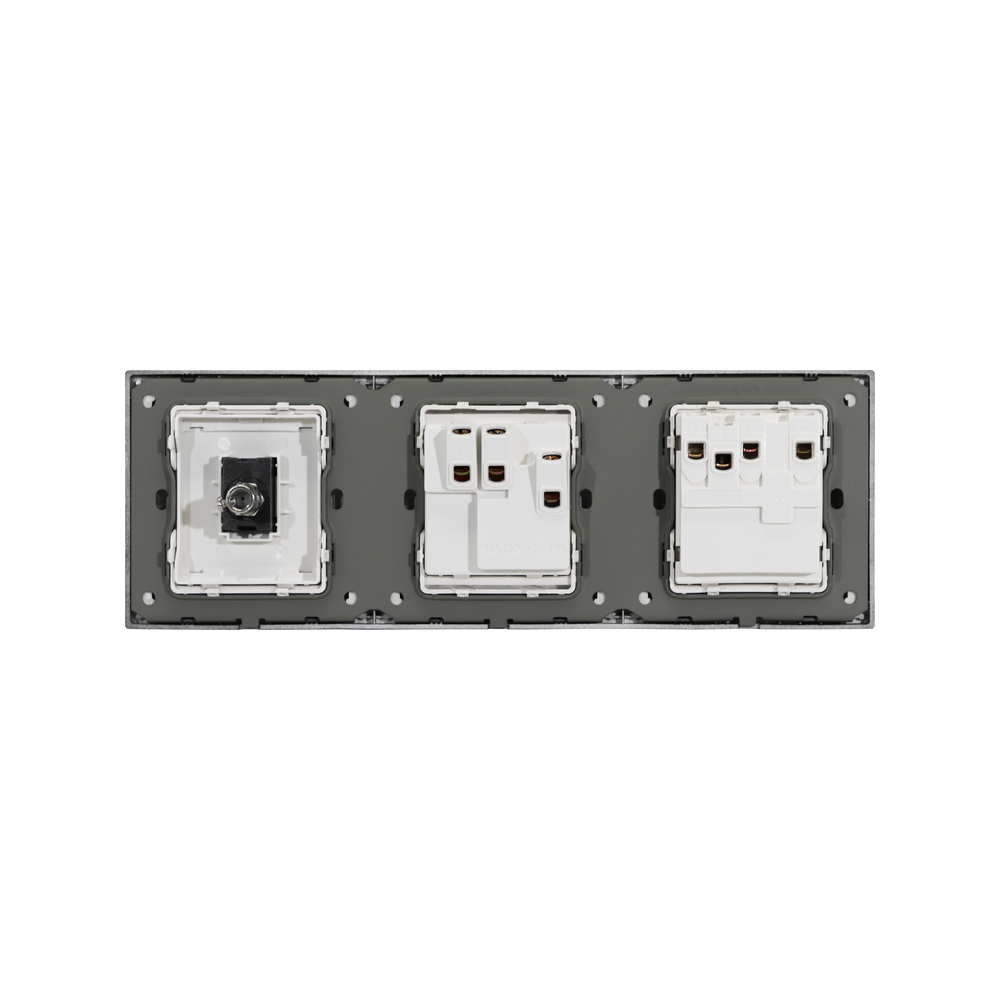
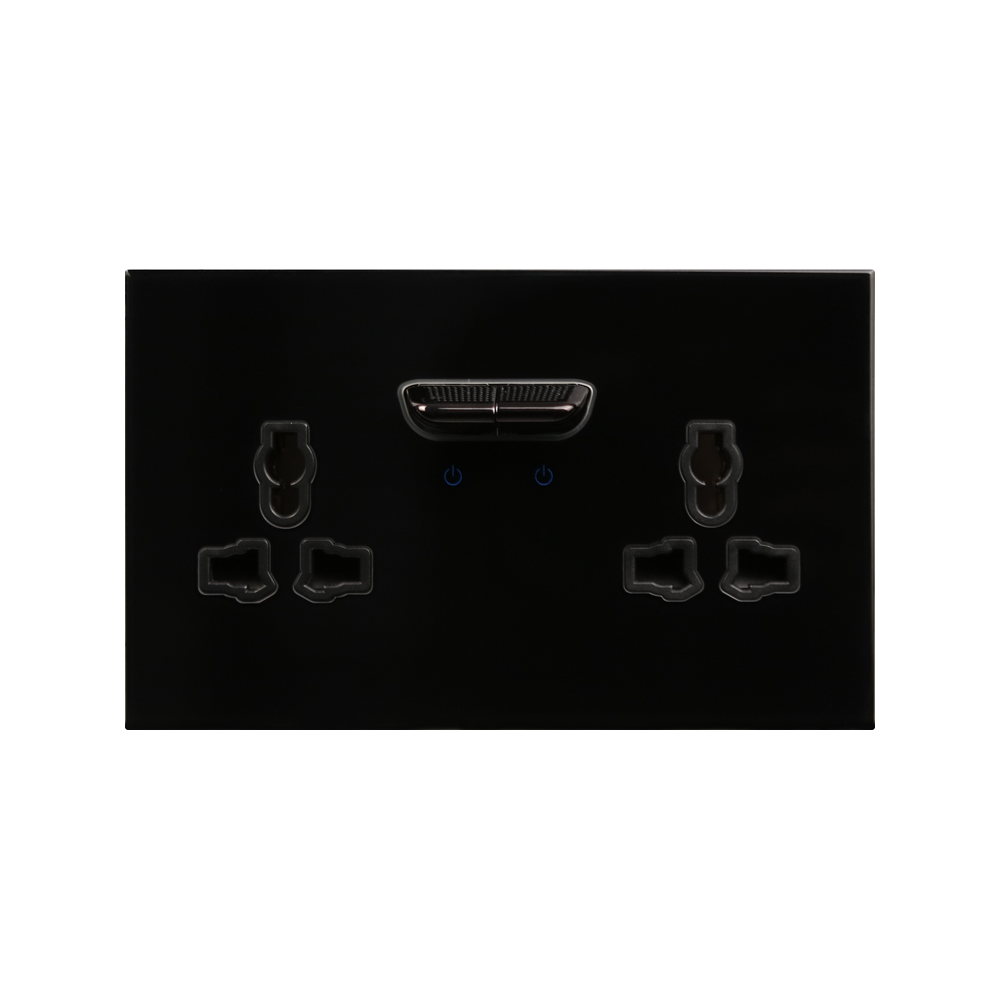
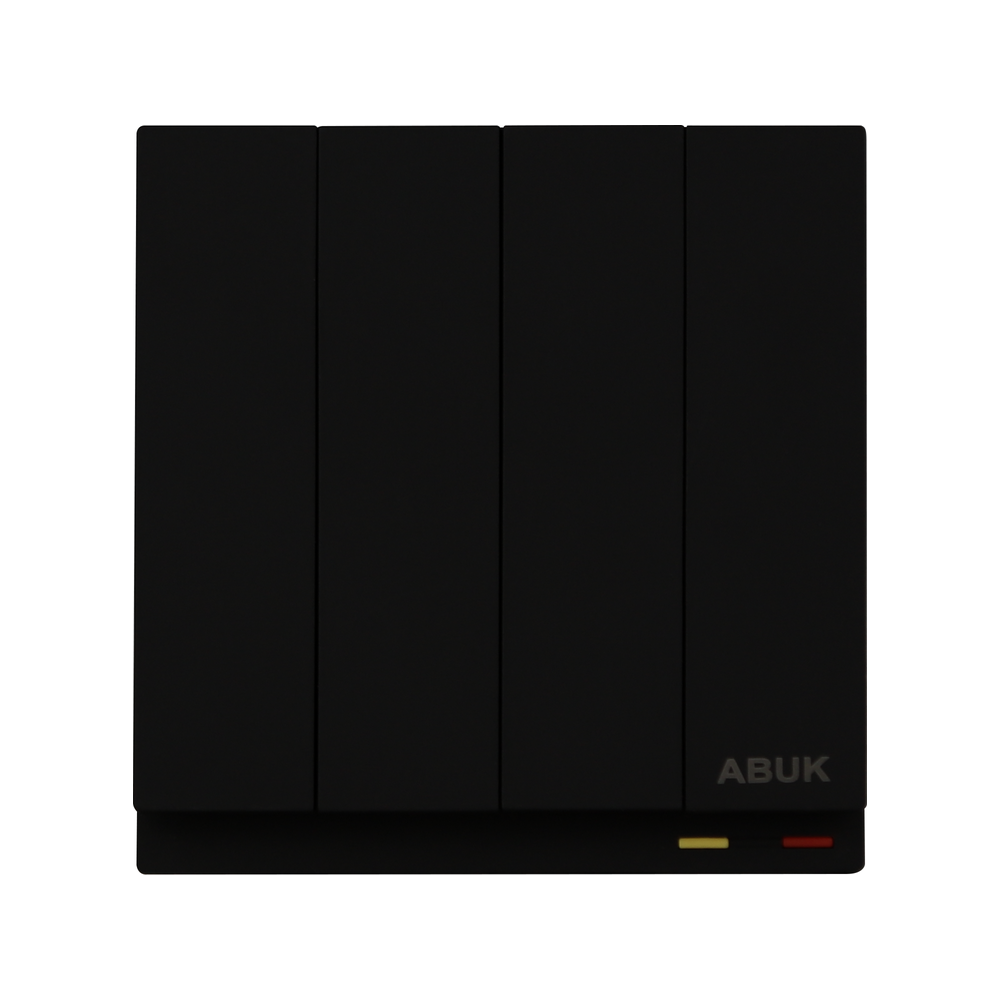
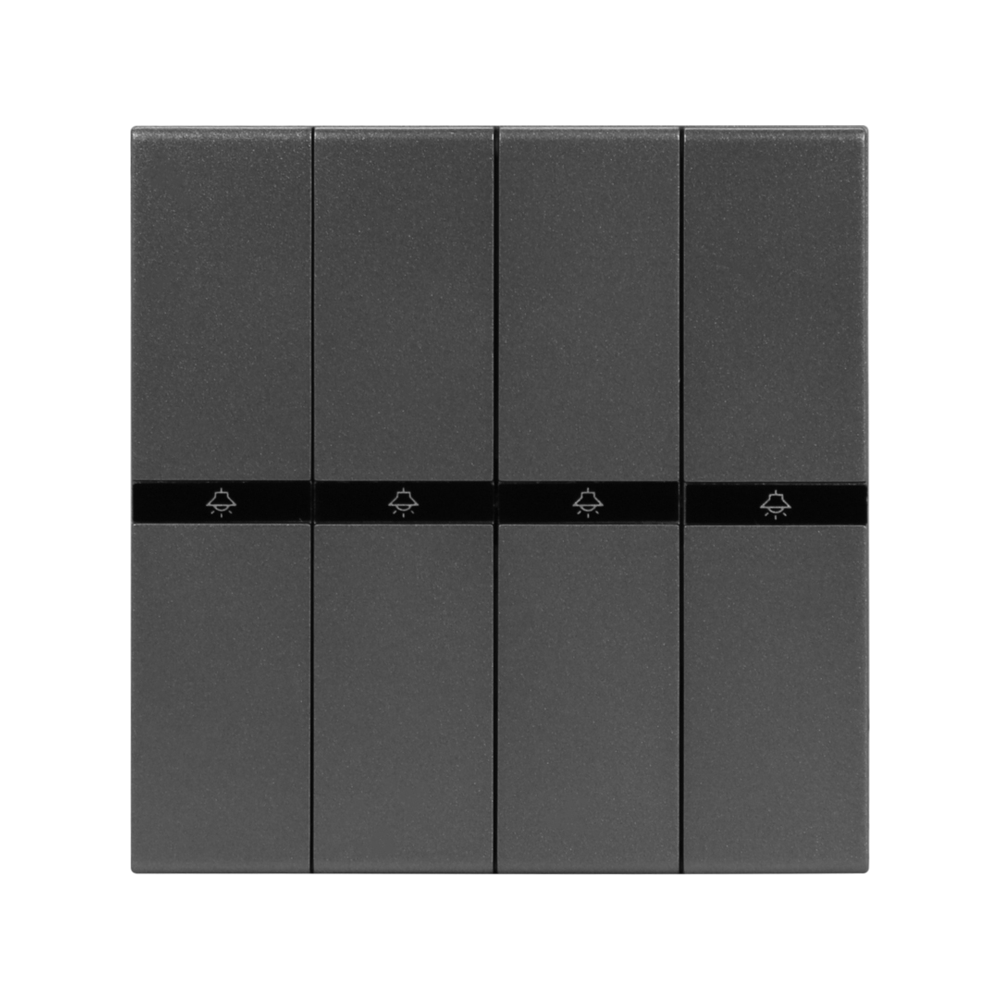
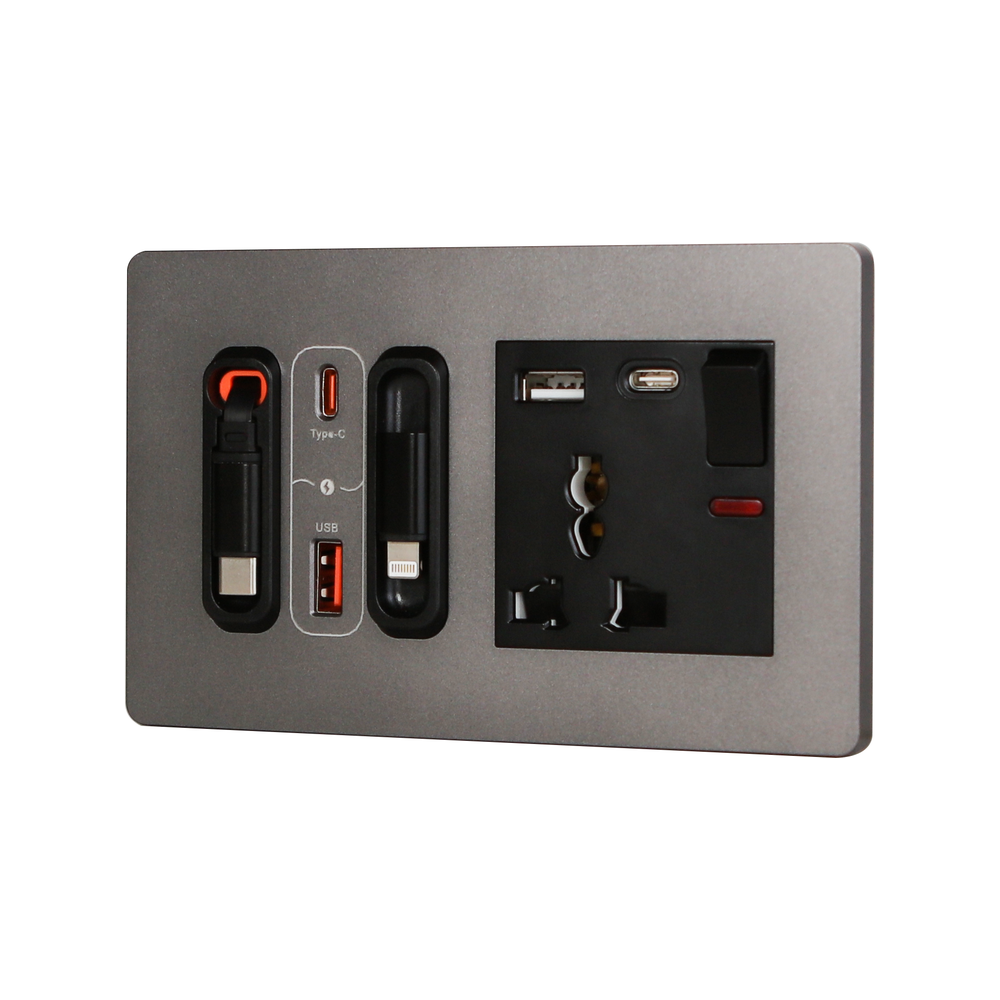
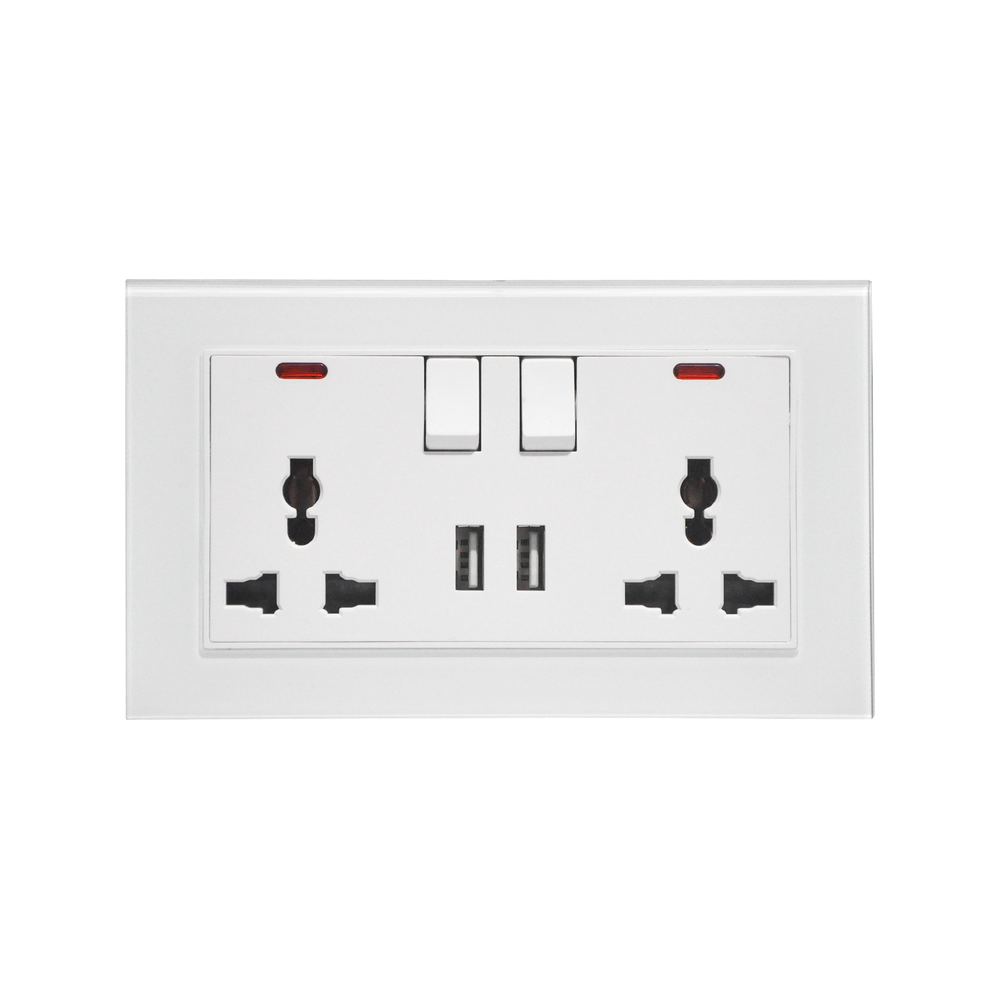
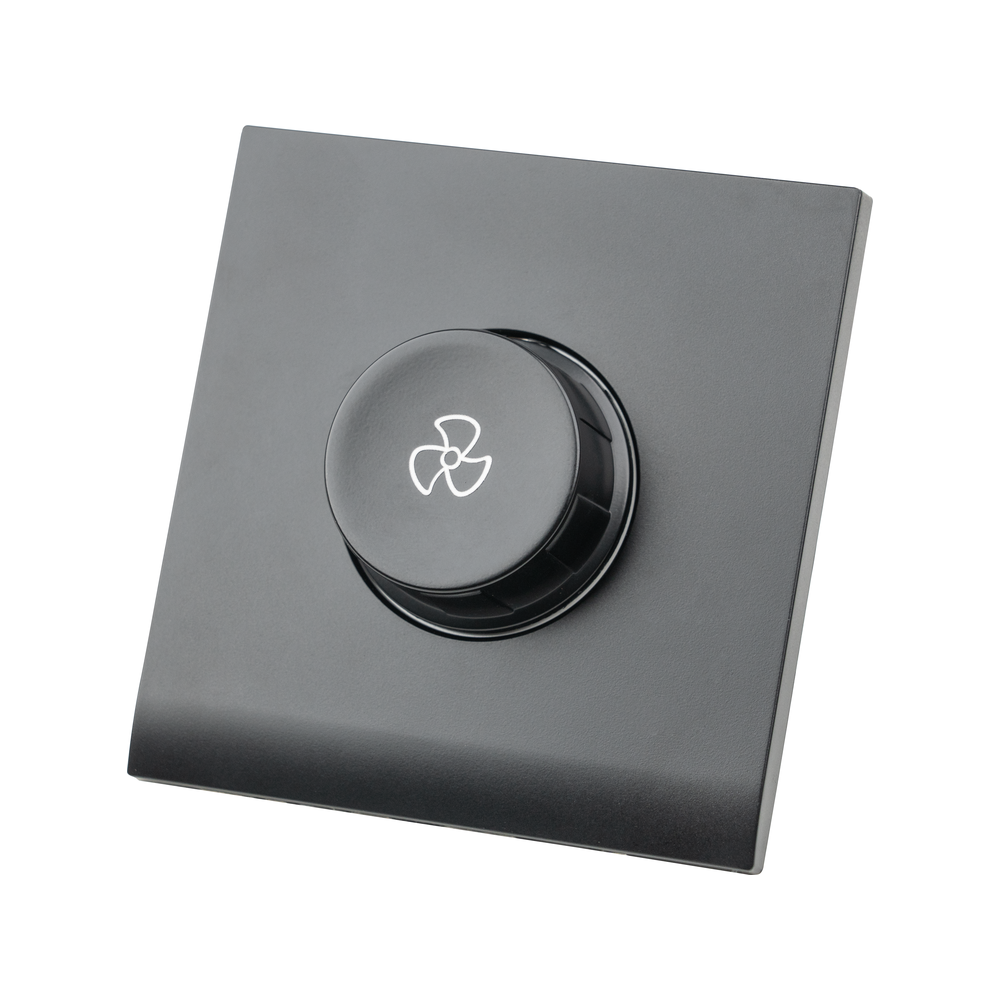
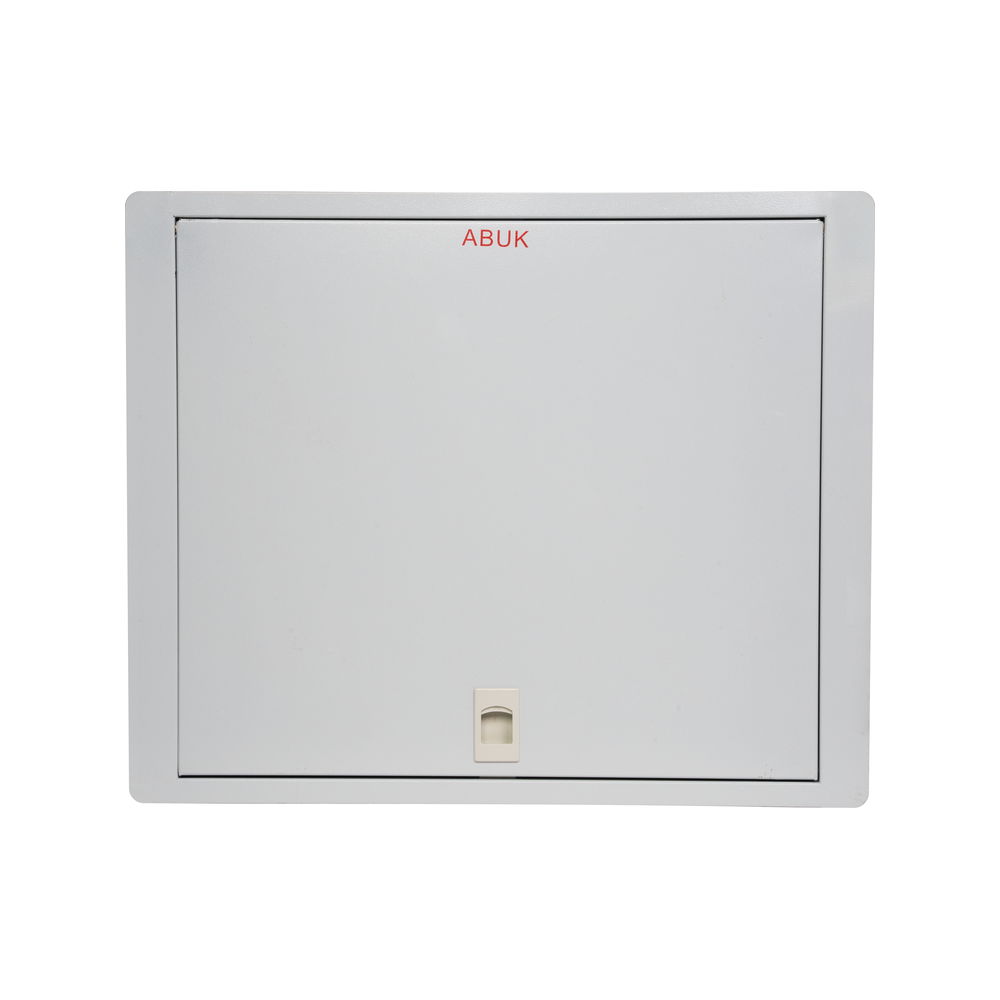
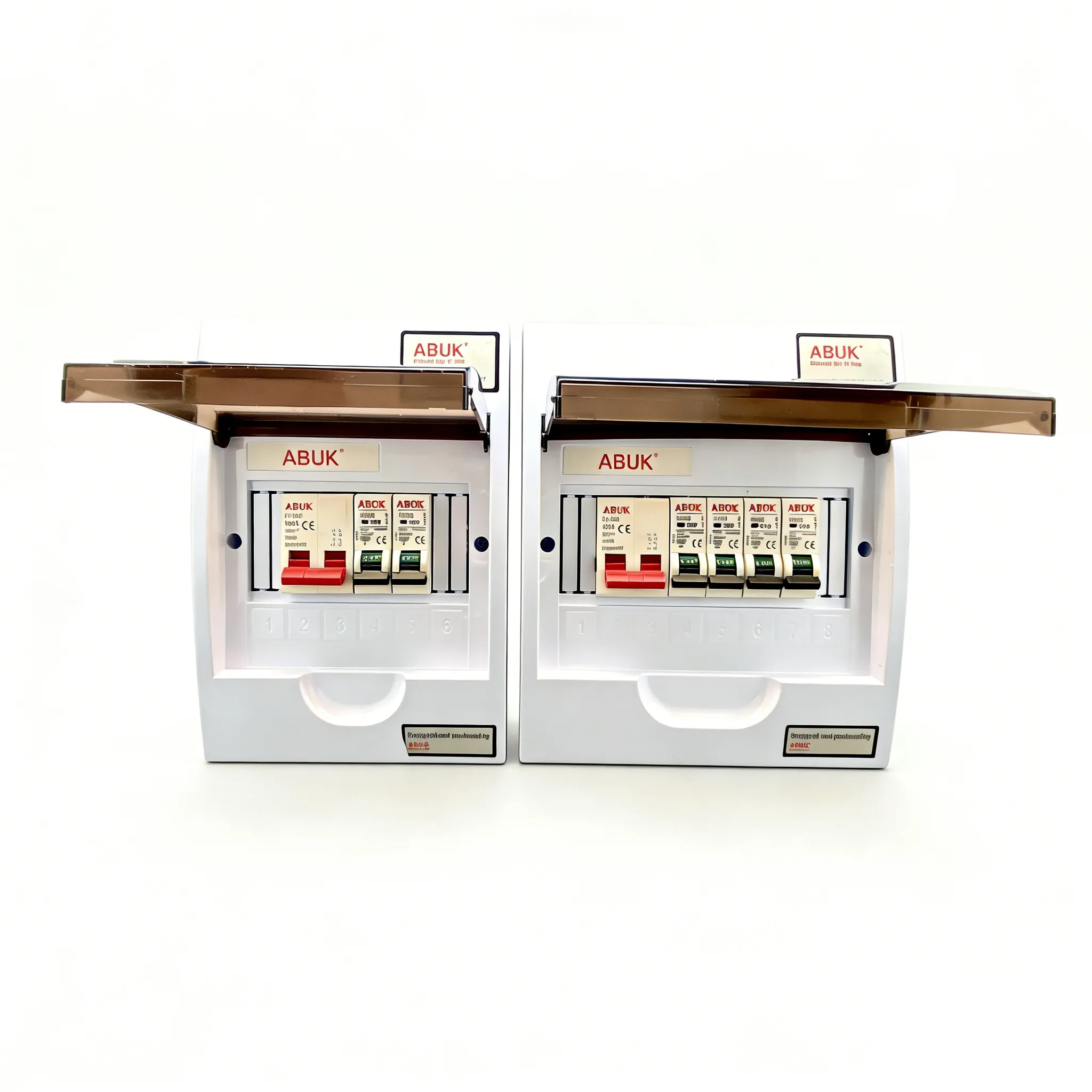
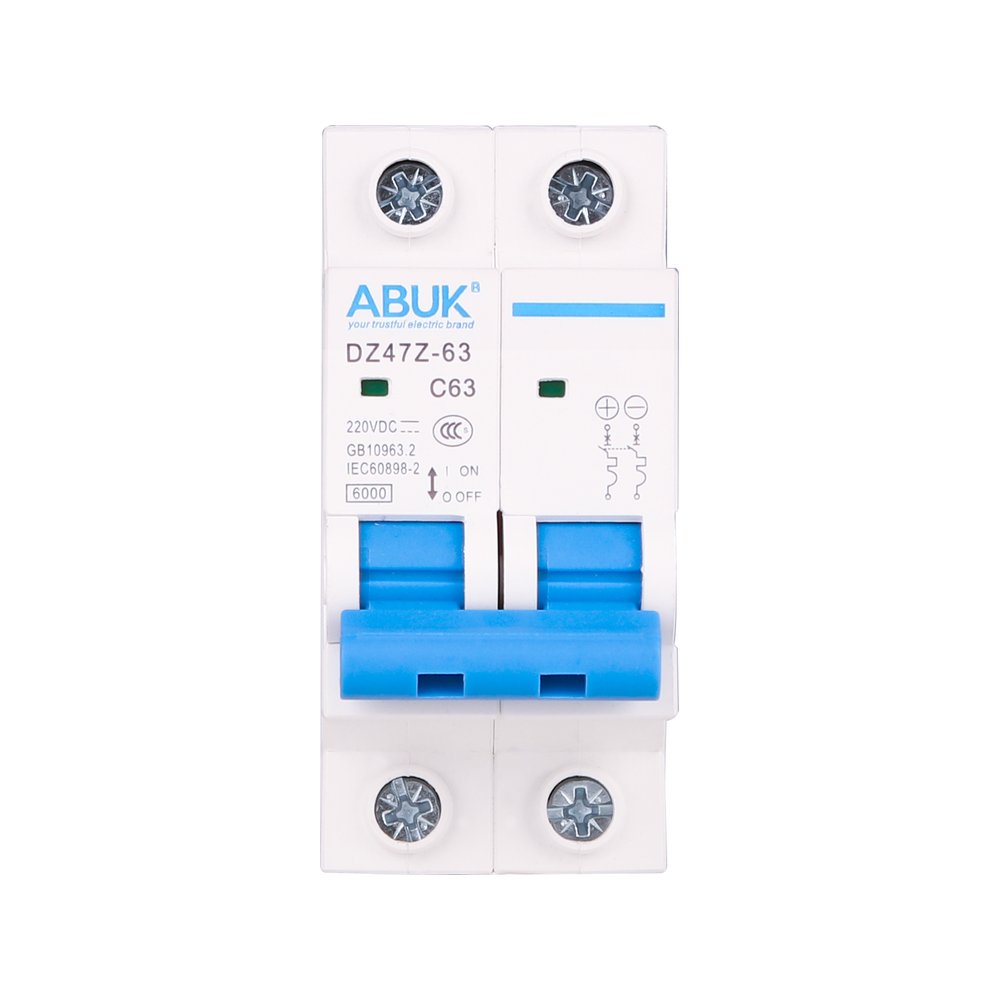
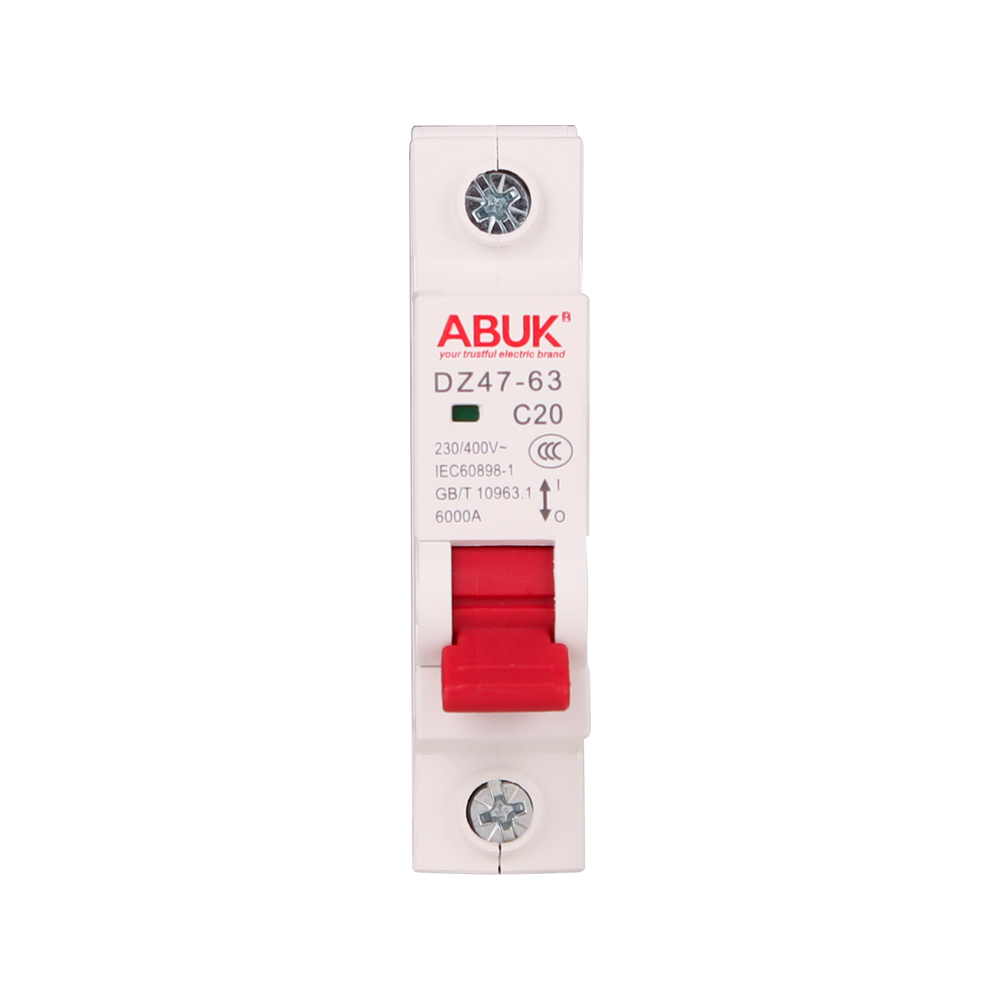
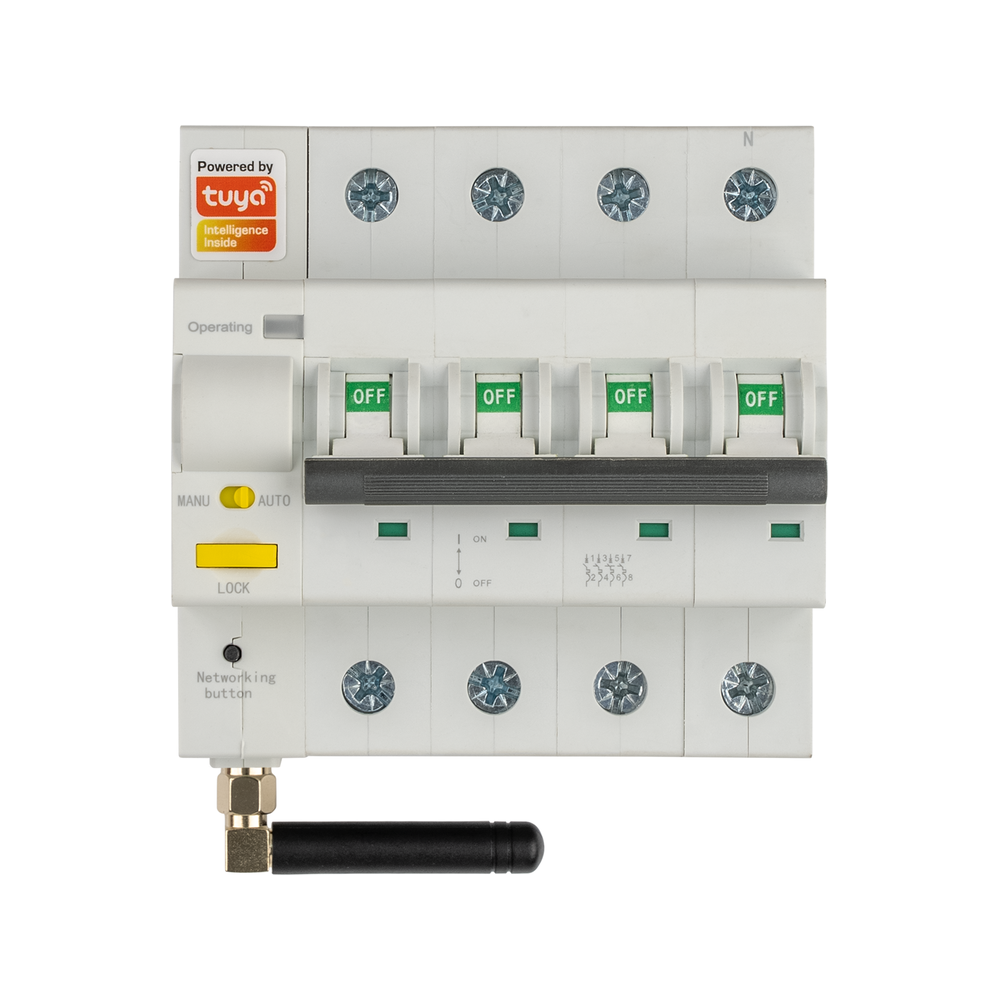
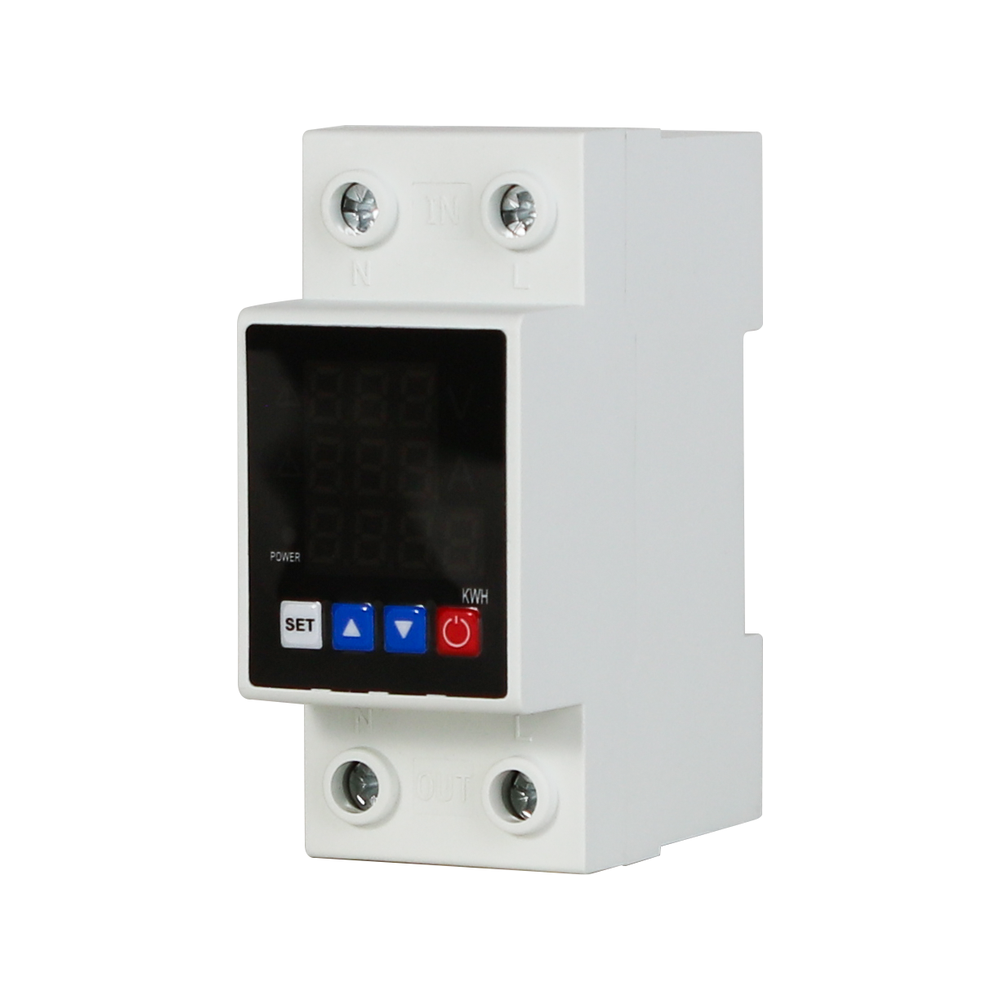
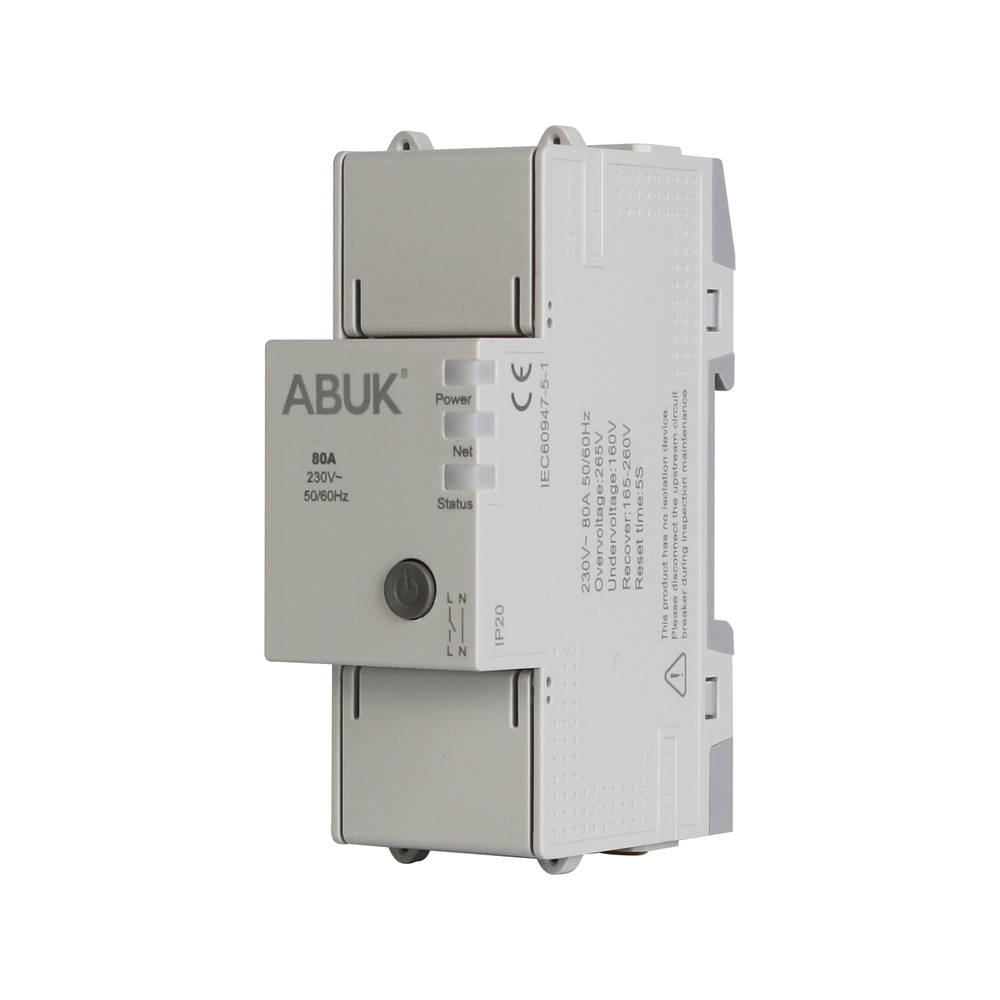
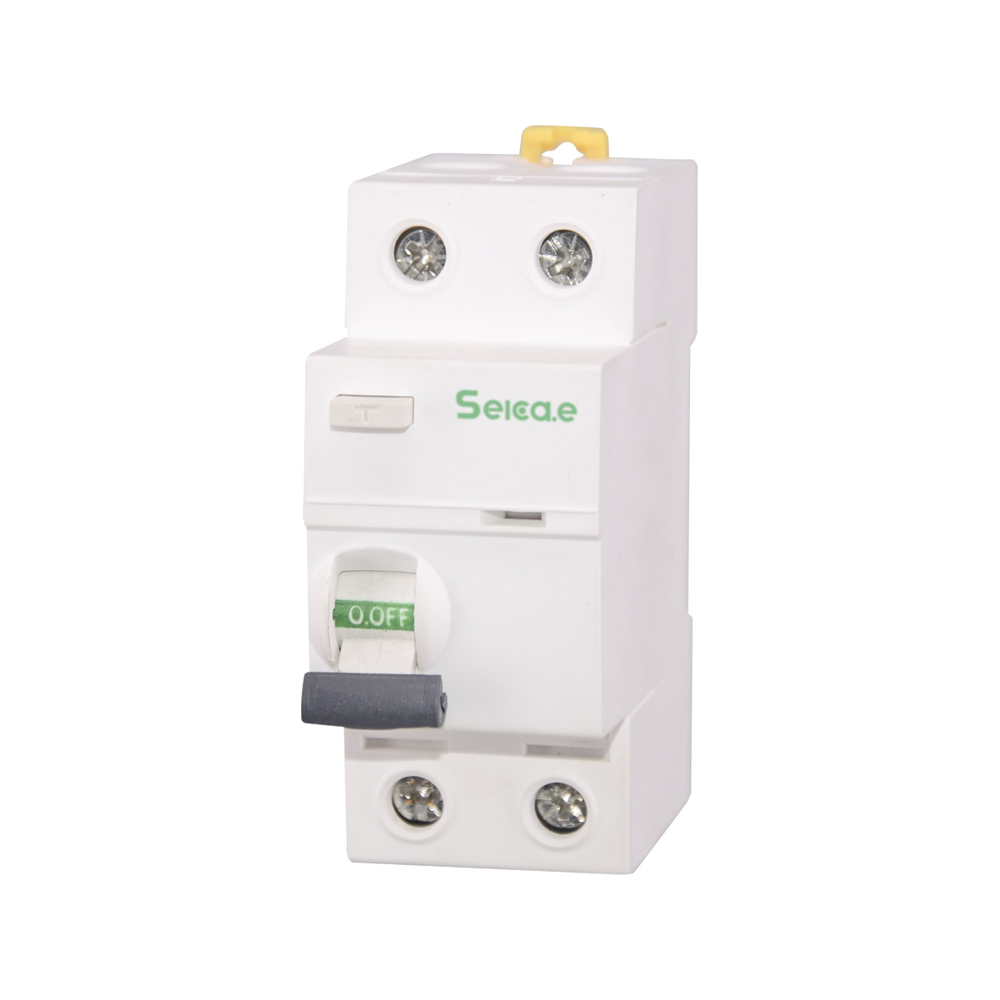
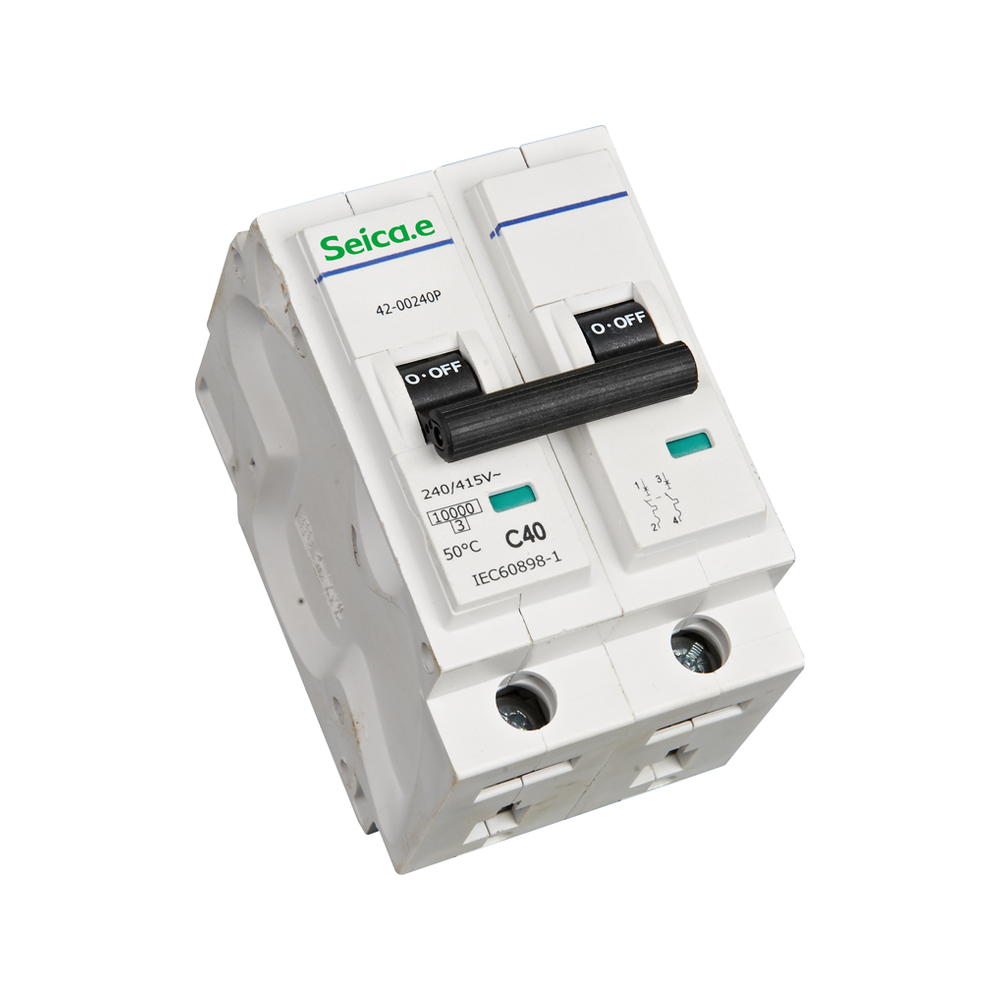
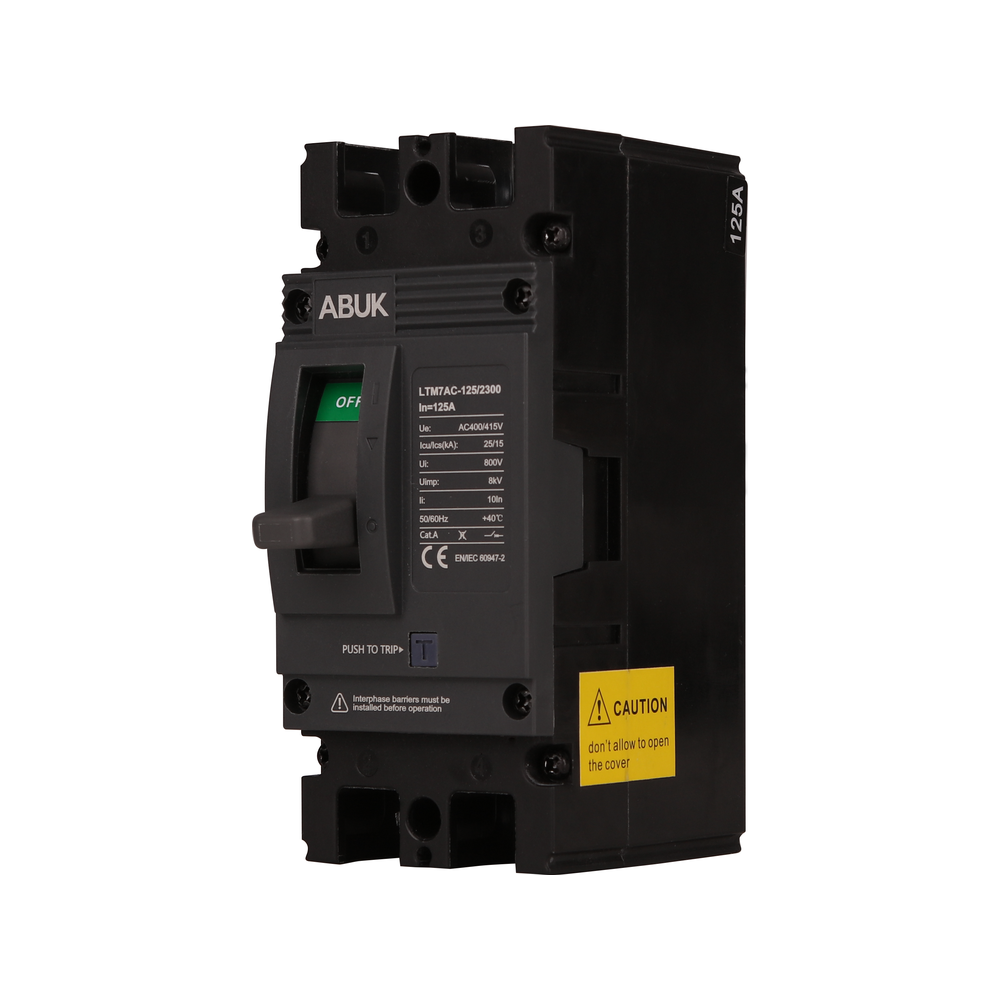
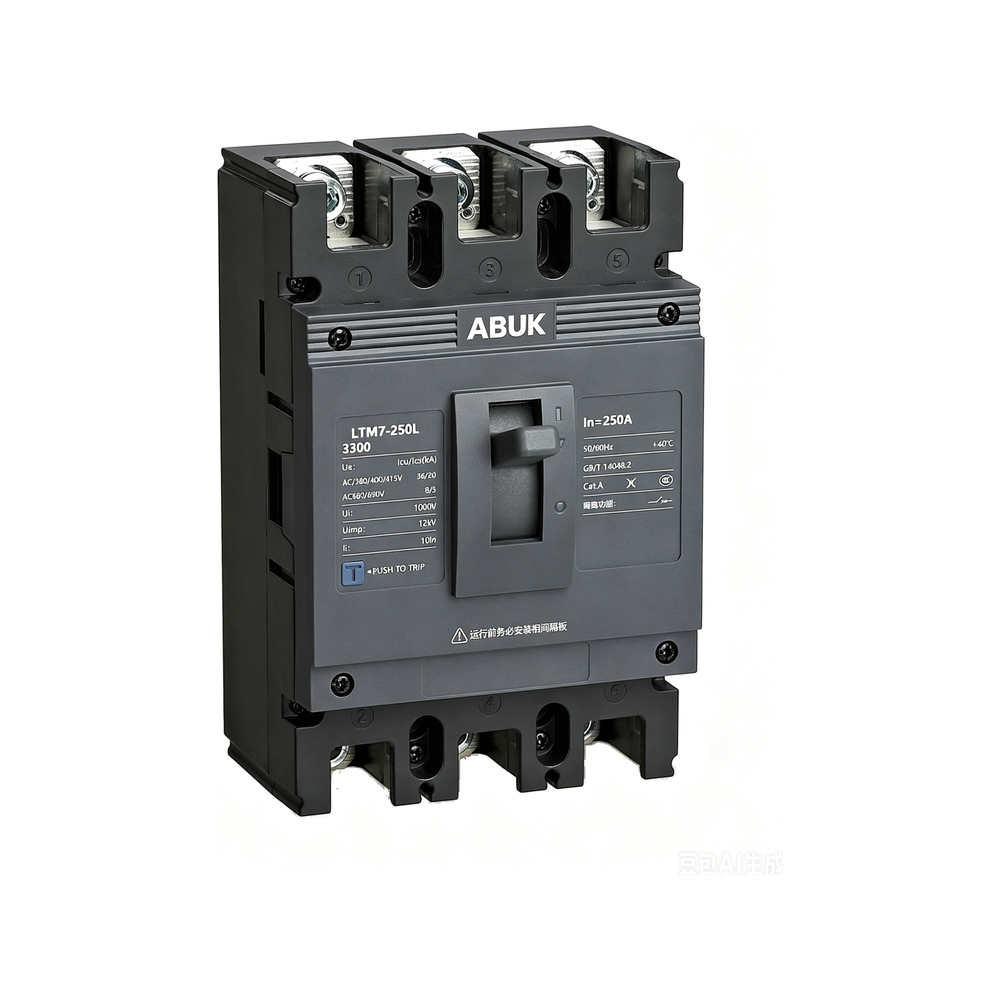
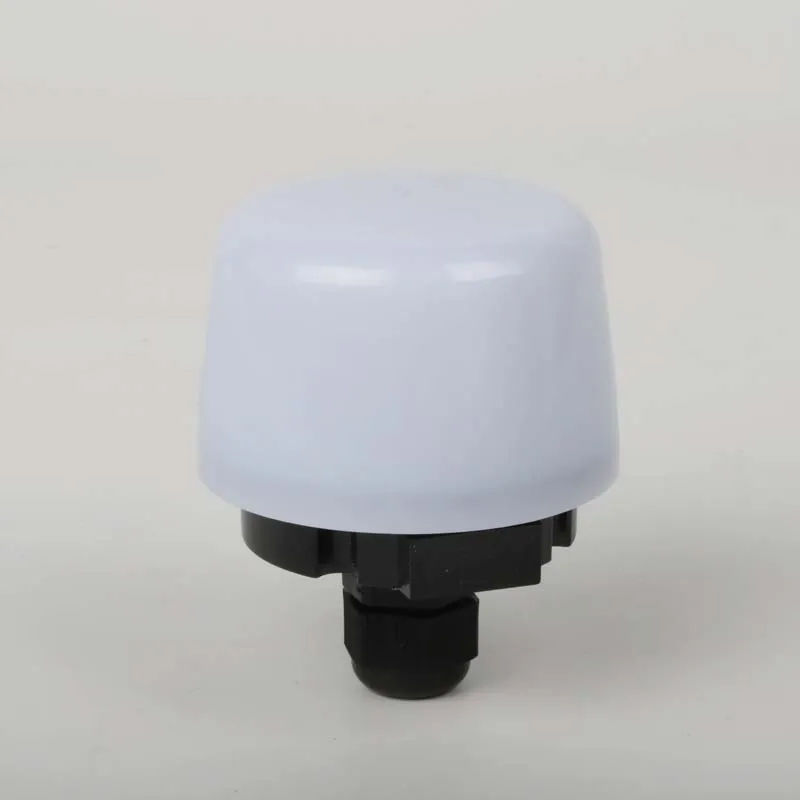
ABUK’s socket and electrical accessory range can be assessed against that brief. The sample images illustrate selection and site assessment; they do not establish that a pictured indoor-style accessory is a French outdoor product.
If moisture has already reached an outlet, the priority is safe isolation and assessment, as explained in the guide to water in a plug socket. Dry-looking surfaces do not prove the internal parts are safe.
Frequently asked questions
Can a French Type E socket be installed outdoors?
Yes, if the exact assembly is intended for the environment and installed correctly. Type E geometry alone does not establish outdoor suitability.
What IP rating should an outdoor socket have?
The required rating depends on exposure and installation conditions. IP44 and IP55 assemblies address different test conditions; the electrician and product instructions should determine the choice.
Does an outdoor socket in France need RCD protection?
Outdoor socket circuits generally require appropriate additional residual-current protection under the applicable installation rules. Have the electrician confirm the 30mA arrangement and device type for the specific circuit.
Is an IP44 socket weatherproof enough for outdoor use?
It may suit a defined splash-exposed application, but not every outdoor environment. Check rain exposure, cleaning and whether protection applies with a plug inserted.
Should an outdoor socket have a protective cover?
Use the cover and enclosure specified by its manufacturer. A cover alone does not prove an IP rating or protect an incorrectly installed cable entry.
Can a surface-mounted Type E socket be used outside?
Yes, where the complete surface-mounted product is intended for outdoor conditions. The mounting method alone does not determine its environmental performance.
References
- Legrand: outdoor socket selection
- Legrand: outdoor socket circuit considerations
- Legrand: enclosure protection and cleaning limits
- HSE: general RCD and electrical safety guidance
An outdoor socket is only as suitable as its complete installation and conditions of use. ABUK can provide model information for a documented project; share the outdoor environment and required specification before selecting an accessory.