
 Wenzhou Lita Electric Co., Ltd.
Italian Plugs and Power Sockets: Type L, Voltage and Adapters
When a project engineer in Milan encountered a temporary workstation rollout stalling before a client demonstration, he initially blamed a poor batch of travel adapters. The failure was immediate: laptop chargers ran at one desk, but a grounded test device and power strip would not connect at the next. A short outlet survey reversed the diagnosis. The accessories were not necessarily faulty; the selection process had ignored Italy’s two Type L sizes, mixed receptacle faces, earth continuity and the input labels on the equipment.
Summary: Italian plugs are principally Type L on a nominal 230 V, 50 Hz supply. A 10 A Type L plug has 4 mm pins on 19 mm centres, while the 16 A version has 5 mm pins on 26 mm centres; a bipasso outlet can accept both, but not every combined-looking outlet accepts a Schuko plug. Before travel, shipment or installation, confirm the socket face, the device’s voltage range and whether a continuous protective-earth path is required. An adapter changes physical fit only; it does not convert voltage or safely replace grounding.

For buyers, “Italy power socket” often compresses three different questions: which plug geometry is present, what supply is available, and whether the connected device needs an adapter or a voltage converter. Treating those as separate checks makes site preparation predictable. Treating Italy as a single, uniform version of “European power” is how otherwise suitable equipment becomes unusable at the wall.
What Italy uses in everyday sockets
Italy is 230 V, not 120 V
Italy uses nominal 230 V at 50 Hz, consistent with the IEC 60038 European low-voltage framework. That answers the practical version of “Is Italy 120 or 240 volts?”: it is a 230 V market, not a 120 V market. Many phone chargers, laptop supplies and USB power units state 100–240 V~, 50/60 Hz and normally need only the right plug interface. A product marked only 120 V, or another narrow input range, must be assessed before use; shape compatibility does not protect its electronics, motor or heating element from overvoltage.
Type L has two current formats, not one interchangeable shape
Both Type L formats use three inline round pins, with the centre pin serving as protective earth. The 10 A pattern uses 4 mm pins at 19 mm spacing; the 16 A pattern uses 5 mm pins at 26 mm spacing. These dimensions affect socket acceptance in both directions: a 10 A-only outlet cannot take the larger 16 A plug, and a 16 A-only Italian outlet does not automatically take the narrower 10 A plug. Buyers should specify the plug and receptacle by geometry and current rating, rather than describing both simply as “Italian.”
What does bipasso mean in an Italian outlet?
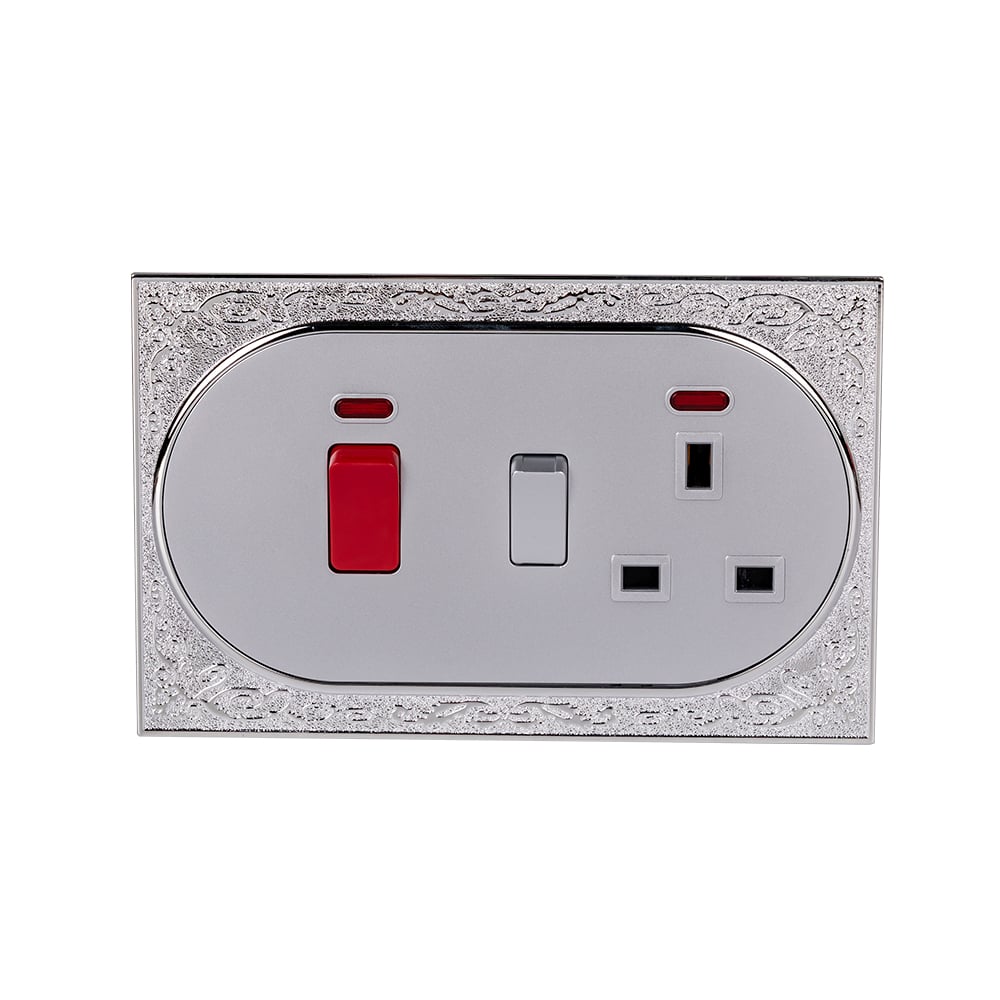
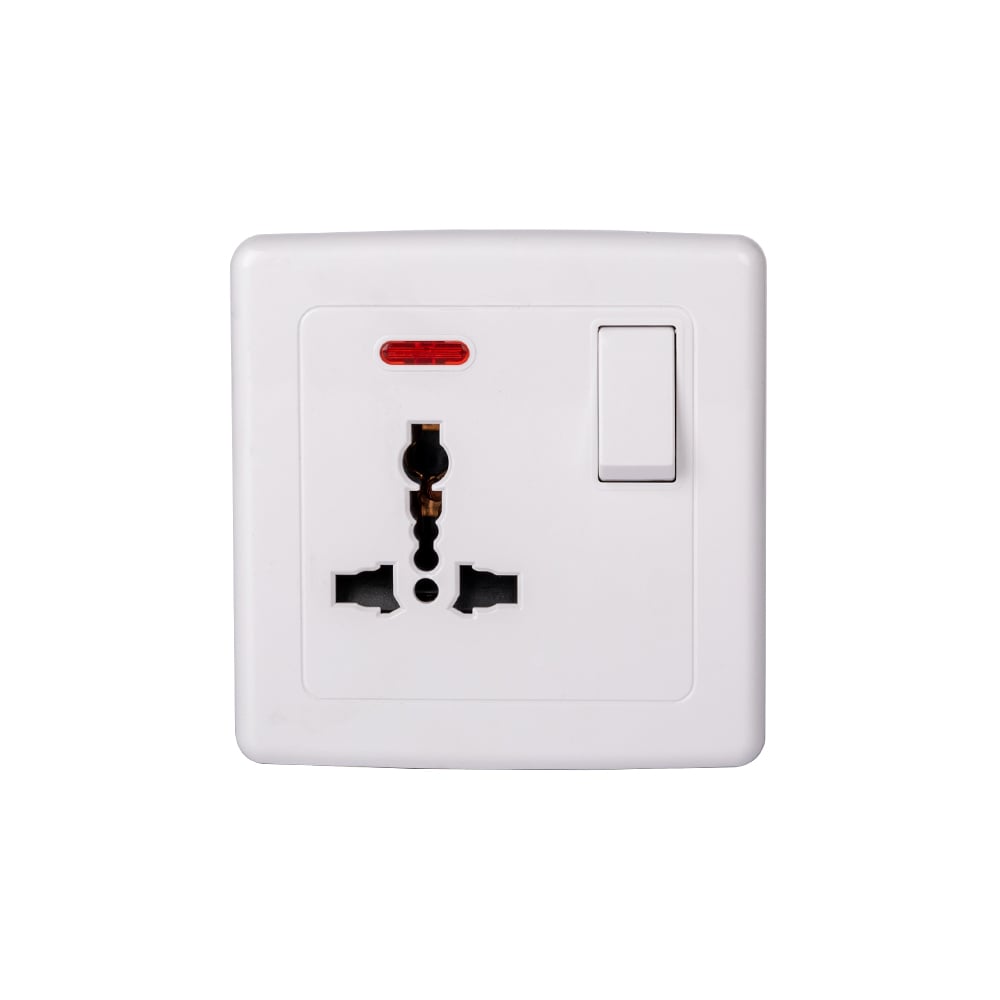
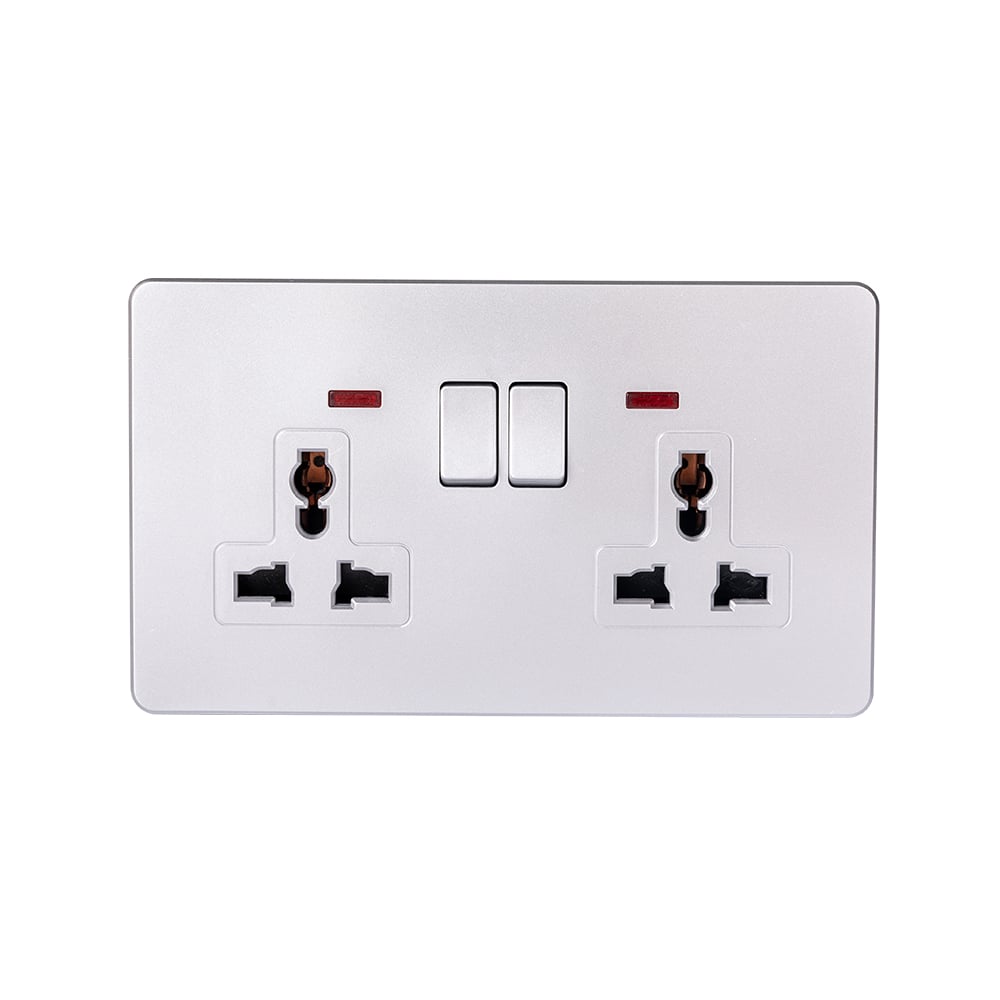
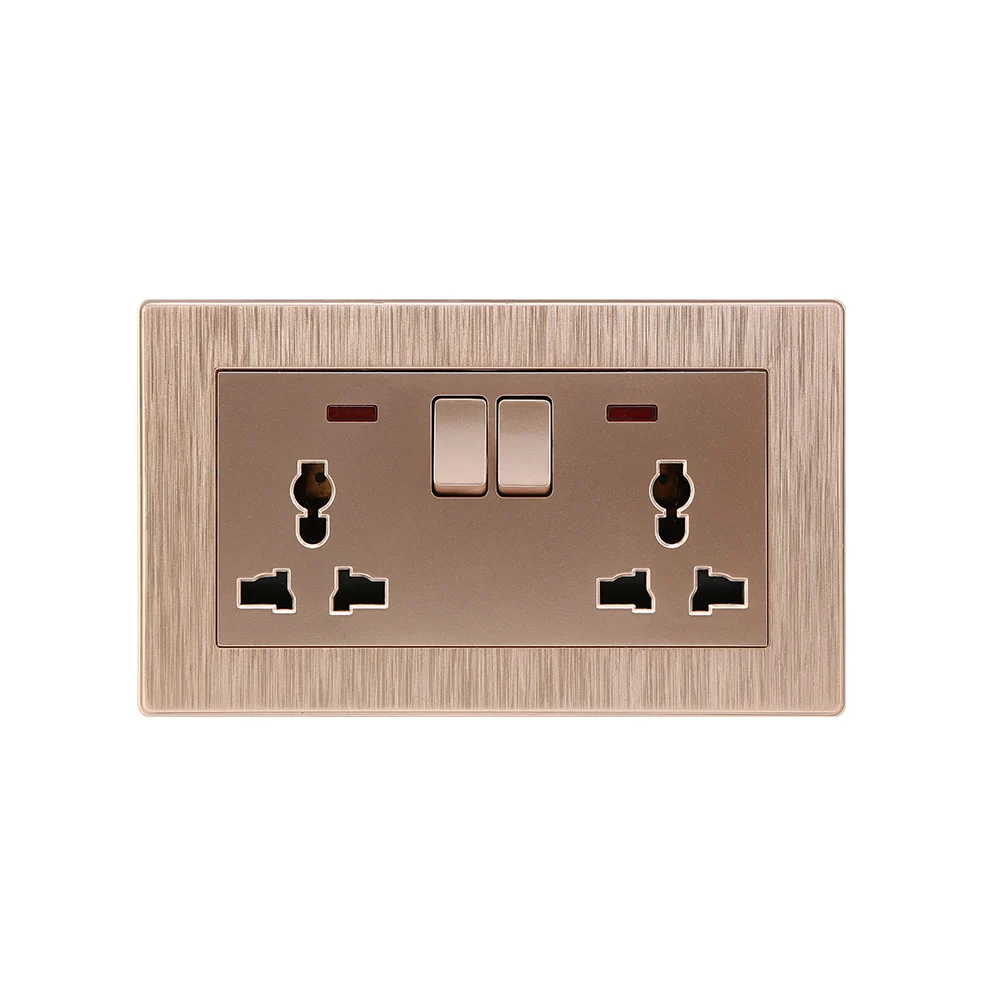
A bipasso (10/16 A) receptacle is made to accept both Italian Type L patterns, typically using a shared earth opening with live-and-neutral openings positioned for the two spacings. It is common in newer work and renovated spaces, but “bipasso” does not by itself mean universal. A bipasso face may accept Type C Europlugs because their two 4 mm pins follow the 19 mm pattern, yet it may lack the Schuko earth contacts and clearances needed for a Type F plug. Ask for a close photo or the receptacle model when a site says it has “combined” outlets.
| Outlet or plug format | Key geometry | What it normally accepts | Procurement implication |
|---|---|---|---|
| Type L 10 A | 4 mm pins, 19 mm centres | 10 A Type L; commonly Type C | Do not plan it for a 16 A Type L or Type F plug |
| Type L 16 A | 5 mm pins, 26 mm centres | 16 A Type L | Check carefully before supplying small Italian or Type C plugs |
| Bipasso 10/16 A | Openings for both Type L spacings | Both Italian Type L formats; often Type C | It is not automatically a grounded Schuko outlet |
| Schuko/Italian combined outlet | Italian openings plus Schuko contact system | Type F and specified Italian/Europlug formats | Confirm the rated configuration, not just the word “universal” |
Where Type C and Type F compatibility works, and where it does not
Type C often fits, but the receptacle still decides
Type C Europlugs have two 4 mm pins at 19 mm centres, so they commonly fit Type L 10 A and bipasso outlets. They are a practical choice for double-insulated, low-power electronics, but a Type C plug provides no protective earth. They also do not fit every Italian installation: a 16 A-only Type L receptacle follows the wider 26 mm pattern. The phrase Italy plug type is therefore useful only when it is followed by the actual receptacle configuration and the equipment class.
Type F needs both physical acceptance and an earth path
Type F Schuko plugs use 4.8 mm pins and side earthing contacts. They are not direct fits for a standard Type L 10 A or 16 A outlet. They can be used where a properly configured Schuko/Italian combined receptacle is installed, or through a correctly rated adapter designed to maintain the protective-earth connection. A two-pin conversion that leaves a Class I appliance without earth is not an equivalent solution. For teams comparing destinations, this guide to Spain outlet types and plug sockets illustrates why matching voltage does not by itself establish plug compatibility.
Adapter, converter and earth-path decision sequence
- Read the equipment nameplate. If it states 100–240 V~, 50/60 Hz, it is normally compatible with Italy’s supply; if it states 120 V only or another limited range, pause before selecting any travel accessory.
- Identify the plug and receptacle faces. Confirm whether the destination provides 10 A Type L, 16 A Type L, bipasso, or a Schuko/Italian combined outlet.
- Decide whether the product is Class II/double insulated or Class I and dependent on protective earth. For Class I equipment, require an adapter and outlet that preserve the earth path.
- Match current and load. A plug adapter must be rated for the intended load and is not a substitute for a suitably rated fixed outlet, extension system or distribution plan.
- Use a converter only when the device’s permitted input range requires voltage transformation and the converter is suitable for that load. For high-wattage heating appliances and uncertain motor loads, procurement review or a locally rated appliance is usually the more reliable choice.
| Equipment situation | Likely solution | Earth-path requirement | Check before use |
|---|---|---|---|
| 100–240 V phone or laptop charger with Type C plug | Often direct use in a compatible 10 A or bipasso outlet | None when the product is double insulated | Label, pin fit and outlet condition |
| 100–240 V device with another two-pin plug | Appropriately rated plug adapter | Not applicable for a genuinely double-insulated product | Adapter rating and socket acceptance |
| 100–240 V Class I device with Type F plug | Schuko/Italian combined outlet or grounded adapter | Must remain continuous from device to installation | Earth contacts, rating and actual outlet face |
| 120 V-only appliance | Suitable voltage converter only if the load permits it | Preserve earth where the appliance requires it | Input rating, watts, duty cycle and converter capacity |
| High-load portable heater, kettle or tool | Locally rated equipment or a reviewed site-power plan | Usually required for Class I products | Load, outlet circuit and local-use suitability |

The decision is deliberately sequential: voltage suitability first, physical fit second, protective earth third and current rating fourth. A converter cannot make an unsuitable plug safe, and an adapter cannot turn a non-earthed connection into a compliant protective-earth path. This distinction matters most for laboratory instruments, professional tools, IT peripherals and other business-critical Class I loads.
Compliance and safe-use points that matter in Italy
For socket-outlet products, IEC 60884-1 sets general requirements for plugs and socket-outlets for household and similar purposes; it is a product standard and test basis, not a blanket certificate for every export listing. Italian installation and national-format requirements must also be assessed for the intended product, installation and claim, including the relevant CEI standards used by the project. IEC 60038 provides the nominal-voltage context, while the site’s installed receptacle still determines day-to-day compatibility.
Commercially, unsupported “Europe compatible” claims can create returns, rework and safety exposure when the declared plug does not fit, the current rating is inadequate or earth continuity is lost. Keep high-load appliances away from light-duty travel adapters, and do not assume a power strip solves a grounding issue. For a critical deployment, request receptacle photos or model numbers before the kit is packed; one verified site survey is more useful than a country-level assumption.
Selection guide for buyers and project teams
- Classify every device by declared voltage range, wattage, plug geometry and Class I or Class II construction.
- Ask the destination to identify each outlet as 10 A Type L, 16 A Type L, bipasso, or Schuko/Italian combined; photographs should show the face, not only the wall location.
- Specify grounded adapters only where they are designed to preserve the earth connection from a compatible receptacle to a Class I device.
- Keep travel adapters for light, temporary loads; use locally suitable accessories and a reviewed distribution arrangement for sustained or higher-power work.
- Align purchasing notes, contractor instructions and packing lists so the verified outlet survey controls the adapter selection.
At that point, ABUK can be a practical sourcing reference rather than an early sales message. Buyers evaluating destination-specific receptacles and export accessories can review ABUK’s category documentation when projects need the socket format, load rating and installation context to be considered together.
Frequently asked questions
What plug type is used in Italy?
Italy is associated with Type L, which appears in 10 A and 16 A versions with different pin diameters and spacing. Many newer locations use bipasso outlets for both Italian formats, and some use combined Schuko/Italian outlets, so the wall face remains the final compatibility check.
Does a Type L adapter work in Italy?
It works when its Italian plug side matches the outlet and its input side accepts the device plug at the required current. It does not change 230 V to 120 V, and it must retain protective earth when used with a Class I device. Check the device label and the site receptacle before relying on one.
Can Type C plugs be used in Italian sockets?
Often yes: Type C commonly fits 10 A Type L and bipasso outlets because its 4 mm pins are spaced 19 mm apart. It is not a grounded solution, and it will not automatically fit a 16 A-only Italian outlet with 26 mm spacing. Use it only for equipment designed to operate without protective earth.
Can Type F Schuko plugs be used in Italy?
Only where the receptacle is a Schuko/Italian combined design or a correctly rated grounded adapter provides the right interface. A standard Italian Type L outlet is not automatically Type F compatible, so a generic statement that a product “fits Europe” is insufficient for grounded equipment.
What voltage does Italy use?
Italy uses nominal 230 V at 50 Hz. Devices marked 100–240 V~, 50/60 Hz usually need only a compatible plug interface; a 120 V-only appliance needs a suitable voltage-conversion decision, not simply an adapter.
References and next step
- Your Europe: electronic equipment, voltage and plug use in Europe
- IEC 60038: IEC standard voltages
- IEC 60884-1: Plugs and socket-outlets for household and similar purposes
The useful rule is simple: Italian power sockets should be chosen and checked as a system of geometry, voltage, current and protective earth—not as a travel-accessory afterthought.
For buyers comparing export-ready accessories or destination-market receptacle options, contact ABUK for sourcing support at the point where the device list, outlet survey and installation requirements meet.