
 Wenzhou Lita Electric Co., Ltd.
Irish Sockets and Plug Types: Type G, Voltage and Safety
When a facilities manager in Dublin encountered repeated charger failures during a hotel refurbishment, he first blamed the imported accessories. The visible failure came quickly: one grounded plug would not seat correctly, a hair tool overheated, and a guest-room commissioning list stalled. The reversal was clear. The issue was not a defective batch; it was a specification gap involving Type G fit, 230 V supply, and the difference between a travel adapter and a correctly fused connection.
Summary: Ireland uses Type G plugs and socket-outlets on a nominal 230 V, 50 Hz supply. The right buying decision checks the appliance label, the earth path, the shutter sequence, and the plug fuse together; a shape-compatible adapter alone does not answer those questions. Before approving room accessories or project equipment, confirm the input rating and the intended outlet environment. This guide to Irish sockets explains the practical checks that reduce returns and rework.

Ireland’s system is familiar to UK buyers because the plug format is physically aligned, but familiarity can hide project risk. IEC 60038 provides the 230 V context, while IEC 60083 and the BS 1363 family explain why plug shape, earthing, retention, and fuse protection have to be considered as one connection system.
How Type G works in Ireland
Three pins serve fit, earthing, and shutter safety in a defined sequence
Type G uses three rectangular pins in a triangular arrangement. During normal insertion, the longer earth pin enters first and operates the socket’s internal shutters; only then can the live and neutral pins enter their apertures. That sequence is a safety feature, not merely a geometric detail. A plug or adapter that is loose, damaged, or not designed for the outlet can undermine the intended engagement.
For buyers, the Ireland plug type decision is functional rather than visual. A double-insulated two-pin charger may only need correct voltage and a properly rated adapter, whereas a Class I appliance needs a reliable protective-earth path as well. BS 1363 is the central standard family for this plug and socket format; IEC 60884-1 supplies a broader test and construction framework for household and similar socket-outlets.
| Type G checkpoint | Common reference value | Why it matters commercially |
|---|---|---|
| Nominal supply | 230 V | Adapter shape does not establish voltage suitability |
| Frequency | 50 Hz | Check motors, timers, and nameplate limits |
| Typical socket rating | 13 A | Useful when allocating connected load |
| Common plug fuse ratings | 3 A, 5 A, 13 A | Fuse must suit the appliance flex and load |
| Line and neutral pin length | about 17.7 mm | Poor adapters may fit or retain poorly |
| Earth pin length | about 22.2 mm | Its earlier engagement releases the shutters |
Voltage, UK compatibility, and the adapter-versus-converter question
Shared Type G geometry does not remove the need to read the appliance label
For ordinary domestic and commercial use, the Republic of Ireland and the UK share the Type G family and a nominal 230 V, 50 Hz supply. A UK Type G plug normally fits an Irish wall socket, which is why buyers often treat the two markets as interchangeable. The fit is real, but it does not prove that every appliance, accessory, or installation scope is suitable.
The first screening question is the device label, even when the local supply is described as 230 V, 50 Hz. Equipment marked 100–240 V~, 50/60 Hz will commonly accept the Irish supply with the correct physical connection; equipment marked only 120 V~ must not be used through a shape-only adapter. Labels also reveal limits for frequency-sensitive equipment and the manufacturer’s stated input range, which remains more useful than a nominal-country-voltage assumption.
The second question is grounding. A compact adapter may be adequate for a double-insulated phone charger, but it may be unsuitable for a grounded appliance or temporary workplace equipment. For fixed works, refurbishments, or supplied accessory packs, project teams should validate the local installation scope, contract specification, and destination-market documentation even where Ireland and the UK share Type G.
Why fused plugs and shuttered sockets matter more than many buyers expect
The fuse in a Type G plug principally protects the appliance’s flexible cord against excessive current; it is not a substitute for the building’s circuit protection or a guarantee that the appliance itself cannot fail. Fuse selection should follow the appliance manufacturer’s guidance and the current-carrying capability of the fitted flex, using the lowest suitable rating for the appliance’s normal demand and legitimate starting current. Common plug-fuse values include 3 A, 5 A, and 13 A, but choosing the largest value simply because it is available defeats the purpose of coordinating protection with the cord.

Shuttered outlets add a second layer of protection. In a compliant Type G arrangement, the earth-pin action releases the shutters before live and neutral engagement, helping prevent ordinary insertion from exposing live contacts. Buyers should therefore reject loose travel accessories, unclear ratings, or uncertain earth continuity; convenience is not evidence of a safe connection.
European two-pin plugs, hotel shaver outlets, and the limits of “it seems to fit” logic
Ordinary wall outlets in Ireland are Type G and are not intended to accept standard continental European two-pin plugs directly. A Europlug device therefore needs an appropriate adapter, and that still does not resolve the voltage, fuse, or grounding question. For teams comparing outlet formats across European destinations, the Type G plug Ireland requirements are usefully contrasted with Spain’s commonly encountered two-pin formats.
Hotel bathroom shaver outlets are a separate case. Many are isolated, low-power units intended for shavers or toothbrush chargers and may accept limited two-pin shaver plug formats at 115 V and/or 230 V selections. They are not general-purpose wall sockets and should not be treated as a solution for laptops, kettles, hair dryers, or maintenance tools. Ireland outlet guidance should therefore distinguish ordinary Type G sockets from special-purpose bathroom shaver supply units.
| Use setting | What usually works | Main limitation | Recommended action |
|---|---|---|---|
| Hotel or office wall outlet | Type G plug or rated adapter | No direct fit for ordinary two-pin EU plugs | Check label voltage and earth needs |
| Metal-body appliance | Properly earthed Type G connection | Shape-only adapters may lose earth continuity | Keep grounded loads on a verified path |
| Bathroom shaver outlet | Low-power shaver or toothbrush charger | Not a general-purpose supply | Follow the outlet marking only |
| Imported 120 V-only device | No safe direct use with a simple adapter | Voltage mismatch can damage equipment | Use a converter only if the maker permits it |
| Mixed accessory kit | Screened, rated components only | Loose fit or incorrect fuse selection | Use one approval sheet |
Standards, compliance, and procurement consequences
The standards stack should be read in layers. IEC 60038 explains the standard-voltage background. IEC 60083 describes standardized domestic plug and socket systems used across IEC member countries. IEC 60884-1 is a test and construction framework, while BS 1363 remains central to the Type G family itself. A test standard or product standard should not be presented as a blanket certification claim.
For products placed on the Irish market, the EU Low Voltage Directive framework remains relevant because destination-market claims, technical files, marking, and declarations cannot be replaced by vague language such as “UK compatible.” The applicable route also depends on the product, intended use, and whether the work concerns a portable accessory or a fixed installation. Unsupported claims can lead to rejected shipments, distributor disputes, or post-sale liability.
How buyers should specify Ireland-ready socket solutions
- Capture the appliance input range and frequency first; 230 V, 50 Hz suitability should be verified from the label before any adapter is approved.
- Separate double-insulated portable devices from grounded Class I equipment; the latter needs confirmed earth continuity.
- Specify the required plug fuse from the appliance-flex guidance and sample approval; do not treat a 13 A fuse as a default for every load.
- Treat bathroom shaver outlets as a special-purpose exception, not as proof that general European two-pin products are room-compatible.
- Use one approval sheet covering voltage, frequency, earthing, fuse rating, outlet environment, and the local installation scope.
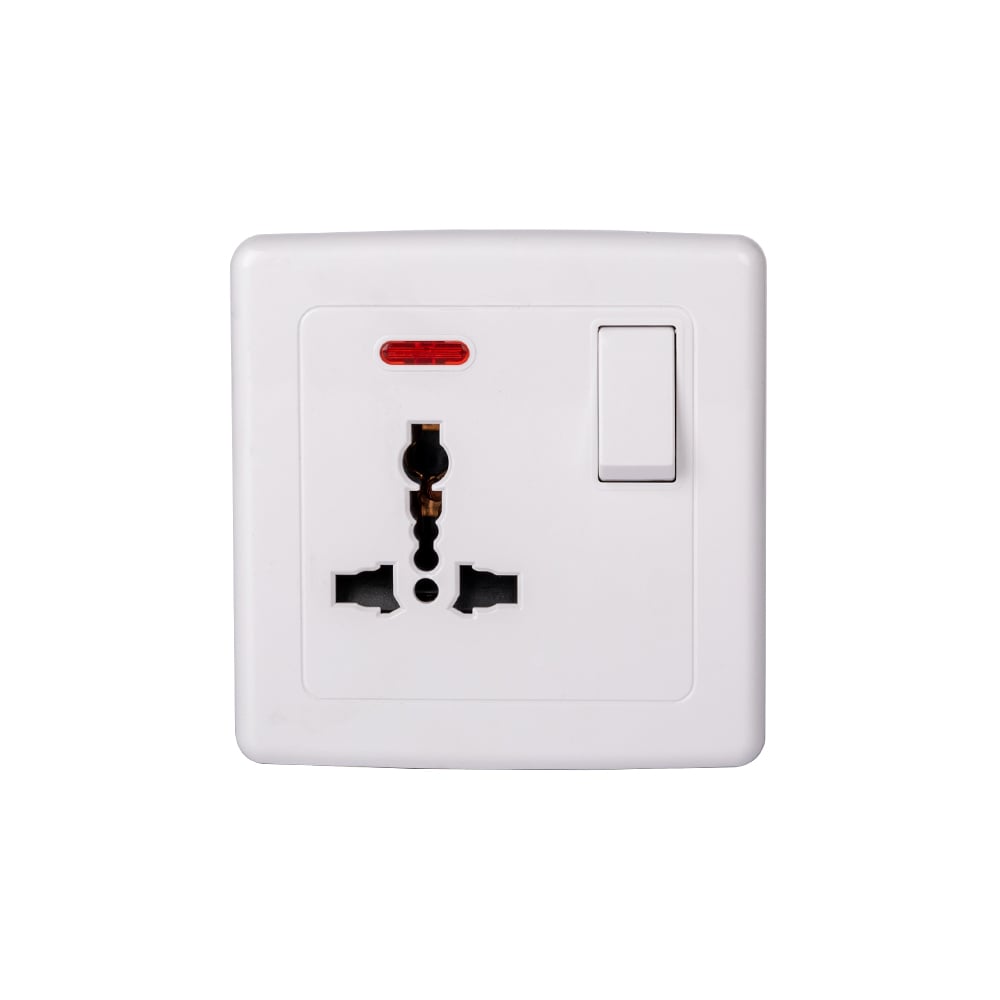
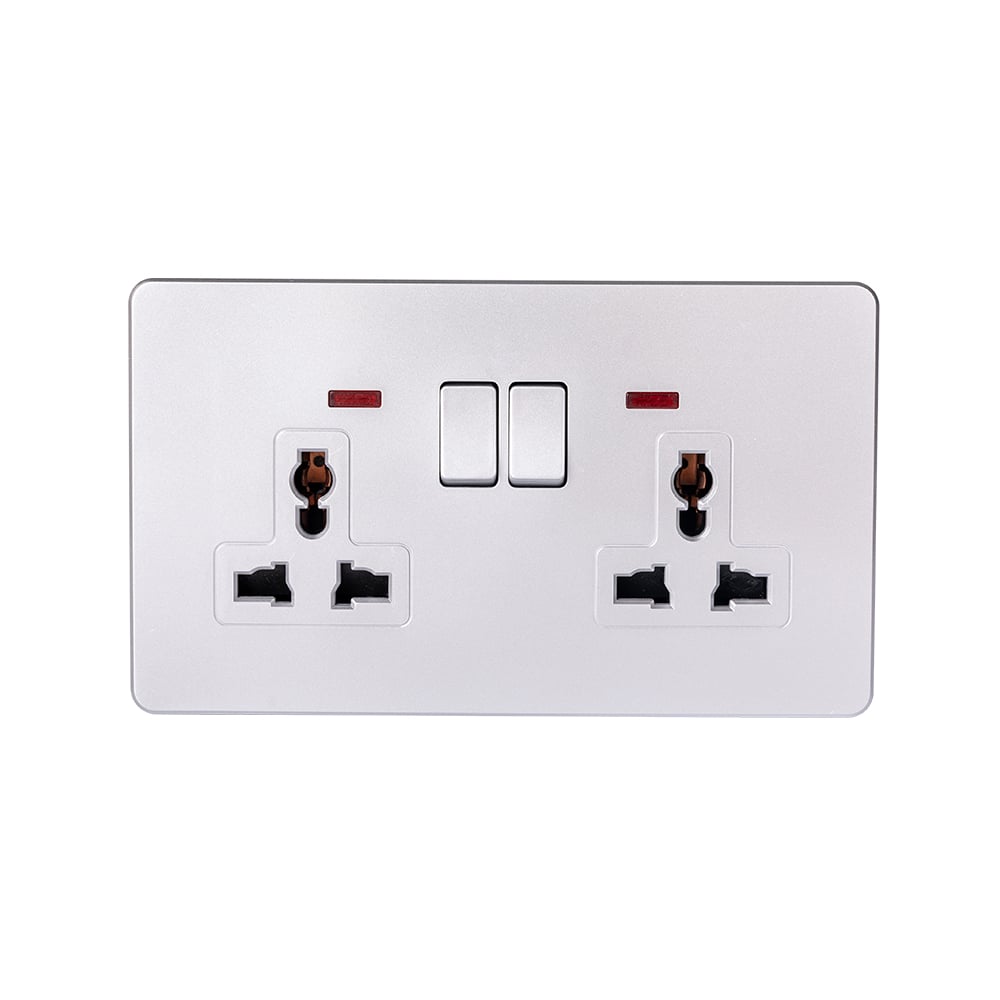
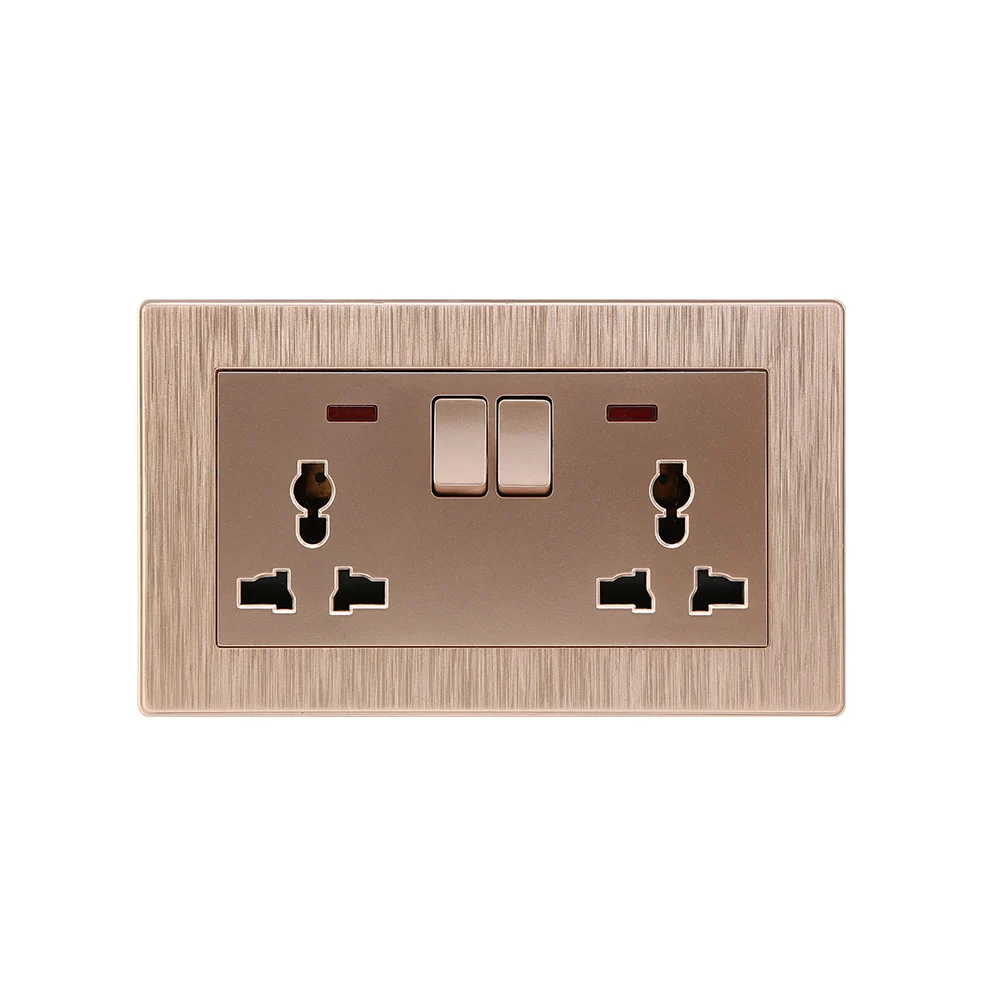
When procurement teams shortlist Ireland-ready devices, ABUK can support evaluation with configurable wall switch and socket options, related accessories, and destination-screening documentation. The useful starting point is a complete requirement sheet rather than a visual comparison of plug heads.
Frequently asked questions
What sockets are used in Ireland?
Ireland mainly uses the Type G socket and plug system on a nominal 230 V, 50 Hz supply. In ordinary rooms and workspaces, that means three rectangular-pin outlets with shuttered construction rather than the two-round-pin formats common in much of continental Europe.
Is Type G plug used in Ireland?
Yes. Type G is the normal plug and wall-socket format in the Republic of Ireland, and UK Type G plugs generally fit. That shared format does not replace a check of the appliance label, fuse, earth path, or local installation requirements.
What voltage are Irish sockets?
Irish sockets are supplied at a nominal 230 V, 50 Hz. Check the appliance nameplate nonetheless: a 100–240 V input device may only need a suitable connection, while a 120 V-only device needs an appropriate conversion solution if the manufacturer allows one.
Why do Irish plugs have fuses?
The fuse in the plug is intended primarily to protect the appliance flex by limiting current in relation to the cord and load design. Select it using the manufacturer’s guidance and the flex rating; it should not be oversized simply to stop nuisance operation.
What Fuse Rating Does an Irish Plug Need for a 1,000W Appliance?
At Ireland’s nominal 230 V supply, a 1,000 W appliance draws about 4.35 A (1,000 W ÷ 230 V). UK Type G guidance commonly points to a 13 A plug fuse for appliances rated above 700 W, but the manufacturer’s specified fuse and the flexible cord’s protection requirements take priority. The plug fuse protects the flex; it does not correct a voltage mismatch, so the appliance input rating must still match the Irish supply.
Can European two-pin plugs fit Irish sockets?
Ordinary European two-pin plugs do not fit standard Irish Type G wall sockets directly and usually need a suitable adapter. Some hotel bathroom shaver outlets may accept limited two-pin shaver plug formats, but those outlets are low-power special-purpose supplies and should not be mistaken for general room outlets.
References and next step
- International Electrotechnical Commission: IEC 60038, standard voltages
- International Electrotechnical Commission: IEC 60083, plugs and socket-outlets standardized in IEC member countries
- International Electrotechnical Commission: IEC 60884-1, plugs and socket-outlets for household and similar purposes
- European Commission: Low Voltage Directive overview
- Electrical Safety First: travel advice and adapter safety considerations
The durable rule is simple: in Ireland, the safest decision comes from matching plug geometry, voltage, fuse protection, and earth continuity at the same time. Buyers reviewing project requirements can explore ABUK’s product range and contact the team when a specification needs clearer socket selection, documentation support, or sourcing coordination.