
 Wenzhou Lita Electric Co., Ltd.
Switzerland Electric Plug Guide: Type J Sockets and Adapters
Switzerland Electric Plug Guide: Type J Sockets and Adapters
switzerland-electric-plug-guide-type-j-sockets-and-adapters
When a procurement manager in Zürich encountered a shipment of conference-room chargers that would not seat in the wall, the installation team first blamed defective sockets. A quick site check showed a different root cause: the chargers used thicker earthed Schuko plugs, while the building had recessed Swiss outlets designed around Type J geometry. Re-ordering the right plug variants avoided rewiring, delays and a return shipment.
Summary: Switzerland uses 230 V nominal electricity at 50 Hz and the Type J system defined in Swiss standard SEV 1011. Many two-pin Europlug (Type C) devices fit the smaller holes, but thicker or earthed plugs may not. Before buying adapters, document plug geometry, earth continuity, current rating and whether a device needs voltage conversion; then match the adapter to the surveyed outlet and the appliance label.
How Switzerland’s Type J outlets differ from nearby European systems
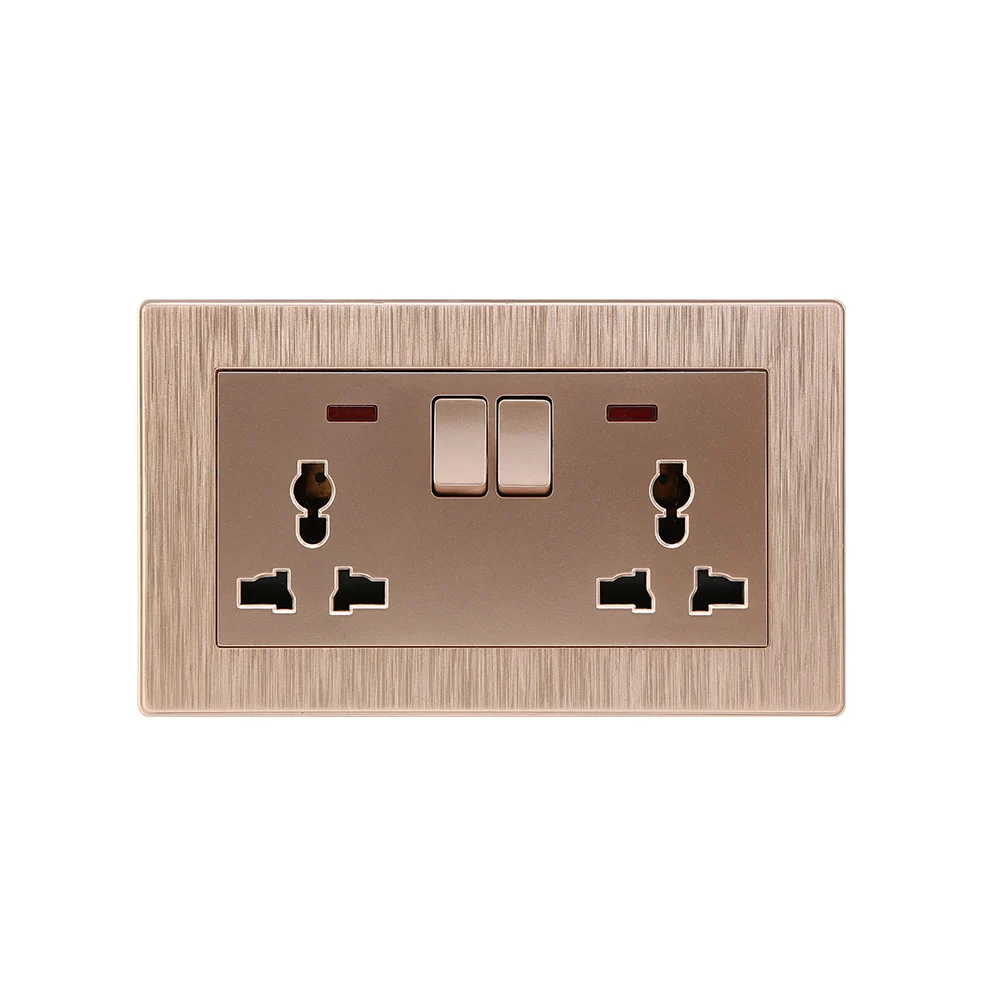
The familiar Switzerland electric plug has two round live/neutral pins plus a distinctive offset earth pin. In a Type J socket, the earth contact sits above (or below, depending on orientation) the current-carrying contacts, so a grounded plug establishes protective earth before its power pins engage. SEV 1011 covers Swiss domestic plugs and sockets, with dimensional sheets distinguishing 10 A and 16 A patterns; IEC 60884-1 provides the wider household-plug safety framework.
Nominal mains is 230 V, 50 Hz. Switzerland Tourism advises visitors to check appliance labels and carry an adapter because local geometry differs from neighboring countries. A passive adapter does not change frequency: equipment must accept 50 Hz and state a suitable voltage range, such as 100–240 V or 220–240 V.
Why a Europlug may fit while an earthed European plug does not
A low-profile Europlug (Type C, typically two 4 mm pins) is intentionally unearthed and narrow. Its tapered body can enter the outer apertures of many Swiss sockets, which is why phone chargers and shavers often work without a bulky converter. Fit is not universal, however. A thicker CEE 7/7 or Schuko body can hit the Swiss recess or fail to align the earth contact; a side-earth or French Type E plug may also require a specific mechanical path.
Screen each device by construction. Class II (double-insulated) equipment uses the “double square” mark and normally has no earth conductor; a two-pin adapter may suit it within rating. Class I equipment has an earth symbol or three-core cable and relies on protective earth. Never defeat that connection with a two-pin adapter. For laptops, check the detachable mains lead separately from the power brick. This grounded-versus-ungrounded test is central to any Switzerland electric plug specification.
| Input plug or device | Likely fit in a Type J socket | Earth implication | Procurement action |
|---|---|---|---|
| Two-pin Europlug (Type C), low profile | Often, when pin spacing and body clearance match | Unearthed; only for Class II loads | Confirm 2.5 A class and physical insertion with the socket sample |
| Swiss Type J plug | Designed fit | Earth pin available on 3-pin version | Preferred for locally installed equipment |
| Schuko CEE 7/4 or hybrid CEE 7/7 | Usually no; body and earth clips conflict | Protective earth required on Class I devices | Use a certified Schuko-to-J adapter with earth continuity, or change the cord set |
| UK, US, AU or other regional plug | No direct fit | Varies by class and plug | Select a country-to-J adapter; evaluate voltage and fuse requirements |
How to avoid confusing a Swiss outlet with a generic EU outlet
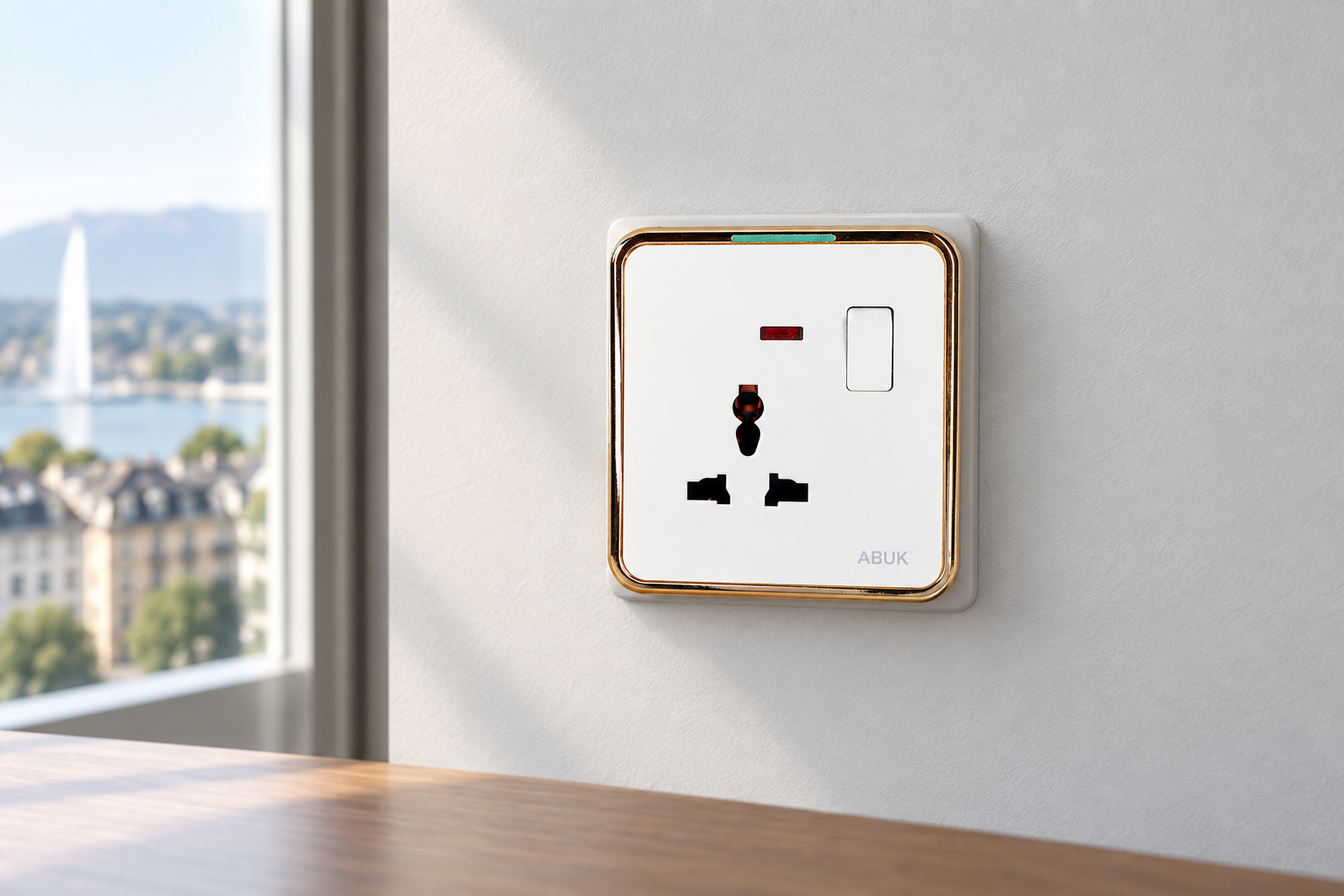
The frequent question “Are Swiss plugs the same as EU plugs?” needs a qualified answer: “EU plug” is a travel shorthand, not one controlled plug geometry. A compact Type C Europlug can suit an appropriate double-insulated load, but it does not create a protective-earth path; a larger earthed plug from another European system may fail on recess clearance or on the Type J earth arrangement. A project should therefore specify the actual mating interface, rather than buy against a regional label.
For locally installed Class I equipment, a Swiss Type J cord set or a documented earthed Type J adapter is normally the clearer procurement route. Request a representative-fit check against the installed outlet, then retain the plug photo, device class, rating label and approval result with the purchase order. That small record helps a buyer distinguish a proven connection from a device that merely appeared to insert.
How to assess plug fit, protective earth, current and voltage before ordering
Use four decision gates. First, geometry: identify plug standard, pin dimensions, shroud depth and shutter clearance. Second, earth: determine whether the appliance is Class I and verify that the adapter bonds earth from input to output; a calibrated continuity meter provides a practical acceptance check. Third, current: compare nameplate current with adapter and socket ratings, allowing for inrush. Never infer a rating from appearance.
Gate 4 is voltage conversion. An adapter changes shape only. If the nameplate says 100–240 V, a passive Type J adapter is normally sufficient; if it says 120 V only, use a correctly sized transformer or a 230 V-compatible replacement. Transformers have continuous and short-time limits, heat and ventilation requirements, and may not suit motor loads. A plug-in voltage converter also does not correct an earth problem.
For distributors, put “plug interface,” “protective-earth path,” “maximum continuous current” and “input-voltage range” on the purchase order. The same four fields make a Switzerland electric plug approval auditable.
How a site survey prevents costly Swiss socket compatibility errors
Inspect representative rooms and drawings before committing to volume. Photograph the faceplate and record whether each Type J socket is recessed, shuttered, switched or combined with USB. Note access, cable bend radius and strain relief. In hotels, sample guest rooms, stores and meeting rooms because refurbishment phases can use different socket families. Record every Swiss power outlet variant.
Ask the facility electrician for circuit protection, residual-current-device (RCD) coverage and the socket’s declared amperage. A Swiss 10 A branch should not be treated as a 16 A supply simply because an adapter accepts a larger plug. During commissioning, test polarity, protective-earth continuity and RCD operation using instruments and intervals required by the responsible electrician and applicable local rules; record serial numbers and remedial actions.
For temporary sites, add ingress protection, impact, dust and cable-management requirements. Portable distribution may fall under separate workplace rules. End with a pass/fail matrix for each device family, not one “Swiss adapter” line.
| Application | Typical device class | Preferred interface | Checks before release |
|---|---|---|---|
| Hotel room chargers | Class II, low power | Europlug or compact Type J lead | 100–240 V label, insertion clearance, heat and tamper resistance |
| Office monitors and IT racks | Mixed; some Class I | Type J or approved earthed adapter | Earth continuity, inrush, RCD coordination, cable retention |
| Kitchen or workshop tools | Often Class I, higher current | Swiss earthed plug matched to circuit | Nameplate current, duty cycle, overload and local electrician sign-off |
| Temporary project cabins | Portable distribution | Site-rated Type J distribution assembly | IP/impact rating, inspection interval, RCD test record and documentation |
Which standards and documents support a defensible Swiss specification
SEV 1011 is the key Swiss reference for household plugs, socket-outlets and couplers; obtain current sheets from Electrosuisse rather than using a reseller drawing. IEC 60884-1 sets general requirements and test methods, but is not blanket certification for every national variant. CE marking reflects applicable EU legislation for a complete product; it does not prove Swiss geometry or safety. RoHS addresses restricted substances, not fit or earth performance. GCC marking matters only where destination and product scope require it.
Request a declaration of conformity, model identification, rated voltage/current, wiring diagram and test evidence that matches the exact adapter or socket. Keep photographs, sample measurements and continuity results with the project file. Unsupported claims such as “universal,” “16 A,” or “Swiss certified” can trigger customs questions, warranty disputes or a costly field replacement.
How buyers can select compatible equipment for Swiss sites
- Map the load: record plug type, appliance class, voltage range, frequency, rated and inrush current for every SKU.
- Sample the destination: test insertion and retention in the actual faceplate family, including recessed and shuttered variants.
- Verify earth: for Class I equipment, require a documented protective-earth path and visual strain-relief inspection.
- Choose conversion only when needed: add a transformer for single-voltage equipment; do not use a shape adapter as a voltage converter.
- Control the batch: quarantine substitutions, retain certificates and repeat acceptance tests after a supplier or tooling change.
ABUK is a China-based B2B electrical equipment solution provider. Buyers can review the company background and request model-specific drawings or test documents; claims should remain limited to evidence for the exact product and market. A Type J socket shortlist and Swiss power outlet schedule should never substitute for that evidence.
FAQ
What electric plug is used in Switzerland?
Switzerland uses Type J plugs and sockets, with two round current pins and an offset protective-earth pin on grounded versions. Some low-profile Type C Europlugs fit, but compatibility depends on body shape and the Swiss power outlet recess. Survey the installed socket before ordering adapters.
Can a Europlug be used in Switzerland?
Often, a two-pin unearthed Europlug works in a compatible Swiss power outlet. It suits only double-insulated Class II equipment within the plug’s current rating. Thicker earthed CEE 7/7 or Schuko plugs generally need an adapter that preserves earth.
Can a Type C Europlug Be Used With a Swiss Extension Lead?
A Type C Europlug can physically fit many Swiss extension leads whose outlets accept its 4 mm pins and slim body, but the Type J recess and shutter geometry must be checked on the actual lead. Because the Europlug is unearthed, use it only with Class II equipment and keep the load within the Europlug’s 2.5 A rating and any lower limit stated for the device or extension lead. A Schuko or other earthed plug should instead use a suitable earthed adapter or Swiss cord that preserves protective earth.
Do Swiss Sockets Work With European USB Chargers?
Many European USB chargers can operate from Swiss mains when the input label states 100–240 V, 50/60 Hz, but electrical suitability does not guarantee physical fit. A compact two-pin Class II Europlug charger may fit compatible Type J geometry, while a bulky charger body or a Schuko/earthed plug may be blocked by the recess or earth arrangement. Check the charger’s current and input label and use a suitable earthed adapter or Swiss cord where protective earth is required.
Does Switzerland use 230V electricity?
Yes. Swiss supply is nominally 230 V at 50 Hz. Check the appliance label: a 100–240 V device usually needs only a mechanical adapter, while a 120 V-only appliance requires an appropriately rated transformer or replacement.
Why are Swiss Type J plugs different?
The offset earth pin and recessed geometry are the Swiss national arrangement specified through SEV 1011. This compact Type J socket supports protective-earth sequencing. Because neighboring plugs use different earth contacts and body dimensions, visual similarity does not guarantee fit. Treat each Switzerland electric plug match as a dimensional and electrical decision.
References
- Switzerland Tourism: Electricity (230 V, 50 Hz and travel guidance).
- Electrical Safety First: Switzerland plug adapters (plug and socket compatibility cautions).
- Electrosuisse standards (SEV 1011 national standard access and scope).
- IEC 60884-1: Plugs and socket-outlets for household and similar purposes (general requirements and test methods).
Specify the interface you measured, the earth path you tested and the voltage your equipment accepts; that evidence travels better than a generic adapter label.
For a documented Swiss power outlet option or project quantities, contact the ABUK technical team with your site-survey matrix.