
 Wenzhou Lita Electric Co., Ltd.


Top-Rated Smart Light Switches: A 2026 Selection Guide
A common procurement failure begins when a project team selects a highly reviewed switch, approves a sample on a desk, and then discovers during installation that the wall box has no neutral, the LED drivers flicker below the stated load, or the existing multi-location wiring is unsupported. The visible problem may appear to be a bad device, but the root cause is often a mismatch among wiring, load, ecosystem, region, and lifecycle requirements. For B2B buyers, “top-rated” should therefore describe verified project fit—not an average consumer review score. This guide provides a transparent method for comparing those requirements before a shortlist becomes a purchase order.
Quick answer: The top rated smart light switches are the models that match the site’s supply and wiring, control the specified LED load without instability, support the required single-pole or multi-location arrangement, fit the wall box, and retain acceptable operation when internet or cloud services are unavailable. Matter, Wi-Fi, Zigbee, and hub-based products solve different integration problems; none is automatically best. Buyers should document the installed conditions first, then verify each candidate’s datasheet, load table, platform support, regional approvals, update policy, and replacement path.
How Should Buyers Define “Top-Rated”?
This guide covers hard-wired in-wall switches and dimmers for residential developments, hospitality, light commercial spaces, and distribution programs—not plug-in controls, lamps, or proprietary automation panels. It awards no universal “best overall” title because wiring, wall boxes, and operating requirements vary.
The comparison method for smart light switches considers public protocol specifications, platform support information, manufacturer installation and compatibility documents, electrical-safety context, and cybersecurity guidance. Evidence was checked on September 22, 2026. A candidate qualifies only when the supplier can substantiate the requirements for the exact model and destination market; review stars cannot replace technical verification.
Commercial relationship disclosure: This guide is educational and is not a paid product ranking. No manufacturer has been assigned a position or “best” badge, and inclusion in an evaluation framework does not imply endorsement.
Which Smart-Home Architecture Fits the Project?
The Connectivity Standards Alliance describes Matter as an IP-based interoperability standard for compatible ecosystems. Matter is an application layer, not a single radio: devices may use Wi-Fi, Thread, or Ethernet, with Bluetooth Low Energy during commissioning. Buyers must still confirm device type, functions, controller requirements, and feature availability. Apple’s official Matter instructions show why controller, account, network, and operating-system prerequisites remain part of deployment planning.
| Architecture | Project advantage | Tradeoff to verify | Best-fit question |
|---|---|---|---|
| Matter over Wi-Fi or Thread | Common application layer across participating ecosystems | Controllers, Thread border routers, and feature parity vary; certification must be model-specific | Which functions remain available on every required platform? |
| Direct Wi-Fi | Can use existing IP infrastructure without a separate protocol coordinator | Network density, credentials, cloud dependence, and reset procedures can raise support effort | Will the device still switch manually and locally during an internet outage? |
| Zigbee | Mesh networking and centralized commissioning can suit multi-device deployments | Requires a compatible coordinator or hub; proprietary features may not travel between ecosystems | Is the chosen hub approved for every device model and region? |
| Local hub or gateway | May preserve local scenes, schedules, and management even when cloud access fails | Adds a managed component and a possible single point of failure | Who owns backups, updates, spares, and re-commissioning? |

For large portfolios, protocol labels should follow the operating model. Smart home light switches intended for managed apartments may prioritize repeatable commissioning and tenant handover, while hotel or commercial projects may value local control, fleet visibility, and a documented replacement process more than direct-to-cloud convenience.
What Must Be Verified in the Circuit, Load, and Wall Box?
Is a neutral conductor available?
Many smart switches for lights use a neutral conductor to power electronics while the lamp is off. No-neutral designs use another approved circuit strategy and may impose special load, bypass, or lamp requirements. Never infer compatibility from a product photo: the wiring diagram, supply, load, and approved accessories must match the site survey.
Is the circuit single-pole or multi-location?
Single-pole means one control location. “3-way” in North America and “two-way” elsewhere commonly describe control from two locations, but conductor arrangements vary. Some smart switches for lights use a dedicated companion; others support a conventional auxiliary only in a specified arrangement. Record the conductors and topology, then compare them with the manufacturer’s diagram.
Will the switch control the actual LED driver?
An LED wattage printed on a carton is not enough to prove dimming compatibility. Buyers need the device’s minimum and maximum LED load, the lamp or driver compatibility list, the supported dimming method where applicable, inrush limitations, gang derating, and any required bypass. Low-end flicker, ghosting, audible noise, incomplete shutoff, or nuisance trips are reasons to test the proposed switch with the actual luminaire batch before rollout.
| Buyer requirement | Evidence to request | Acceptance check | Risk if skipped |
|---|---|---|---|
| Supply and wiring | Rated voltage/frequency, neutral requirement, wiring diagram | Compare with a documented site survey | Non-operation, unsafe installation, or rework |
| LED and dimming load | Minimum/maximum load, compatible-driver list, dimming method | Bench and room test using the specified luminaires | Flicker, ghosting, noise, or reduced dimming range |
| Switching topology | Single-pole/multi-location diagram and companion-device rules | Verify every location and conductor before ordering | Lost control points or additional rewiring |
| Physical fit | Module dimensions, box depth, wallplate format, gang limits | Trial fit with conductor bend space and thermal guidance | Box replacement, crowding, or derating errors |
| Ecosystem and lifecycle | Platform matrix, offline behavior, update and end-of-support policy | Disconnect internet, reset, re-pair, and replace a sample | Support calls, stranded devices, or service disruption |

Official manufacturer support pages expose model-level differences. For example, Lutron’s Caséta guidance separates products by wiring, load type, and application rather than treating the range as interchangeable. The lesson applies across brands: smart light switches should be evaluated by exact catalog number, not family name.
Which Lifecycle, Security, and Regional Checks Affect TCO?
For smart home light switches, purchase price is only one part of TCO. Commissioning, onboarding, firmware management, handover, support, spares, and re-pairing can outweigh a unit-price difference. A useful pilot tests normal switching, internet and hub loss, power recovery, reset, credential transfer, permissions, and replacement.
CISA’s Secure by Design guidance places responsibility on technology manufacturers to make products secure by default, while NISTIR 8259A describes a core baseline of device cybersecurity capabilities such as identification, configuration, data protection, interface access control, software update, and cybersecurity-state awareness. Procurement teams can convert those principles into questions: Are updates authenticated? How long are they supplied? Can default credentials be changed? Is vulnerability reporting available? What happens when the app or cloud service is retired?
Regional suitability also requires evidence: check voltage, frequency, grounding, wall-box and faceplate formats, radio approvals, electrical-safety requirements, and destination-market restrictions. IEC 60669-1 and IEC 60669-2-1 address household and similar fixed switches, including electronic control devices, but citing a standard does not prove a specific product was tested or certified. Request current, model-specific evidence accepted in the destination market.
How Should a Procurement Team Build the Shortlist?
- Freeze the site conditions. Record voltage, frequency, neutral availability, grounding, box dimensions, gang count, load type, and every switching location.
- Define required behavior. Specify manual control, local schedules, remote access, platform integrations, outage behavior, and administrator ownership.
- Demand model-level evidence. Collect installation instructions, load tables, compatibility lists, radio and safety documentation, update commitments, warranty terms, and end-of-life procedures.
- Pilot the complete assembly. Test the production luminaire or driver, wall box, companion devices, hub/controller, network, and commissioning workflow—not an isolated switch.
- Price the service life. Add installation, configuration, support, spares, replacements, re-commissioning, and expected platform changes to the unit cost.
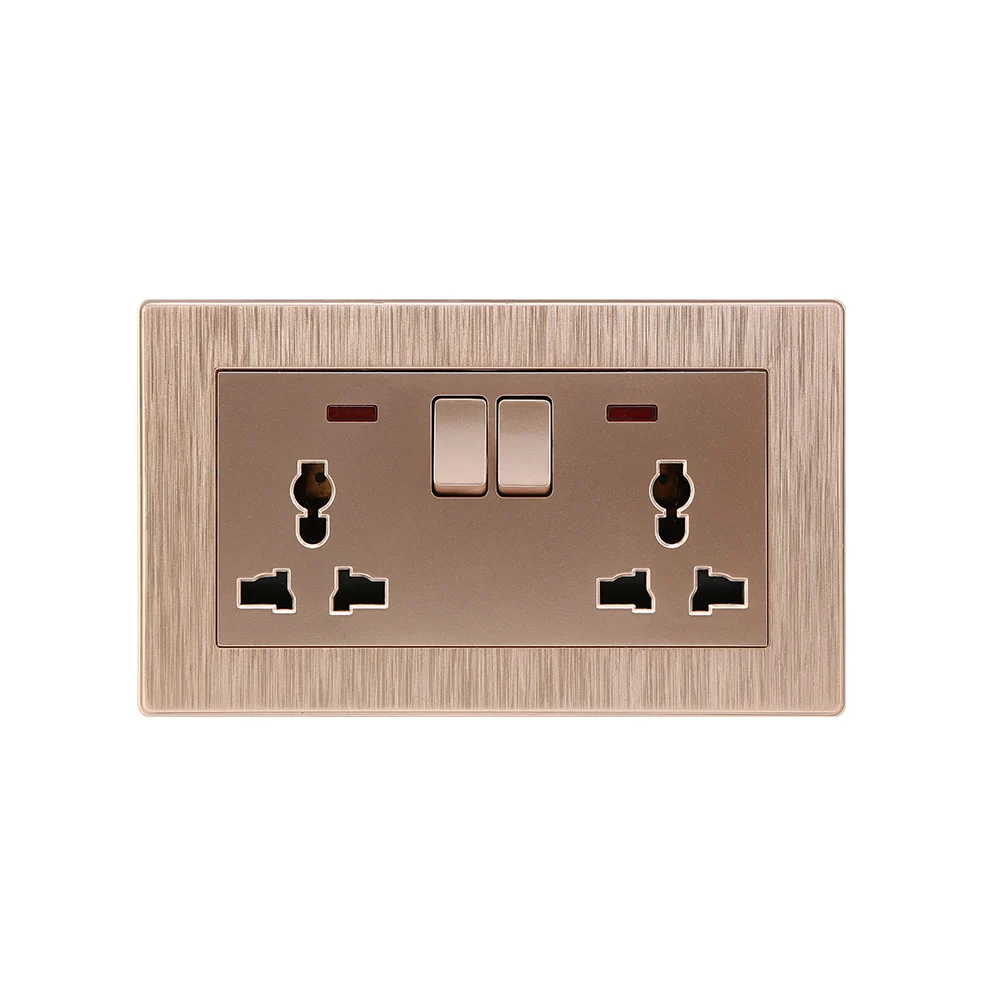
This process identifies top rated smart light switches by verified fit and auditable evidence. Buyers needing broader background can consult this guide to smart switches and outlets, wiring, and setup. After the specification is defined, ABUK’s wall switch and socket options and wider electrical product portfolio can be reviewed for relevant project sourcing. No Matter, Wi-Fi, Zigbee, or voice-assistant capability should be assumed unless the exact linked product documentation states it.
Frequently Asked Questions
What are the top-rated smart light switches?
The top rated smart light switches are not one fixed list. They are the models that can prove compatibility with the project’s wiring, LED load, switching topology, ecosystem, region, security policy, and support horizon. Start with those requirements, then compare exact model documentation rather than review stars alone.
Which smart light switch works without a neutral wire?
Only a model explicitly documented for no-neutral installation should be used on that circuit. Some no-neutral designs require a minimum load, a bypass component, or a restricted lamp list, so confirm the wiring diagram and test the actual luminaire. Do not use the ground conductor as a substitute for neutral.
Are smart switches compatible with LED lights?
Some are, but “LED compatible” is not universal. Smart switches for lights must match the lamp or driver type, minimum and maximum load, dimming method, inrush behavior, and gang derating. A controlled sample test with the specified LED batch is the most reliable acceptance check.
What smart switch supports Matter or voice assistants?
Support must be confirmed for the exact model, hardware revision, region, and target platform. Smart home light switches may expose different features through Matter, Apple Home, Alexa, Google Home, or a proprietary app; voice control does not prove full dimming, scene, multi-location, or offline functionality. Verify official certification records and current platform support pages before purchase.
References
- Connectivity Standards Alliance — Matter overview and specification resources (accessed September 22, 2026).
- Apple Support — Pair and manage Matter accessories (accessed September 22, 2026).
- Lutron Support — Caséta Wireless in-wall switch selection (accessed September 22, 2026).
- Cybersecurity and Infrastructure Security Agency — Secure by Design (accessed September 22, 2026).
- NISTIR 8259A — IoT Device Cybersecurity Capability Core Baseline (final publication, accessed September 22, 2026).
Conclusion
The best switch is not the one with the loudest rating; it is the one whose evidence matches the installed reality. Buyers should first document the circuit, wall box, load, control locations, and destination market, then select an ecosystem and verify offline behavior, security updates, commissioning, and replacement. No convenience feature should bypass model-specific electrical testing or accepted regional compliance evidence. That sequence turns smart light switches from a consumer-style feature comparison into a manageable project specification and keeps lifecycle cost visible before rollout. Once requirements are fixed, ABUK can help buyers review relevant conventional switching and electrical sourcing options; contact the ABUK team with the project schedule, market, wiring conditions, and documentation checklist.