
 Wenzhou Lita Electric Co., Ltd.

Standard Household Outlet Voltage and Amperage US
When a procurement engineer named Elena in Phoenix encountered instant breaker trips after energizing a model-home appliance package, she replaced two receptacles and watched the failure return within minutes. The reversal came after the electrician traced the problem: the devices were not defective; the purchasing schedule had treated plug shape as a complete electrical specification and placed a sustained load on an undersized branch circuit.
Summary: The standard household outlet voltage and amperage US buyers usually need is 120 V nominal on 15 A or 20 A branch circuits, while 30 A and many 240 V loads require dedicated configurations. Treat the 80% figure as a continuous-load planning result, not a universal outlet capacity. Before ordering, coordinate the equipment nameplate, NEMA pattern, breaker, conductor and receptacle rating, then have the locally adopted code checked by a qualified professional.
A nominal value is a system designation, not a promise that every reading will be exactly 120. NEMA ANSI C84.1 defines voltage ratings and operating ranges for 60 Hz systems, so source tolerance matters when equipment has a narrow input range. The search wording united states standard household outlet voltage 120 volts captures the common supply level, but not allowable current, available capacity or plug configuration. A receptacle marked 125 V is not evidence that the building normally supplies 125 V; it identifies the device’s voltage class and rating, while the connected system is commonly specified as 120 V nominal.
What does a standard US household outlet specification actually describe?
A common receptacle supplies 120 V nominal, while 120/240 V describes the wider residential service
Most ordinary US household receptacles supply nominal 120 V from one hot conductor to neutral. A typical residence has 120/240 V split-phase service: either hot leg to neutral supplies 120 V, while the two hot legs together supply 240 V. This is not the same as saying every outlet carries both voltages. The receptacle and connected appliance determine which conductors are present and which voltage is available.
Legacy labels such as 110 V and 115 V remain conversational shorthand. In an RFQ, use 120 V nominal and obtain the equipment’s input range; do not approve a device from one field measurement.
Residential 240 V and commercial 208 V come from different supply arrangements
Do not assume that every US building offers the same higher voltage. A common house receives 120/240 V single-phase service, producing approximately 240 V from hot to hot. Many commercial properties and some multifamily buildings instead use a 120/208 V three-phase wye system: a receptacle can still provide 120 V from line to neutral, but the line-to-line voltage is approximately 208 V rather than 240 V. Both are recognized nominal system arrangements in ANSI C84.1.
This difference matters before ordering motors, heaters, HVAC equipment, cooking equipment or power supplies. A nameplate that says only 240 V should not be assumed suitable for a 208 V connection; output, current and warranty conditions may differ. Specify the measured and documented service, phase, available conductors and equipment input range. Where the nameplate explicitly states 208/240 V, follow the manufacturer’s connection and protection instructions for the actual supply.
Are standard household outlets rated 15 A or 20 A?
The honest answer is both, depending on the branch circuit and application. General-use residential branch circuits commonly have 15 A or 20 A ratings, and the T-shaped slot on a NEMA 5-20R distinguishes its face from a 5-15R. Yet the face alone is not a complete circuit audit: code rules can permit 15 A receptacles in certain multi-receptacle 20 A branch-circuit arrangements. A 30 A circuit is normally reserved for specified equipment, not treated as a higher-capacity substitute for a general-purpose outlet.
Illustrative circuit-rating calculation: 120 V × 15 A = 1,800 VA, and 120 V × 20 A = 2,400 VA. These figures describe apparent-power capacity at the circuit rating; they are not promises of 1,800 W or 2,400 W continuously available from one socket. Watts and volt-amperes are not interchangeable for every load, and other receptacles, lighting or fixed equipment on the same branch may already use part of the capacity.
Under NEC treatment, a continuous load is one expected to run at maximum current for three hours or more. The usual 125% sizing requirement produces the often-cited 80% planning result: 12 A on a 15 A circuit and 16 A on a 20 A circuit. That screen applies to the relevant continuous-load calculation, not as a universal rule that every outlet always has 80% available. Mixed continuous and noncontinuous loads, shared branch loads, local amendments and permitted exceptions require a project-specific check.
NEMA patterns identify an interface, but why does plug fit not prove circuit capacity?
NEMA 5-15 vs NEMA 5-20 can be identified at the face. A 5-15R has two parallel blade slots plus ground. A 5-20R adds a T-shaped neutral slot, allowing it to accept both 5-15P and 5-20P plugs when installed on a compliant 20 A circuit. The perpendicular blade on a 5-20P prevents it from entering a 5-15R.
That one-way fit is intentional compatibility, not permission to allocate the whole circuit to the plugged-in device. A 5-15P appliance can draw only what its design and nameplate call for, while a shared 20 A branch may also serve other outlets. Conversely, an adapter that makes a 5-20P enter a 5-15R defeats the physical safeguard without increasing breaker, conductor or receptacle capacity.
For higher-power equipment, NEMA families encode different voltage, current, grounding and neutral arrangements. For example, 6-series devices are generally used for 250 V-class loads without a neutral, while 14-series devices can support 125/250 V loads with a neutral. A current 30 A clothes-dryer application commonly uses 14-30, but the appliance instructions—not a generic table—must govern the final choice.
Plug fit is only a mechanical screen. It does not prove correct supply voltage, frequency, polarity, grounding, neutral availability, shared-load headroom, continuous-duty capacity or product listing. The “125 V” or “250 V” shown for a NEMA configuration is a device rating, not the expected real-time meter reading. Adapters can make mismatched interfaces appear compatible while leaving the underlying electrical conflict untouched.
The receptacle, breaker, conductor and connected load must be specified as one system
Breaker, conductor, receptacle and load form one protective system. Increasing only the breaker rating can expose wiring or devices to excess current. Conductor selection also depends on material, insulation, terminal temperature and installation conditions; wire gauge alone is not a procurement rule.
For panel schedules, list each fixed load, likely coincident loads, voltage, current, duration and dedicated-circuit instructions. Separate continuous from noncontinuous demand and balance 120 V loading across the service legs. A qualified professional must apply the adopted load-calculation rules.
For an existing site, ask five questions before approving a substitution: What does the panel schedule call the circuit? What breaker rating protects it? What conductor material, size and termination conditions are documented? Which receptacles or fixed loads share the branch? Is the installed receptacle listed and rated for the intended circuit and environment? These checks reveal why an apparently correct plug can still cause nuisance trips, overheating risk or failed inspection.
How do common 15 A, 20 A and 30 A circuit choices compare?
| Decision point | 15 A, 120 V context | 20 A, 120 V context | 30 A appliance context |
|---|---|---|---|
| Typical role | General lighting and receptacle loads where permitted | Higher-capacity general or required branch circuits | Specified equipment on a dedicated circuit |
| Common straight-blade example | NEMA 5-15R | NEMA 5-20R | NEMA 6-30R or 14-30R, depending on voltage and neutral need |
| Continuous-load screen | 12 A under the common 125% sizing method | 16 A under the common 125% sizing method | Calculate from the actual circuit and equipment instructions |
| Compatibility risk | Shared loads can exceed the plan | A 20 A face does not upgrade upstream wiring | Wrong voltage family or missing neutral creates a major mismatch |
| Unit-cost tendency | Usually lower device and wiring cost | May require higher-rated devices and conductors | Dedicated wiring and protection generally increase installed cost |
| TCO consideration | Low cost only if capacity is adequate | Can reduce nuisance trips when correctly specified | Correct matching avoids adapter use, rework and inspection delays |
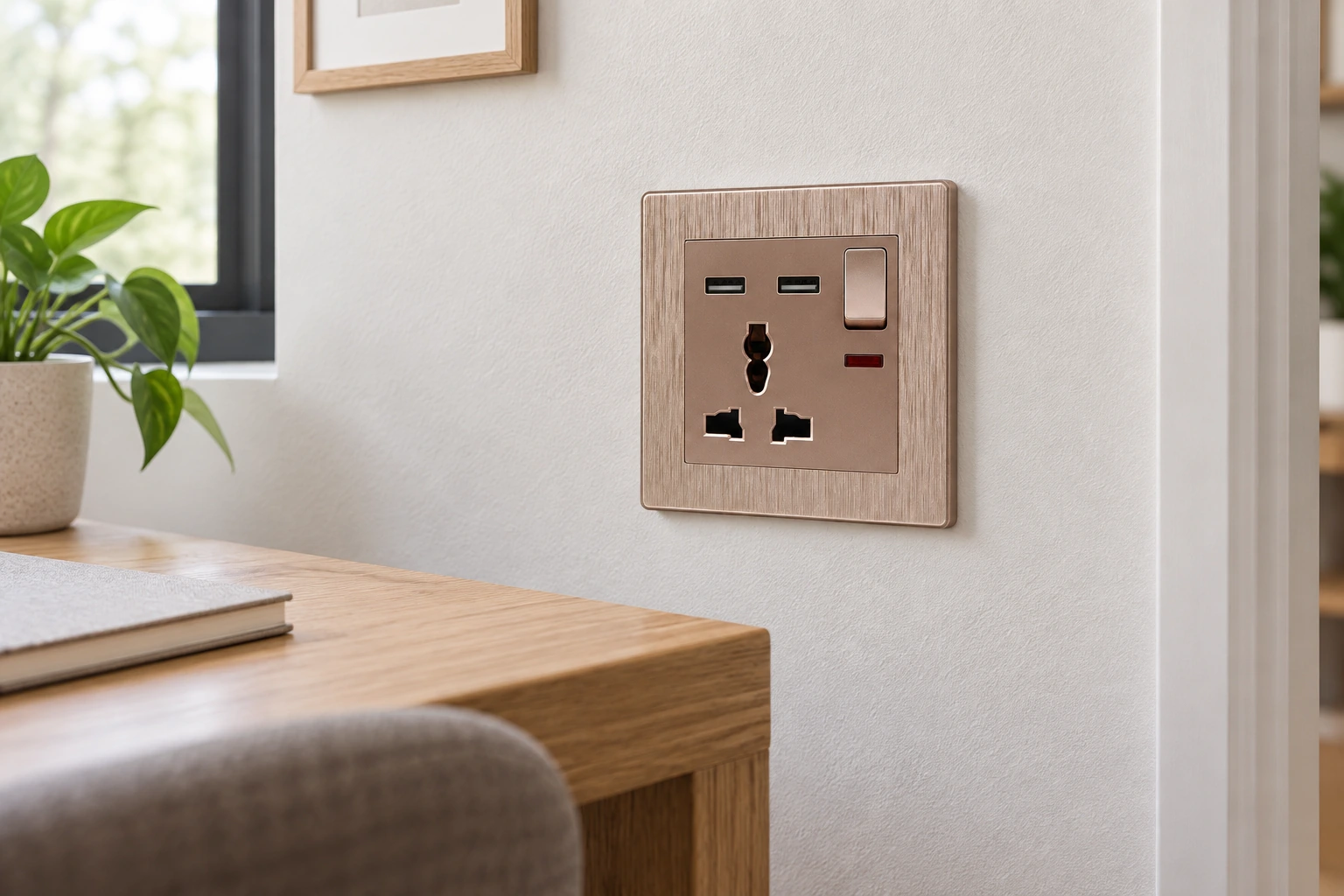
Illustrative TCO example: if 40 rooms receive the wrong configuration, costs can include replacement devices, electrician return visits, testing, schedule disruption and returns. A verified schedule and sample approval can cost less than correcting an unsuitable order.
The load and building power architecture should determine the outlet choice
| Application | Likely supply context | Configuration starting point | Critical buyer check |
|---|---|---|---|
| Lamps, chargers and small electronics | 120 V, often 15 A branch | NEMA 5-15 | Aggregate shared load and equipment input range |
| Kitchen or laundry small-appliance circuits | 120 V, commonly 20 A where code requires | NEMA 5-20 circuit context | Location-specific GFCI/AFCI and receptacle rules |
| Multifamily or commercial equipment | 120/208 V three-phase may be present | Exact 120 V or 208 V interface specified by equipment | Do not substitute 208 V for 240 V without nameplate approval |
| Window air conditioner or workshop tool | 120 V or 240 V; often dedicated | 5-series or 6-series as specified | Nameplate voltage, current and duty cycle |
| Electric clothes dryer | Typically 120/240 V, 30 A | Often NEMA 14-30 for current installations | Neutral requirement, instructions and existing-site conditions |
| Range, HVAC or EV supply equipment | Often 240 V with load-specific rating | Hardwired or exact listed receptacle | Dedicated-circuit, load calculation and manufacturer requirements |
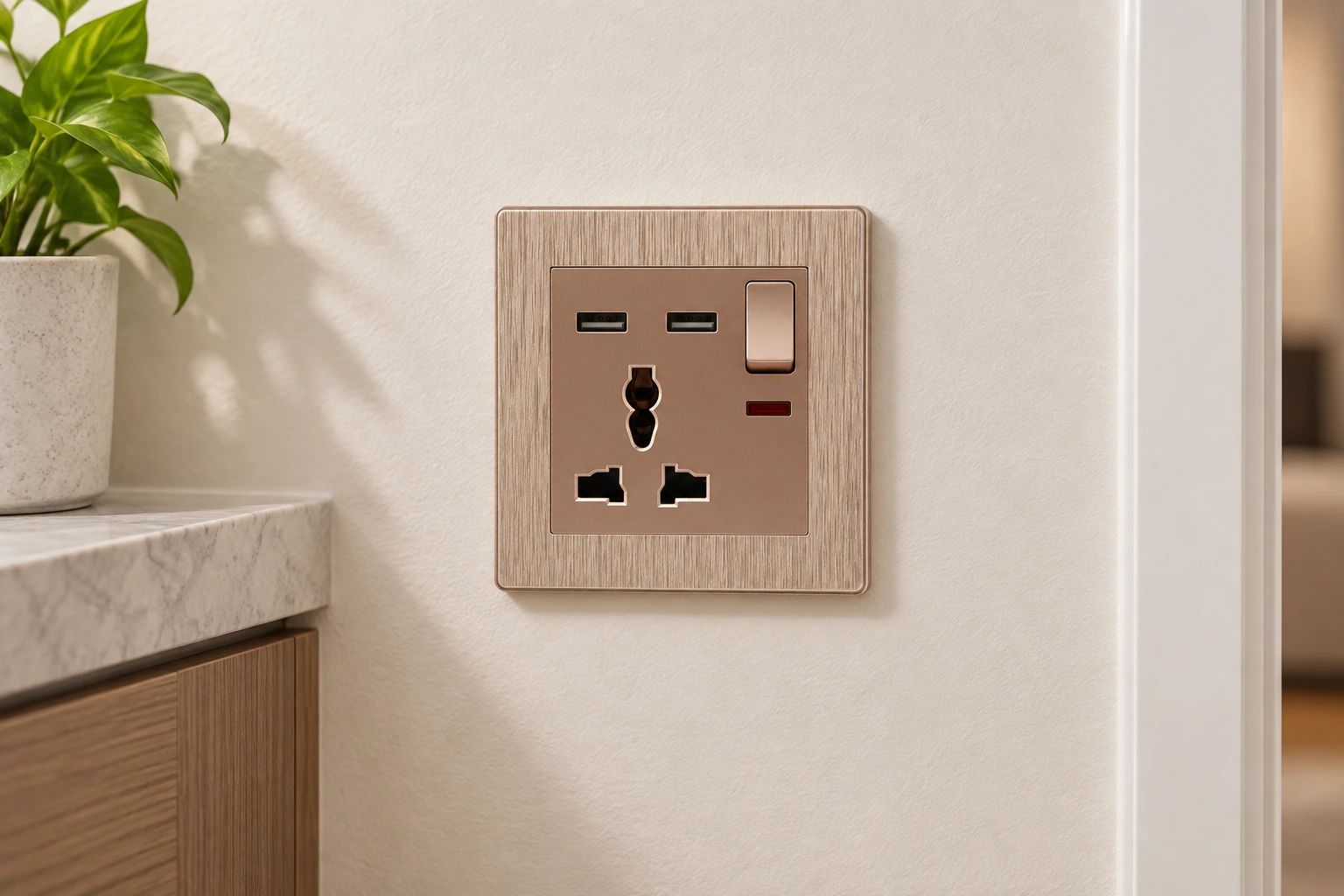
This application-first view prevents four costly substitutions: treating 208 V and 240 V as interchangeable, treating 240 V as another name for a complete 120/240 V service, treating 30 A as universally better than 20 A, and treating a matching plug as approval to energize equipment.
Which standards govern the device, circuit and installation claims?
NFPA 70, the National Electrical Code, addresses installation requirements, including branch circuits, overcurrent protection and receptacle ratings. Local jurisdictions adopt particular editions and may amend them, so an NEC citation is not a substitute for authority-having-jurisdiction approval. NEMA WD 6 standardizes dimensional configurations for plugs and receptacles; it identifies an interface but does not certify an entire installation. ANSI C84.1 addresses power-system voltage ratings and ranges, while OSHA electrical rules apply to covered workplaces rather than serving as a household product certificate.
Procurement files should distinguish product test evidence, factory declarations and installation approval. CE marking relates to applicable European requirements, RoHS addresses restricted substances within scope, and GCC conformity routes depend on product and Gulf market. Such claims require model-level verification; none represents US NEC approval, an NRTL listing or permission to install.
Unsupported compliance language can trigger rejected submittals, customs questions, inspection delays and warranty disputes. Require certificates or reports that identify the exact model, issuing body, standard edition and validity, and have the US listing and installation needs reviewed independently.
A five-step procurement check prevents outlet and circuit mismatches
- Capture the load: record nameplate voltage, current or wattage, frequency, phase, operating time and dedicated-circuit instructions; do not infer 208 V/240 V suitability.
- Define the interface: state the full NEMA designation and whether neutral and ground are required.
- Coordinate protection: check the panel schedule, shared loads, breaker, conductor ampacity, receptacle and terminals as one circuit under the adopted code.
- Verify destination evidence: request model-specific drawings, markings, reports and any required US listing information.
- Approve a sample: inspect dimensions, required safety features, terminals and labeling before volume production.
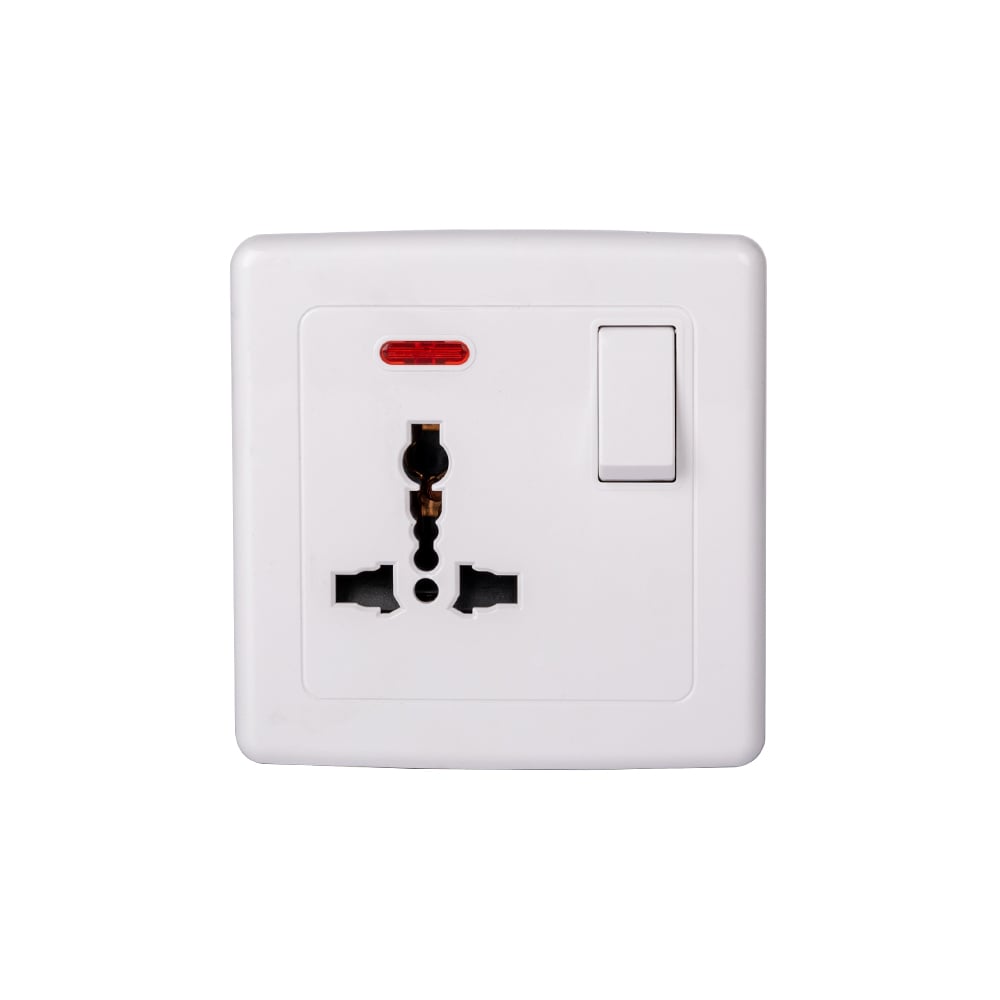
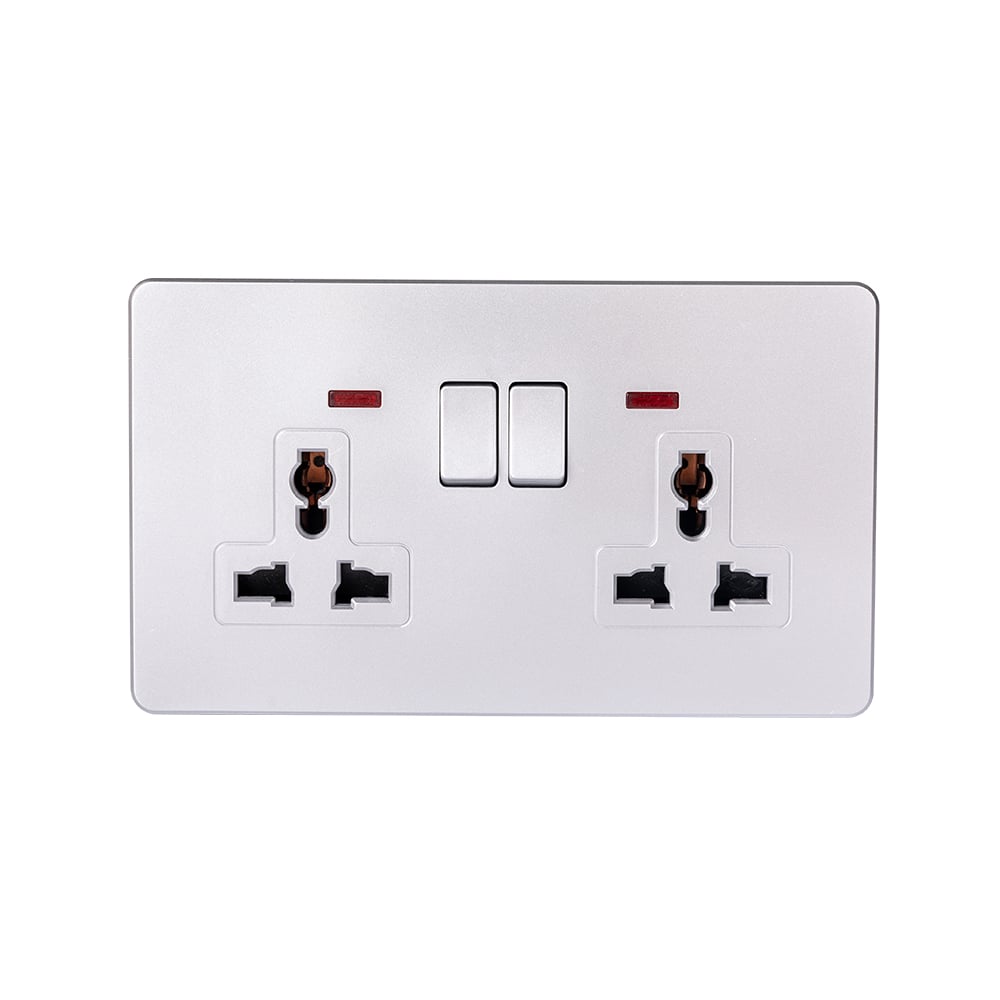
For sourcing teams, ABUK can support configurable standard household outlet voltage and amperage US products plus documentation for buyer review. Its CE, RoHS and GCC claims should be confirmed for the selected model and destination; a US project still needs the relevant US product and installation evidence. Buyers who need more background can review this united states standard household outlet voltage 120 volts guide before finalizing an RFQ.
These answers resolve the most common US outlet specification questions
What is the standard household outlet voltage in the US?
Nominal 120 V is the standard value for common household receptacles. The phrase “united states standard household outlet voltage 120 volts” is useful shorthand, but actual service voltage may vary within recognized limits; verify equipment input tolerance and local conditions.
How many amps is a typical US wall outlet?
Common household receptacle circuits are rated 15 A or 20 A; there is no single amperage for every “regular” outlet. The face configuration, branch-circuit breaker, conductor, shared loads and intended appliance must be checked together, and a continuous load may require the common 125% sizing treatment rather than use of the full rating.
Why is US voltage called both 110V and 120V?
110 V is a historical and colloquial label that persists in everyday speech. Modern specifications normally use 120 V nominal, so procurement documents should say 120 V and include the equipment’s acceptable input range. A 125 V marking on a receptacle describes its rating class; it does not change the nominal supply specification to 125 V.
What outlet is needed for high-power appliances?
There is no universal high-power outlet. Use the appliance nameplate and installation instructions to select voltage, current, neutral requirement and exact NEMA configuration; dryers, ranges, HVAC equipment and EV supply equipment can require different circuits.
Can a 15A appliance plug into a 20A receptacle?
A NEMA 5-15P can physically fit a correctly installed NEMA 5-20R. Compatibility still depends on voltage, appliance condition, grounding and circuit loading, so physical fit alone is not approval for an unusual or modified setup.
These authoritative references support a defensible US outlet specification
- NEMA ANSI C84.1, Electric Power Systems and Equipment—Voltage Ratings (60 Hertz)
- NEMA Straight-Blade Plug and Receptacle Reference Chart
- NFPA 70, National Electrical Code
- OSHA 29 CFR 1910.304, Wiring Design and Protection
- US Energy Information Administration, Electricity Delivery to Consumers
The durable rule is simple: select from the load backward—nameplate, circuit, conductors and protection first, receptacle face last. That is how standard household outlet voltage and amperage US research becomes a defensible project specification.
Review ABUK’s electrical product portfolio, then contact the sourcing team with the destination market, load schedule and required NEMA configuration for a model-specific discussion.