
 Wenzhou Lita Electric Co., Ltd.

30 Amp Plug and Socket Guide: Types, Voltage and Wiring Basics
When a project manager in Dallas encountered a failed commissioning test on temporary power, he had selected a connector from an online chart and ordered an apparently matching 30-amp set. The generator started, but the equipment would not energize; the plug’s NEMA configuration and voltage did not match the receptacle or load. The error was specification, not a defective socket—a distinction that prevents reorders, delays and unsafe improvisation.
Summary: A 30 amp plug and socket must be specified as a system: amperage alone is insufficient. Confirm NEMA configuration, nominal voltage, poles/wires, grounding and load; a 30 A RV connection is commonly 120 V, while many industrial connections are 250 V. Use the applicable configuration standard and have qualified personnel design, install and test the dedicated circuit.
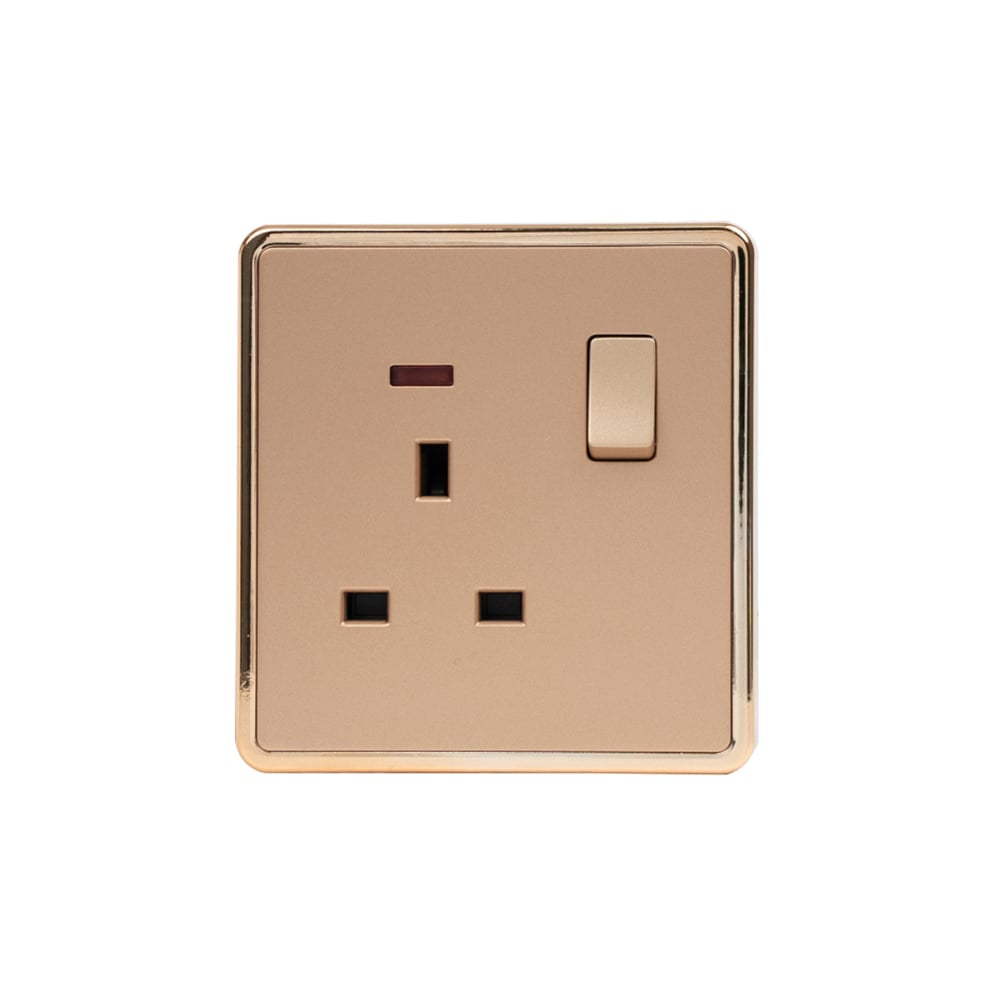
A 30 amp plug and socket is a cord-and-receptacle interface rated for a circuit carrying up to 30 A under listed conditions. It is used for RV service, generators, welders, HVAC equipment and temporary distribution, but those applications do not share one connector. IEC 60038 provides standard-voltage guidance, while North American connection geometry is identified through NEMA configurations.
30 amp plug and socket types, voltage and wiring basics
Read the NEMA configuration before the amperage
NEMA WD 6 configuration markings describe blade pattern, poles, wires and grounding provision. A 5-30 device is typically a 125 V, 2-pole, 3-wire grounding configuration; a 6-30 device is typically 250 V, 2-pole, 3-wire grounding. A 14-30 configuration is typically 125/250 V, 3-pole, 4-wire grounding and can serve equipment that requires both line-to-line voltage and a neutral. L5-30 and L6-30 are locking counterparts for the respective voltage families. The markings on both mating devices and the equipment nameplate must agree—shape compatibility should never be inferred from a photo or the “30 A” label.
Voltage, wire gauge and protective device work together
A 30 amp plug and socket does not determine circuit voltage or conductor size. In North American practice, copper 10 AWG is a common starting point for a 30 A branch circuit, but ampacity depends on insulation rating, terminals, ambient conditions, bundling, installation method and local rules. The protective device, conductors, receptacle and load must be coordinated on a dedicated circuit; qualified personnel should design, install, inspect and test it under the NEC and local code.
Use the 80% continuous-load rule only as a code-dependent screen
For planning under NEC-style continuous-load rules, a load expected to run for three hours or more is commonly calculated at 125% of its continuous rating; equivalently, a 30 A circuit is often screened at 24 A of continuous load. That 80% shorthand is not a universal operating permission. Equipment instructions, terminal ratings, local adoption and amendments, temperature, duty cycle, and the responsible designer’s calculation can require a different result, so it should never substitute for a circuit design.
A wrong voltage family can add electrician time, rework and commissioning downtime. An illustrative calculation is one avoided half-day delay multiplied by affected crew and equipment costs—more useful than connector unit price alone. For voltage context, see 120 V and 240 V outlets and normal outlet voltage.
30 amp plug and socket configuration comparison
| Common configuration | Typical nominal rating | Connection style | Typical use | Procurement check |
|---|---|---|---|---|
| NEMA 5-30 | 125 V, 30 A | Straight blade | Specified 120 V equipment | Verify compatible 125 V load and grounding |
| NEMA L5-30 | 125 V, 30 A | Locking | RV/generator or temporary power where specified | Confirm matching locking inlet or receptacle |
| NEMA 6-30 | 250 V, 30 A | Straight blade | Specified 240/250 V equipment | Check supply and equipment nameplate voltage |
| NEMA L6-30 | 250 V, 30 A | Locking | Industrial or generator connection where specified | Confirm poles/wires and locking pattern |
| NEMA 14-30 | 125/250 V, 30 A | Straight blade | Specified equipment needing a neutral and two hot legs | Confirm 3-pole, 4-wire grounding circuit and equipment instructions |
These ratings are configuration conventions, not permission to interchange devices. Listing, enclosure suitability, cord type and local rules still govern selection. Never alter blades, slots, grounding pins or connector housings to force a match; replace the mismatched component or redesign the circuit through qualified personnel.
30 amp plug and socket selection by application
| Application | First questions | Likely selection focus | Risk if missed |
|---|---|---|---|
| RV pedestal or cord | Is the vehicle inlet 30 A/125 V? Is it a dedicated RV circuit? | Correct RV-compatible configuration and weather exposure rating | Voltage mismatch or unsuitable outdoor installation |
| Generator connection | What outlet pattern and voltage does the generator provide? | Matching connector family; load calculation and transfer arrangement | Non-mating parts or unsafe backfeed arrangements |
| Industrial equipment | What do the nameplate and site supply specify? | Voltage, poles/wires, locking need and enclosure environment | Failed commissioning and downtime |
| Temporary distribution | What protection and inspection regime applies? | Listed equipment, cable management and dedicated-circuit coordination | Damage, nuisance trips or code issues |
Choose 30 A or 50 A from the load, not the plug’s appearance
A 50 A connector is not an upgrade path for a 30 A circuit. The 30 A versus 50 A decision starts with the equipment nameplate, calculated demand, supply voltage, conductor system, overcurrent protection and the required NEMA family. A 50 A device has a different circuit and connector specification; fitting it to solve nuisance trips or to “future-proof” an existing 30 A installation can create a mismatch. Specify the capacity that the equipment and engineered circuit require, then match every mating component to that selection.
30 amp plug and socket standards, listings and compliance
IEC 60038 addresses nominal system voltages, not every plug geometry. IEC 60884-1 covers plugs and socket-outlets for household and similar uses within its scope; it is not blanket approval for North American NEMA devices. NEMA WD 6 standardizes dimensional configurations, while NFPA 70 (NEC) sets installation requirements where adopted, often with local amendments. A standard may define dimensions or testing rather than constitute product certification.
Do not assume CE, RoHS or GCC documentation establishes North American compliance. Verify destination-market requirements, listing expectations, local code, intended use and marketing claims before tender, import or installation.
A practical 30 amp plug and socket procurement checklist
- Capture the equipment nameplate voltage, current, phase, plug pattern and environment in the purchase request.
- Match plug, connector, inlet and receptacle configuration—not only their ampere ratings.
- Confirm the dedicated circuit’s breaker, conductor specification and grounding arrangement with the responsible electrical professional.
- Request dimensional, rating and destination-market documentation before approving an equivalent item.
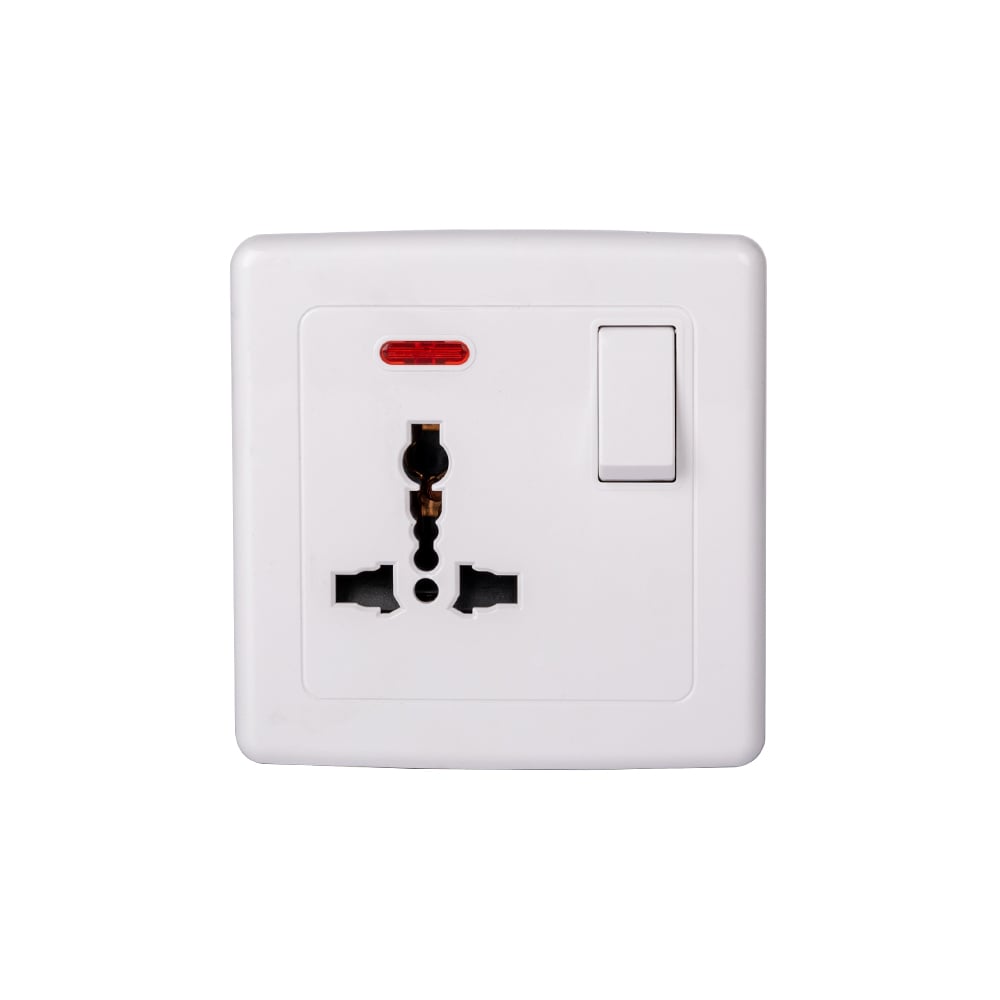
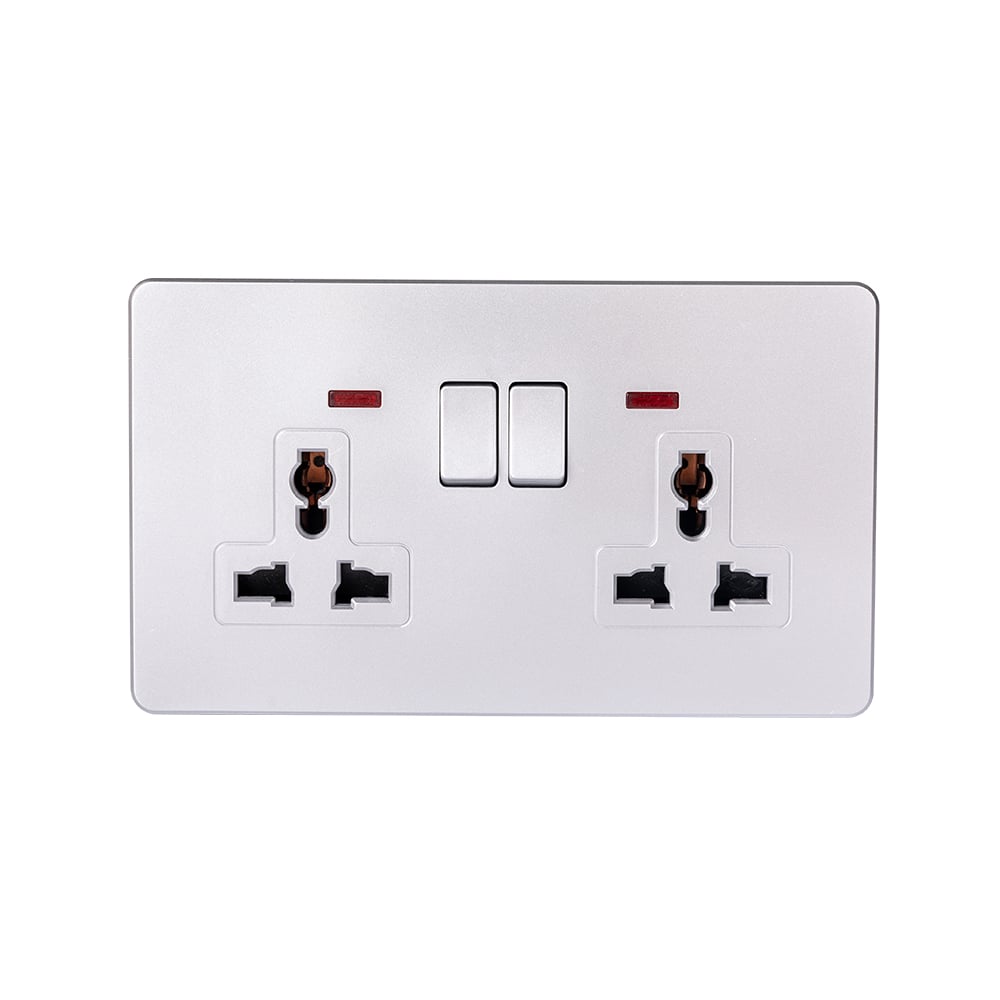
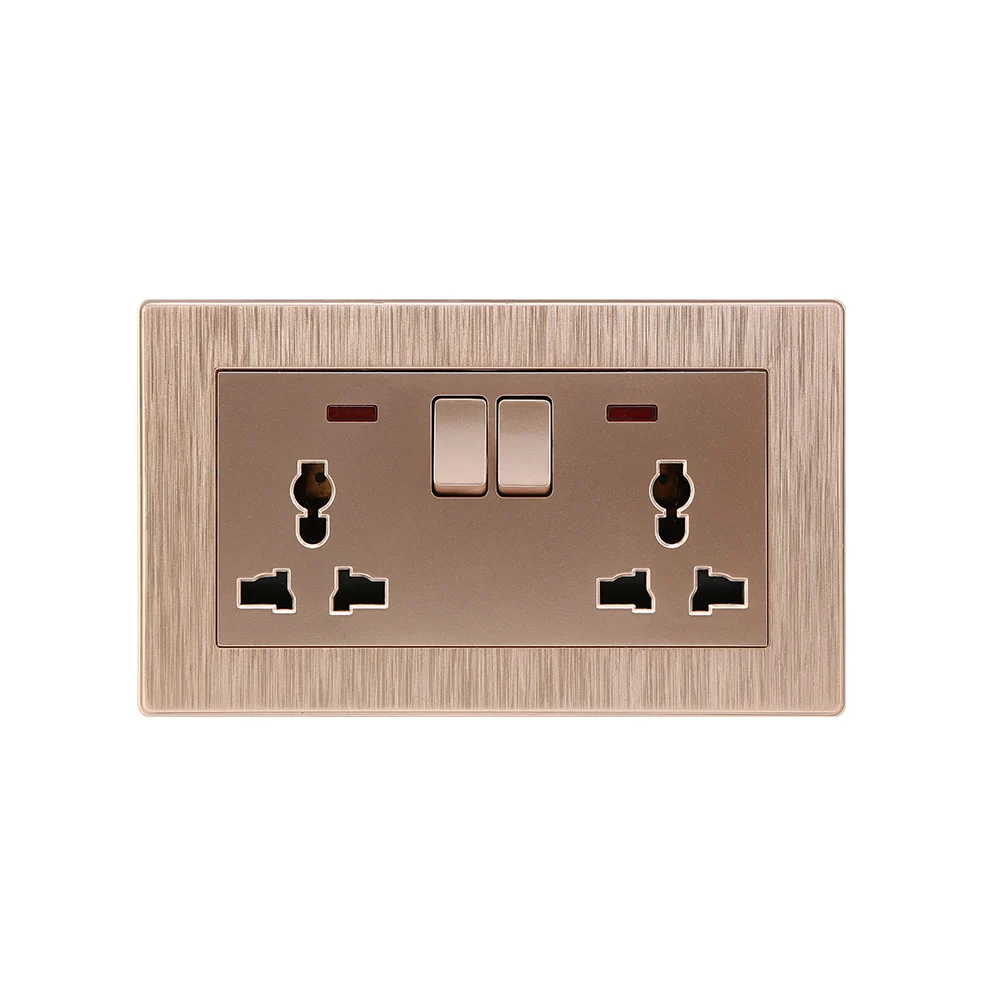
For projects sourcing wall switches and sockets alongside related wiring devices, ABUK provides configurable wiring-device solutions with CE, RoHS and GCC documentation where applicable. Treat those documents as part of the submittal package, then verify project-specific and destination-market requirements independently.
30 amp plug and socket frequently asked questions
What is a 30 amp plug and socket used for?
It connects equipment designed for a 30 A circuit, including some RVs, generators, temporary-power assemblies and industrial loads. Voltage, configuration and the nameplate still determine compatibility.
Is a 30 amp outlet 120V or 240V?
It can be either. NEMA 5-30 or L5-30 is associated with the 125 V family, while 6-30 or L6-30 is associated with 250 V; inspect the marking and confirm the installed supply.
Can I plug a 30 amp RV cord into a household outlet?
Not directly unless outlet, circuit and RV cord are correctly matched and approved for that use. A household receptacle is often 15 A or 20 A, not a substitute for a specified 30 A RV circuit; have a qualified person assess any adapter or installation.
What breaker is required for a 30 amp receptacle?
A 30 A receptacle is generally served by a properly designed 30 A protective device, but final selection depends on the circuit, load and adopted local code. Its rating cannot override equipment instructions, conductor ampacity or local requirements.
30 amp plug and socket references and next step
- IEC 60038: IEC standard voltages
- IEC 60884-1: Plugs and socket-outlets for household and similar purposes
- NEMA WD 6: Attachment plugs and receptacles
- NFPA 70: National Electrical Code
The dependable choice is the one whose voltage, configuration and circuit protection agree before it reaches the site. Review ABUK’s electrical products when preparing a wiring-device specification, and contact the team to discuss configurable options and documentation for your destination market.