
 Wenzhou Lita Electric Co., Ltd.
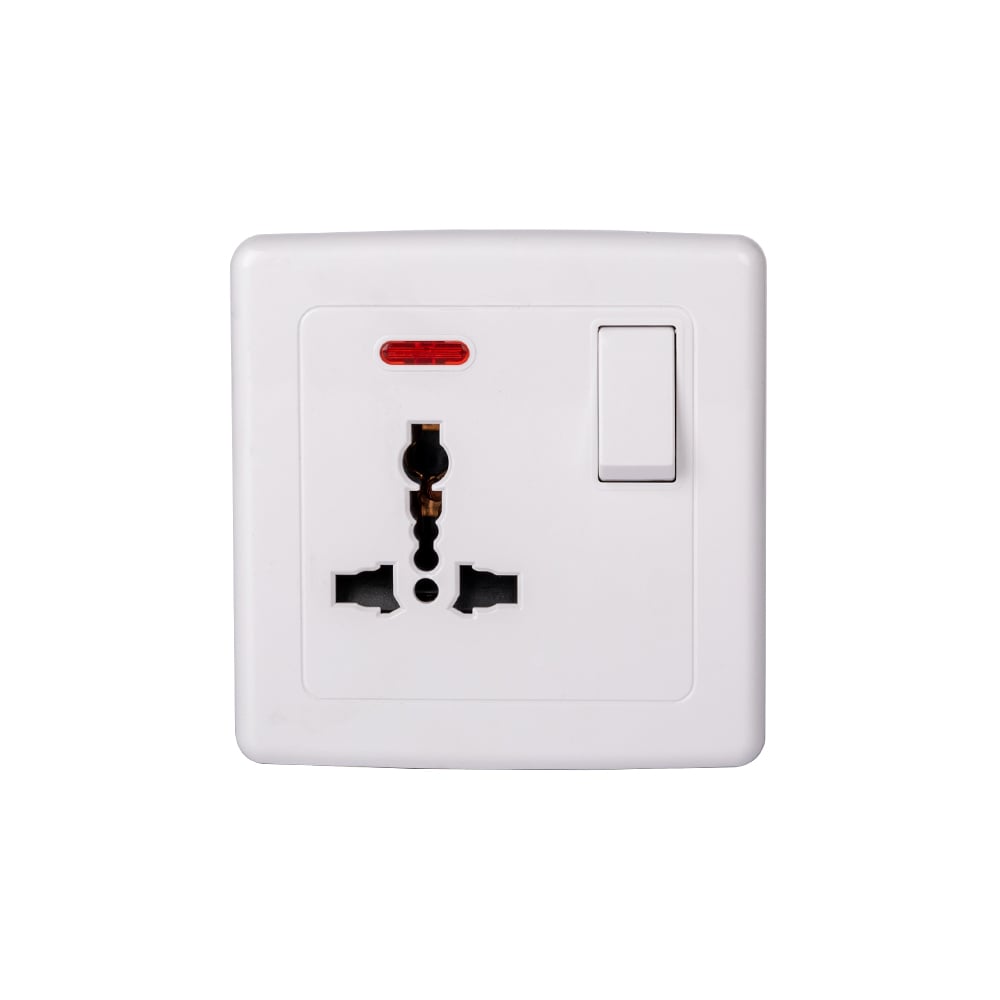
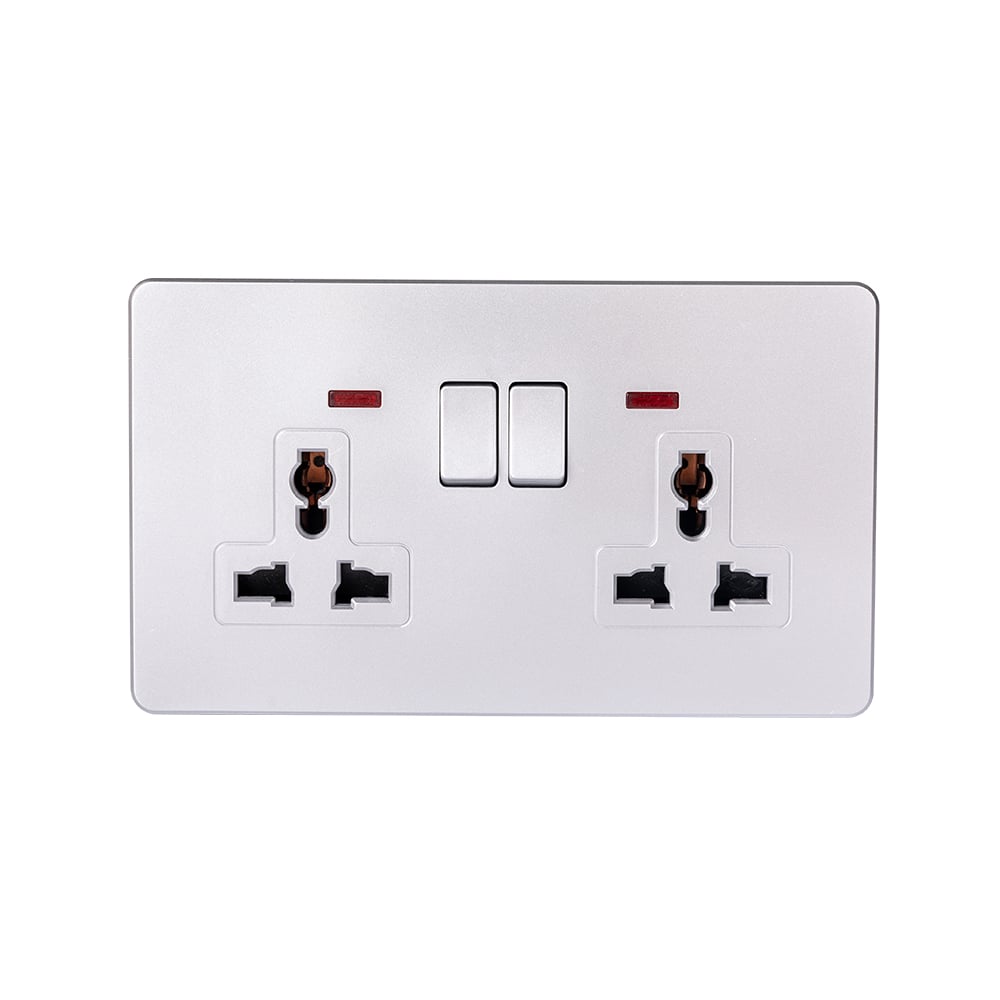
Canadian Electrical Socket Types: 120V and 240V Receptacle Guide
Search results for Canadian sockets commonly reduce the answer to Type A and Type B. That shorthand is useful for travel orientation, but it is incomplete for B2B procurement because it does not identify the NEMA configuration, circuit ampacity, grounding arrangement, product approval or location-specific protection. A purchase order that says only “Canadian outlet” can therefore admit non-equivalent products, creating incompatible equipment connections, approval gaps, change orders or inspection delays. The decisive question is not whether a plug looks familiar; it is whether the receptacle, branch circuit, load, protection, certification evidence and destination authority having jurisdiction align. This guide separates travel terminology from project specifications, compares common 120 V configurations, explains 240 V selection boundaries and provides a compliance and total-cost checklist without offering DIY wiring instructions.
Quick answer: The common canadian electrical socket type is described internationally as Type A or Type B, with nominal 120 V, 60 Hz power for ordinary receptacles. In procurement terms, the familiar grounded outlet is commonly a NEMA 5-15R, while a 20 A, 125 V branch circuit may use a NEMA 5-20R. Canadian premises can also provide 240 V for dedicated loads, but there is no single “Canadian 240 V socket.” Select the exact receptacle from the circuit voltage, ampere rating, neutral requirement, grounding arrangement, load plug and local code, then have the design verified by the authority having jurisdiction (AHJ) and a qualified electrical professional.
Type A generally means two flat parallel blades without a grounding pin; Type B adds a grounding pin. Public references summarize Canada as Type A/B, 120 V and 60 Hz.[1] A product schedule also needs the NEMA configuration, ratings and approval evidence. For device compatibility context, see this overview of Canada plugs, voltage and US compatibility.
How do Type A and Type B relate to NEMA 5-15 and 5-20 receptacles?
Type A/B describes plug families; NEMA designations distinguish rated configurations. A NEMA 5-15R is a 15 A, 125 V grounding receptacle with two parallel slots. A NEMA 5-20R is a 20 A, 125 V grounding receptacle whose T-slot accepts a matching 20 A plug and common 15 A plugs. Manufacturer specifications provide a cross-check for those ratings.[2][3]
| Term or configuration | Visible geometry | Typical purchasing meaning | What it does not prove |
|---|---|---|---|
| Type A | Two parallel flat contacts | Country-level compatibility context for ungrounded plugs | Branch-circuit rating, polarity, product approval or suitability for permanent installation |
| Type B | Two parallel flat contacts plus grounding pin | Country-level context for grounded plugs | That the installed grounding path is continuous or that every receptacle has the same ampere rating |
| NEMA 5-15R | Two parallel slots plus grounding opening | 15 A, 125 V grounding configuration for many ordinary 120 V applications | That the location does not require tamper resistance, GFCI protection or another construction grade |
| NEMA 5-20R | One T-shaped slot, one straight slot and grounding opening | 20 A, 125 V grounding configuration coordinated with a suitable 20 A circuit | That replacing a 5-15R alone upgrades the conductors, breaker or permitted load |
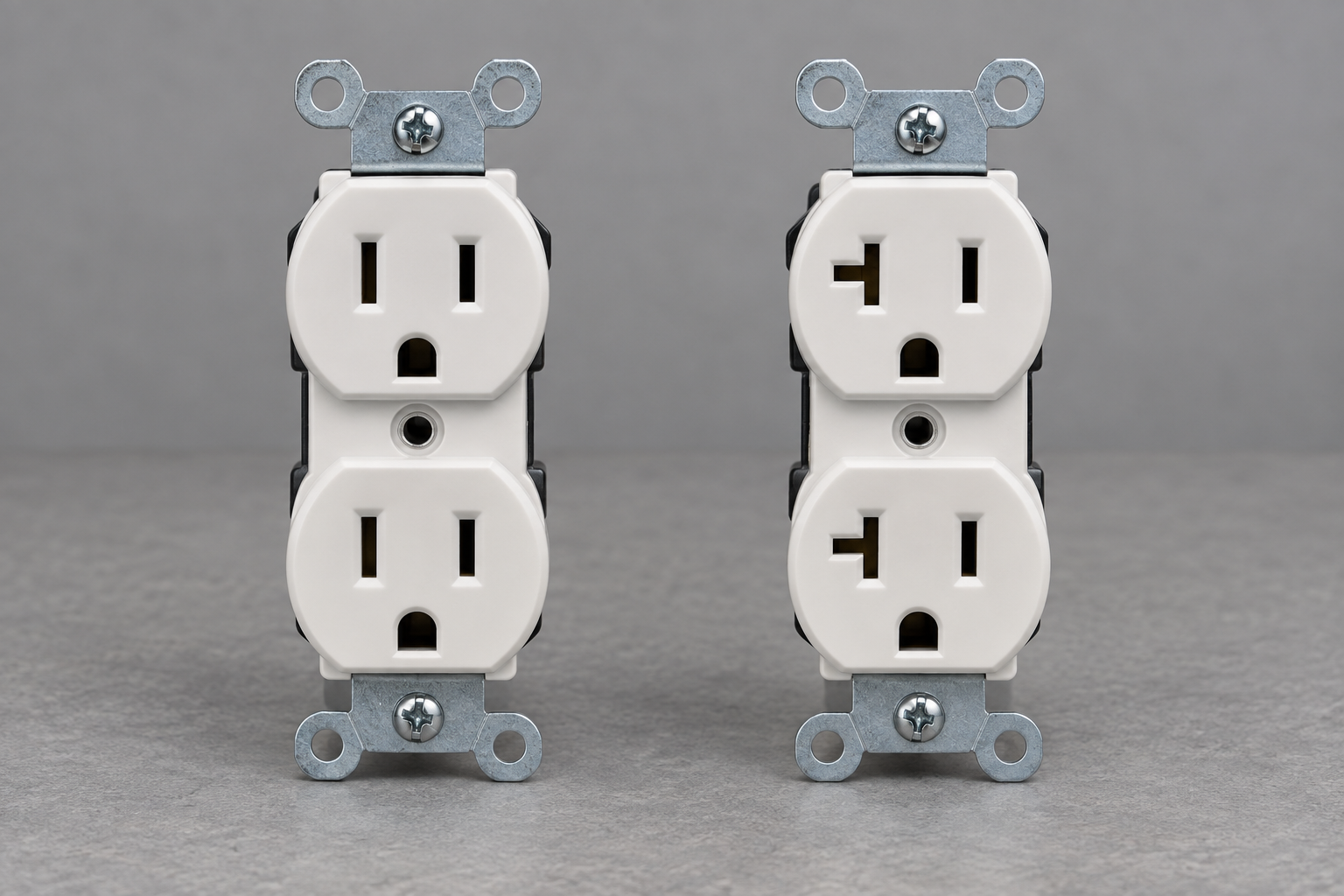
For a common 120 V branch circuit, the canadian electrical socket type decision therefore starts with the circuit rating and intended load, not the faceplate. A 5-20R should not be specified simply because its T-slot accepts more plugs. The conductor, overcurrent protection, box, terminals, environmental rating and connected equipment must be coordinated as one system.
Which receptacle is appropriate for a 240V Canadian appliance?
First determine whether the load needs line-to-line voltage only or both 120 V and 240 V functions. A load without a neutral may use a two-pole, three-wire grounding NEMA 6 configuration. A load needing two lines, neutral and grounding uses a four-wire 125/250 V configuration, often from the NEMA 14 family. Ampere classes are intentionally different, and locking devices form another family.
That classification does not permit substitution. A range, dryer, heater, compressor, EV supply equipment or machine may require a specific plug and dedicated circuit. Legacy configurations are not templates for new work. Buyers should collect plug and receptacle photos, the nameplate, instructions and circuit schedule, then ask the responsible designer or electrician to identify the exact device.
An adapter changes fit but cannot add a neutral or grounding conductor, increase ampacity or make an unapproved device acceptable. A plug/receptacle difference is a design-review trigger, not an invitation to improvise.
Which Canadian approval and protection checks apply?
Canada does not have one installation authority for every project. Provincial or territorial rules, local amendments, occupancy and the AHJ determine the code and inspection path. Ontario guidance, for example, requires affected electrical products to carry the mark or label of an accredited certification or evaluation agency.[4]
A buyer should therefore request the exact certification mark, file or listing information, model number and scope, then confirm them with the destination AHJ. A CSA mark or an appropriate cUL mark may be relevant, but the artwork alone is not enough: the product identity and Canadian scope must match. CE, RoHS and GCC documentation may serve other markets or purposes; they are not substitutes for Canadian electrical product approval.
Tamper-resistant construction and GFCI protection are also location- and code-dependent. Ontario guidance, for example, identifies tamper-resistant receptacles for residential areas and GFCI protection for outlets near sinks, including a stated 1.5 m condition.[5] That is useful evidence, not a nationwide shortcut. Kitchens, washrooms, outdoor areas, garages, workplaces, health-care spaces and temporary installations can have different rules. The procurement document should say where the device will be installed and who will confirm the protection method.
Where do hidden costs appear in a receptacle project?
Unit price rarely predicts total cost. An outlet becomes expensive when its approval is unverifiable, terminals do not match the conductor, the faceplate system is unavailable or its grade is unsuitable. Stocking similar-looking 5-15R, 5-20R and 240 V devices without controlled labels also increases picking errors.
| Selection class | Evidence to collect | Typical risk if omitted | TCO control |
|---|---|---|---|
| 120 V general-purpose | 5-15R or 5-20R designation, circuit rating, application grade, grounding and protection requirements | Inspection rejection, overheating at poor terminations or an incompatible plug | Standardize an approved device schedule by room and circuit class |
| 240 V, no neutral | Exact voltage, amperage, pole/wire count, equipment plug and instructions | Wrong configuration, unnecessary rework or unsafe adapter use | Release the purchase only after load and circuit review |
| 125/250 V with neutral | Neutral requirement, grounding, ampere class and dedicated-load documentation | A missing conductor or a receptacle that cannot serve the appliance functions | Coordinate equipment, branch circuit and receptacle in one submittal |
| Wet, outdoor or public-access location | GFCI method, tamper/weather resistance, enclosure and AHJ requirements | Change orders, nuisance outages, premature damage or failed inspection | Specify the environment before comparing product prices |
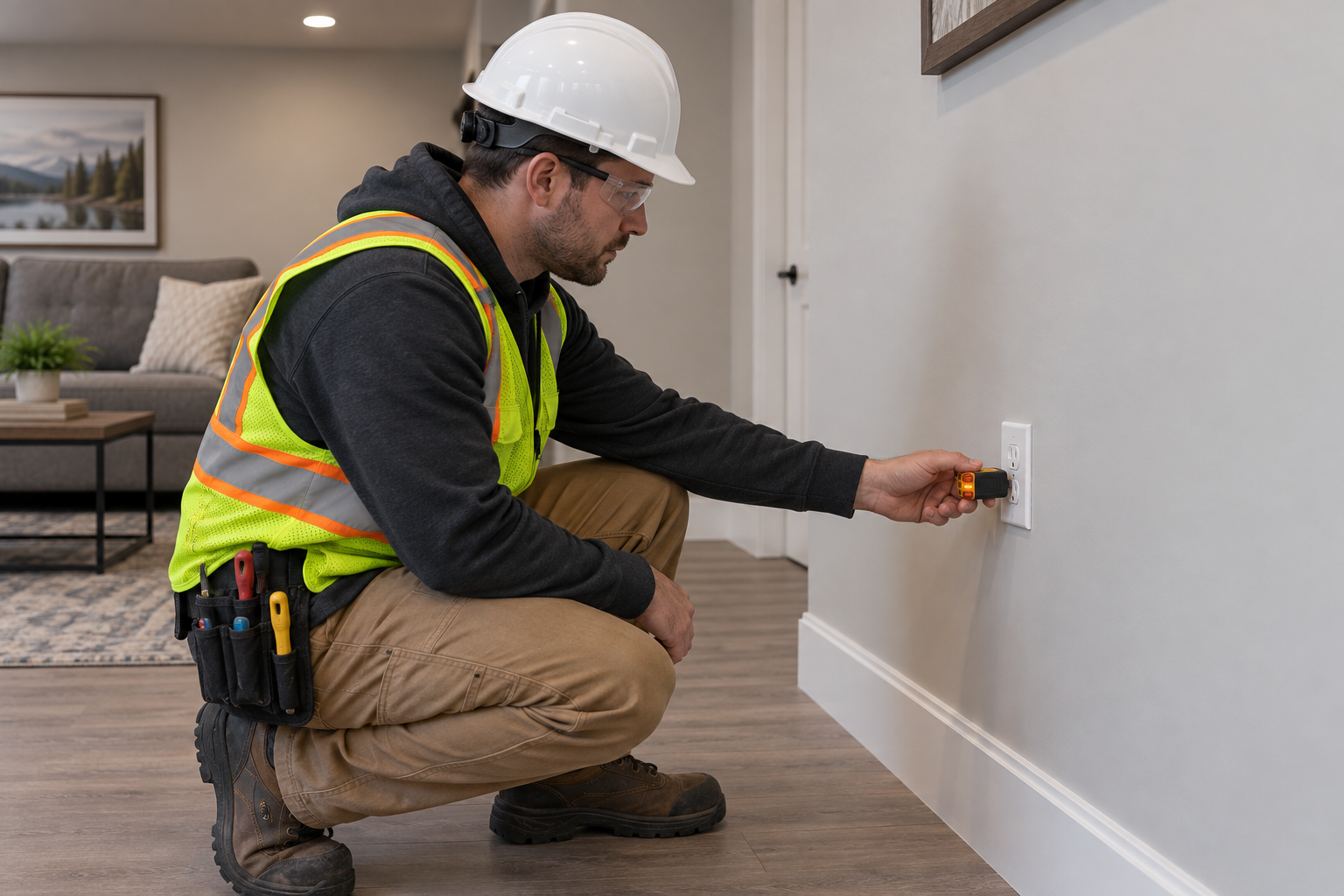
How should a project team specify and purchase Canadian receptacles?
A reliable canadian electrical socket type purchase can be reduced to five documented actions:
- Record the load: capture the equipment nameplate, plug configuration, operating voltage, frequency, current and manufacturer instructions.
- Record the circuit: obtain the nominal voltage, breaker rating, conductor information, neutral and grounding arrangement from qualified project personnel.
- Define the environment: state indoor or outdoor use, wet exposure, public access, occupancy and whether tamper-resistant, GFCI, weather-resistant or special-grade construction is required.
- Verify approval: match the model to Canadian certification or evaluation evidence and confirm acceptance with the AHJ; do not approve a family-level certificate that excludes the ordered SKU.
- Control the submittal: include drawings, faceplate and box compatibility, terminal range, installation instructions, labeling, samples and spare strategy before mass shipment.
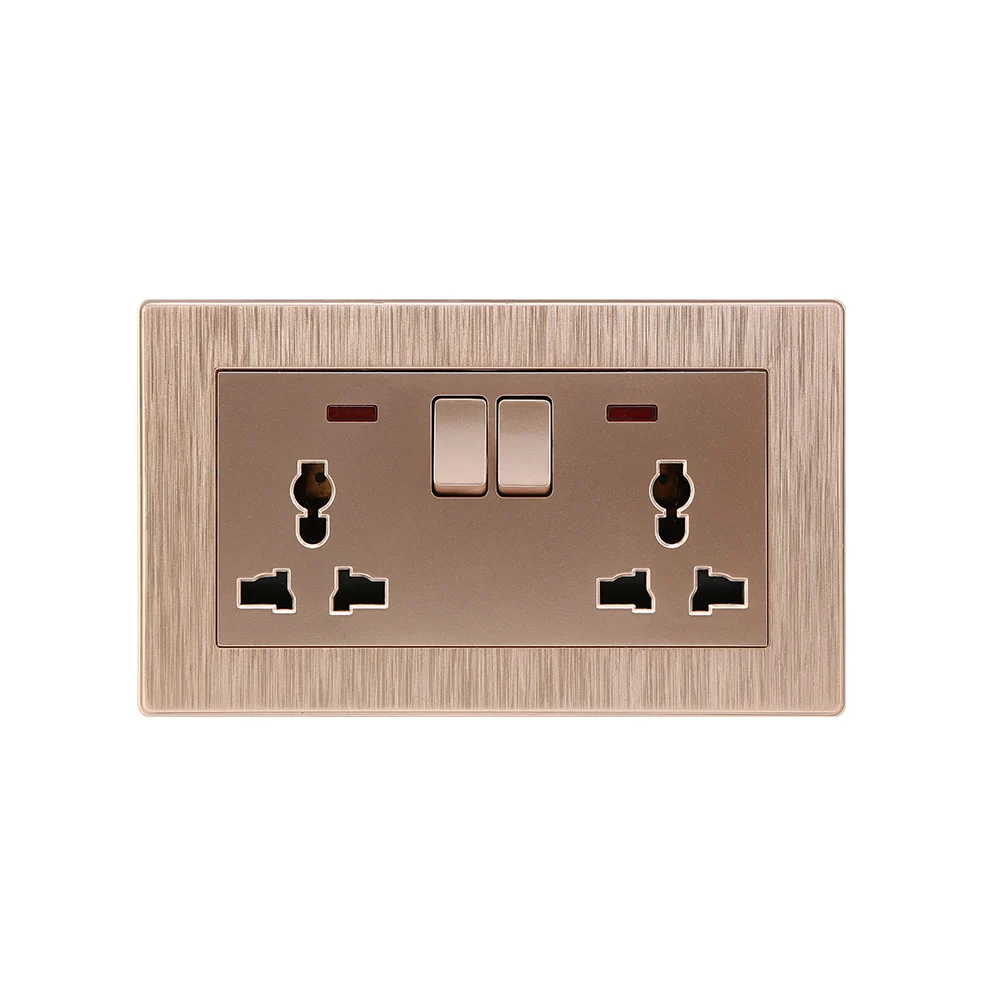
ABUK can support sourcing discussions with its wall switch and socket range and broader electrical product catalogue. For Canadian projects, buyers should request model-specific evidence and have the final selection reviewed for the destination jurisdiction; no general CE, RoHS or GCC statement should be interpreted as Canadian approval.
Frequently asked questions
What electrical socket type is used in Canada?
Canada is commonly described as using Type A and Type B plugs and sockets. For fixed-installation purchasing, specify the NEMA configuration as well; NEMA 5-15R is a common 15 A, 125 V grounding receptacle, while other circuits and locations require different devices.
Are Canadian sockets the same as US outlets?
They often share Type A/B and NEMA 5-series geometry, so many plugs are mechanically compatible. Approval markings, adopted code editions, local amendments and installation requirements are not automatically identical, so a US-market listing or specification should not be copied into a Canadian project without verification.
What voltage and frequency do Canadian outlets use?
Ordinary receptacles are generally supplied at nominal 120 V, 60 Hz. Buildings may also provide 240 V or 120/240 V service for dedicated loads; the voltage at a particular receptacle must be confirmed from project documentation and field verification.
Which Canadian receptacle is needed for 240V appliances?
There is no universal 240 V receptacle. The correct choice depends on voltage, ampere rating, whether the load needs a neutral, grounding, straight-blade or locking geometry, the appliance plug and instructions, and the applicable code. Have a qualified electrical professional and the AHJ confirm the exact configuration.
References
- World Standards, “Canada—Power plug, socket and mains voltage”, accessed September 22, 2026.
- Leviton T5320-W product specification, 15 A, 125 V, NEMA 5-15R.
- Leviton T5825-W product specification, 20 A, 125 V, NEMA 5-20R.
- Electrical Safety Authority, “Search for an Approval Mark”, accessed September 22, 2026.
- Electrical Safety Authority, “Are You Using the Right Outlet?”, accessed September 22, 2026.
Conclusion
The decisive distinction is between a country-level plug label and a project-ready receptacle specification. Type A/B and nominal 120 V, 60 Hz answer the first question; NEMA configuration, circuit ampacity, neutral and grounding needs, environmental protection and accepted approval marks answer the second. For any canadian electrical socket type decision, verify the equipment first, coordinate the circuit next, and confirm the exact product with the AHJ before release. That sequence prevents a visually compatible outlet from becoming a costly change order or field workaround. ABUK can help buyers organize product options and documentation for review, but Canadian acceptance must remain model- and jurisdiction-specific. For a controlled specification or sourcing discussion, contact the ABUK team with the load schedule and destination requirements.