
 Wenzhou Lita Electric Co., Ltd.
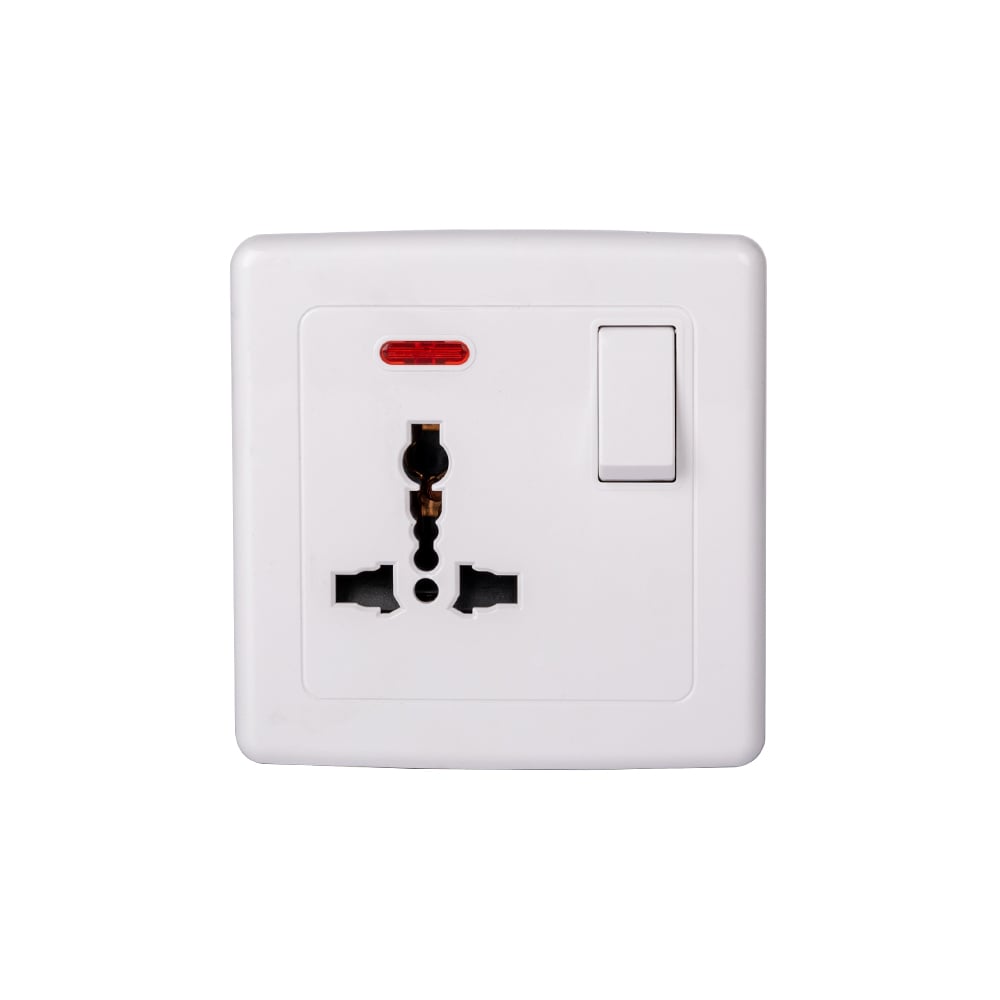
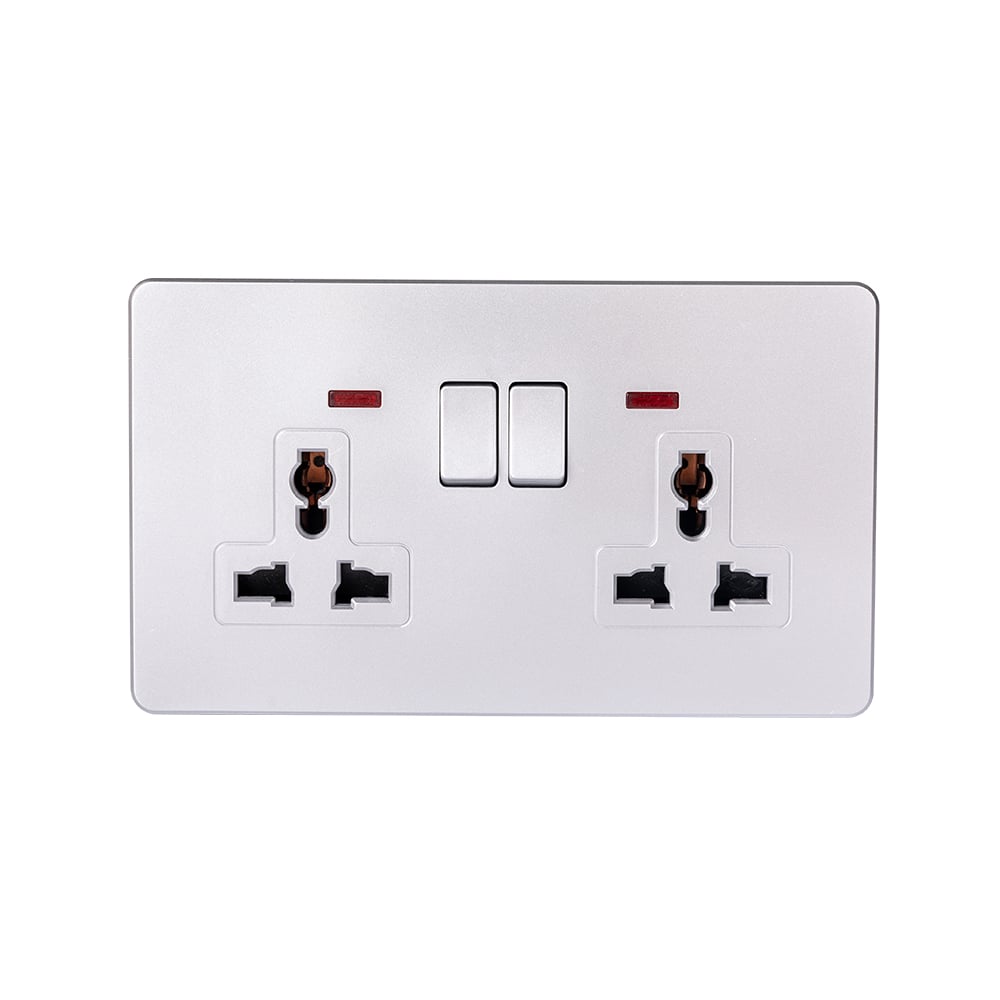
Wall Socket Types
When a procurement engineer in Dubai encountered a mixed socket schedule for a hotel renovation, he approved samples by pin pattern, released the order and watched installers stop within hours because several devices did not match the specified back boxes or circuit ratings. The sockets were not simply defective; this representative case turns on selection, installation and destination-market compliance.
Summary: Choose wall socket types by the destination standard, grounding method, rated voltage and current, shutter design, enclosure and mounting system—not by hole shape alone. The IEC groups 15 familiar configurations from Type A through Type O, but national rules determine what may be installed. Confirm the appliance load, approval documents and back-box fit before ordering.
Countries retain different socket systems because the installed infrastructure cannot be separated from the interface
Wall socket types describe fixed contact devices that connect plugs to building circuits. IEC World Plugs provides a useful country-level reference for plug letters, nominal mains voltage and frequency, while IEC 60083 catalogs plugs and socket-outlets for domestic and similar general use that are standardized in IEC member countries. Neither resource replaces a national wiring code, product approval scheme, project specification or authority-having-jurisdiction decision.
There is no single technical reason that every country selected the same interface. National systems developed around different supply voltages and frequencies, grounding and polarity conventions, product standards and wiring practices. Once millions of plugs, sockets, appliances, back boxes and trained installers formed an installed base, changing the interface would also mean managing compatibility, rewiring, replacement and transition risk. That practical cost helps explain why national systems persist even when international standards can describe them side by side.
Pin shape cannot prove voltage or frequency; similar interfaces appear on different supplies, and one country may use several configurations. For a project schedule, build the decision in layers: interface family; nominal voltage and frequency; rated current and load duty; grounding and polarity; shutter or contact-access protection; environmental enclosure; mounting and wiring details; and national approval. A failure at any layer can make a visually compatible socket unsuitable.
Type A–O letters identify interface shapes but do not confirm voltage, grounding or approval
The A–O letters are convenient traveler-facing and market identifiers, not a single worldwide certification scheme or a complete procurement specification. They help a traveler ask whether a plug is likely to fit; they do not establish conductor size, wiring terminals, shutter performance, polarity, temperature rise, mounting dimensions or legal acceptance. The table below summarizes geometry and common reference systems; ratings are representative of named systems and must be verified against the applicable national standard and the product marking.
| Type | Contact layout and earthing | Common system or market reference |
|---|---|---|
| A | Two parallel flat blades; ungrounded | NEMA 1-15 family, commonly 15 A/125 V |
| B | Two parallel flat blades plus earth pin | NEMA 5-15 family, commonly 15 A/125 V |
| C | Two round pins; ungrounded | CEE 7/16 Europlug is 2.5 A/250 V; socket practice varies |
| D | Three round pins in a triangle | BS 546 5 A pattern, associated with India and nearby markets |
| E | Two round pins; socket earth pin enters plug hole | French/Belgian system, commonly 16 A/250 V |
| F | Two round pins; side earthing contacts | CEE 7/3 and 7/4 system, commonly 16 A/250 V |
| G | Three rectangular pins; earthed and polarized | BS 1363, rated 13 A/250 V with a fused plug |
| H | Three pins; modern versions use round pins | Israeli SI 32 system, commonly 16 A/250 V |
| I | Two angled flat pins; optional vertical earth | AS/NZS 3112 includes 10 A/250 V and higher-current variants |
| J | Three offset round pins; earthed | Swiss SN 441011 system, with 10 A and 16 A families |
| K | Two round pins plus dedicated earth pin | Danish national system; verify the rated variant and approval |
| L | Three round pins in one line | Italian CEI 23-50 system, 10 A or 16 A/250 V |
| M | Three large round pins in a triangle | BS 546 15 A pattern, used for higher-current legacy applications |
| N | Three round pins; earth offset between line and neutral | IEC 60906-1-derived systems; Brazil uses 10 A and 20 A variants |
| O | Three round pins in a triangle | Thai TIS 166-2549 system, rated 16 A/250 V |
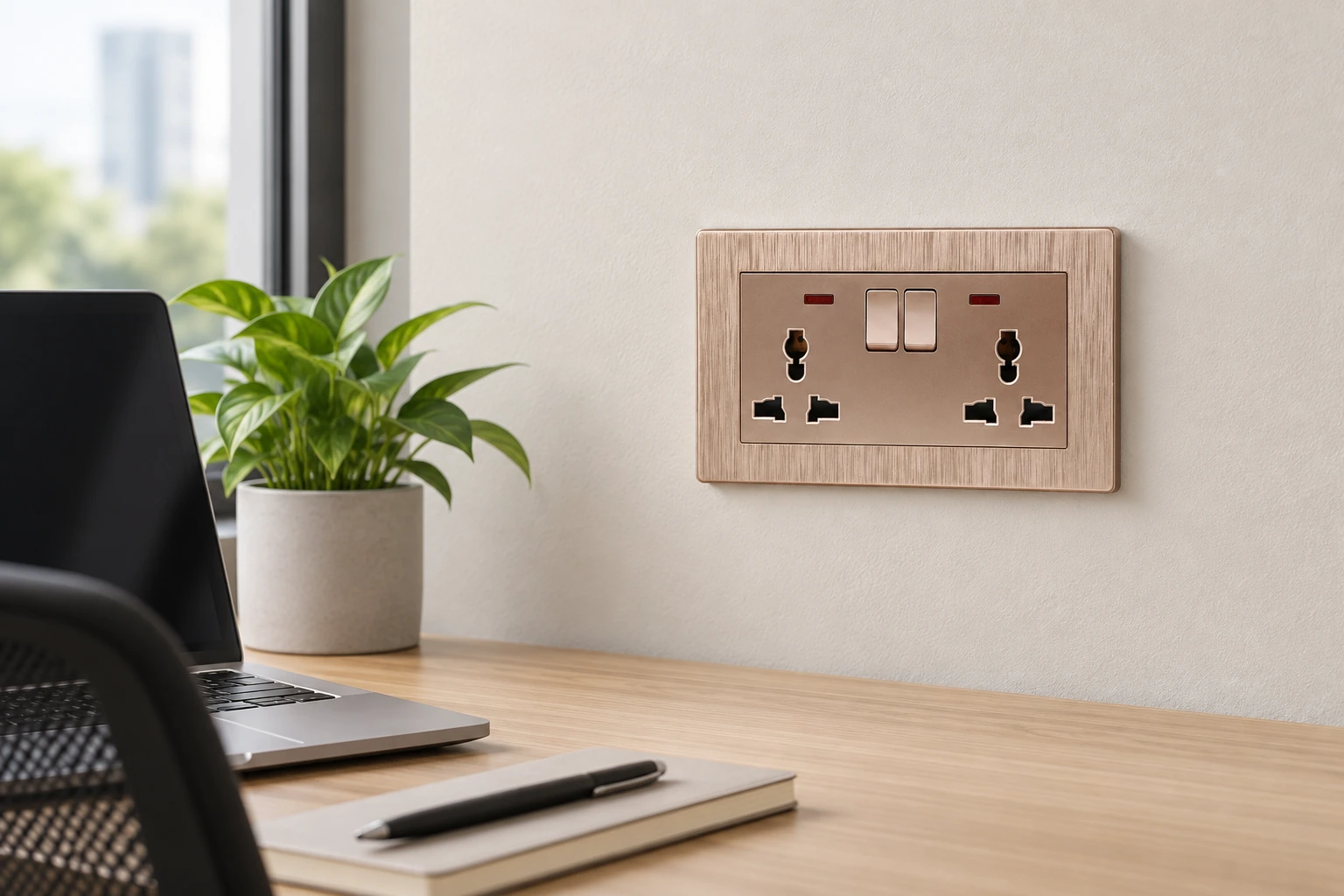
Type E and F plugs have partial interoperability, but earthing still governs safe use; Type I, J and N families also contain current-specific dimensions. Require drawings, plug-gauge evidence and mating samples—not catalog photographs alone.
Grounding, polarity, shutters and contact geometry determine whether a socket system is safely compatible
A grounded wall socket provides a protective-earth path for compatible Class I equipment, but the terminal, continuity, plug sequence and building earthing must work together. BS 1363, UL 498 and IEC 60884-1 apply system-specific construction, gauge and temperature-rise tests; visual inspection cannot replace test evidence.
Recessed faces can reduce access to live pins during insertion, whereas flush contacts may expose more of a partly inserted pin; safeguards vary by national design. Some shutters open with an earth pin, while others require simultaneous line-and-neutral pressure. Request the shutter sequence and test evidence—never probe a sample with tools or single pins.
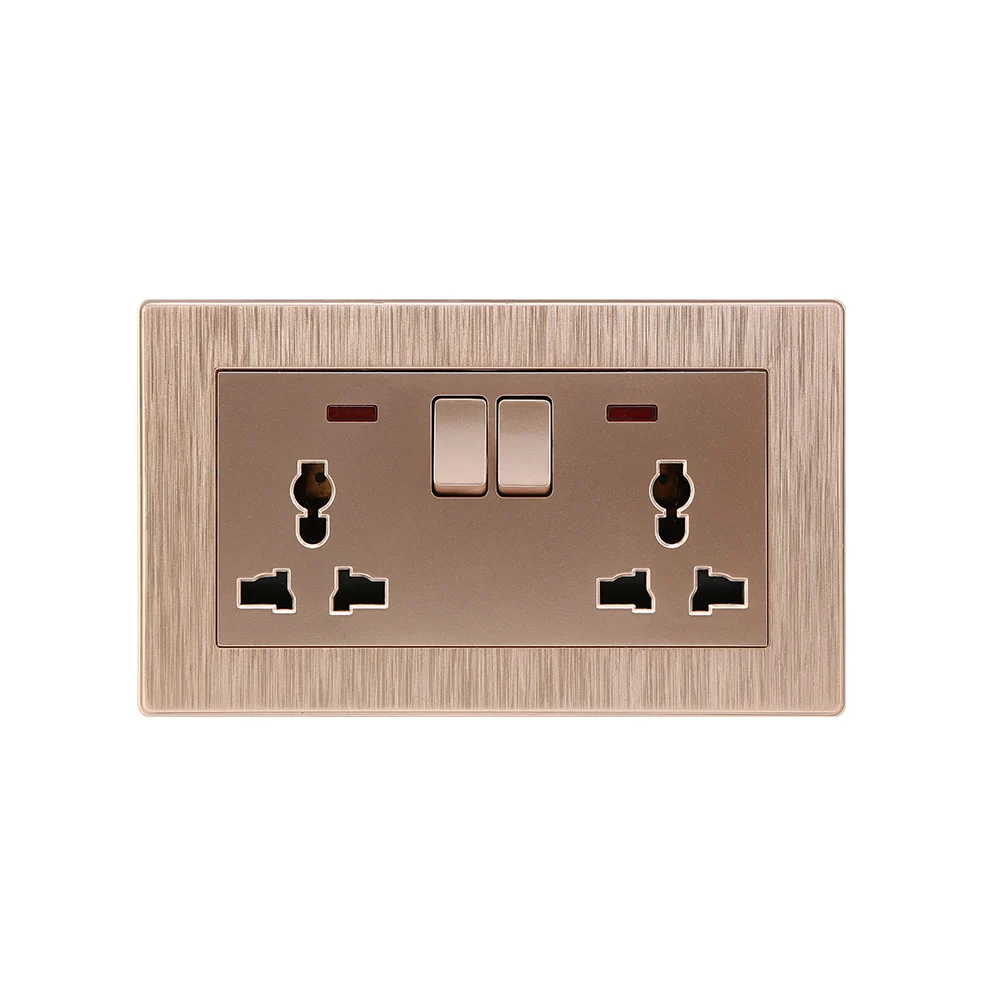
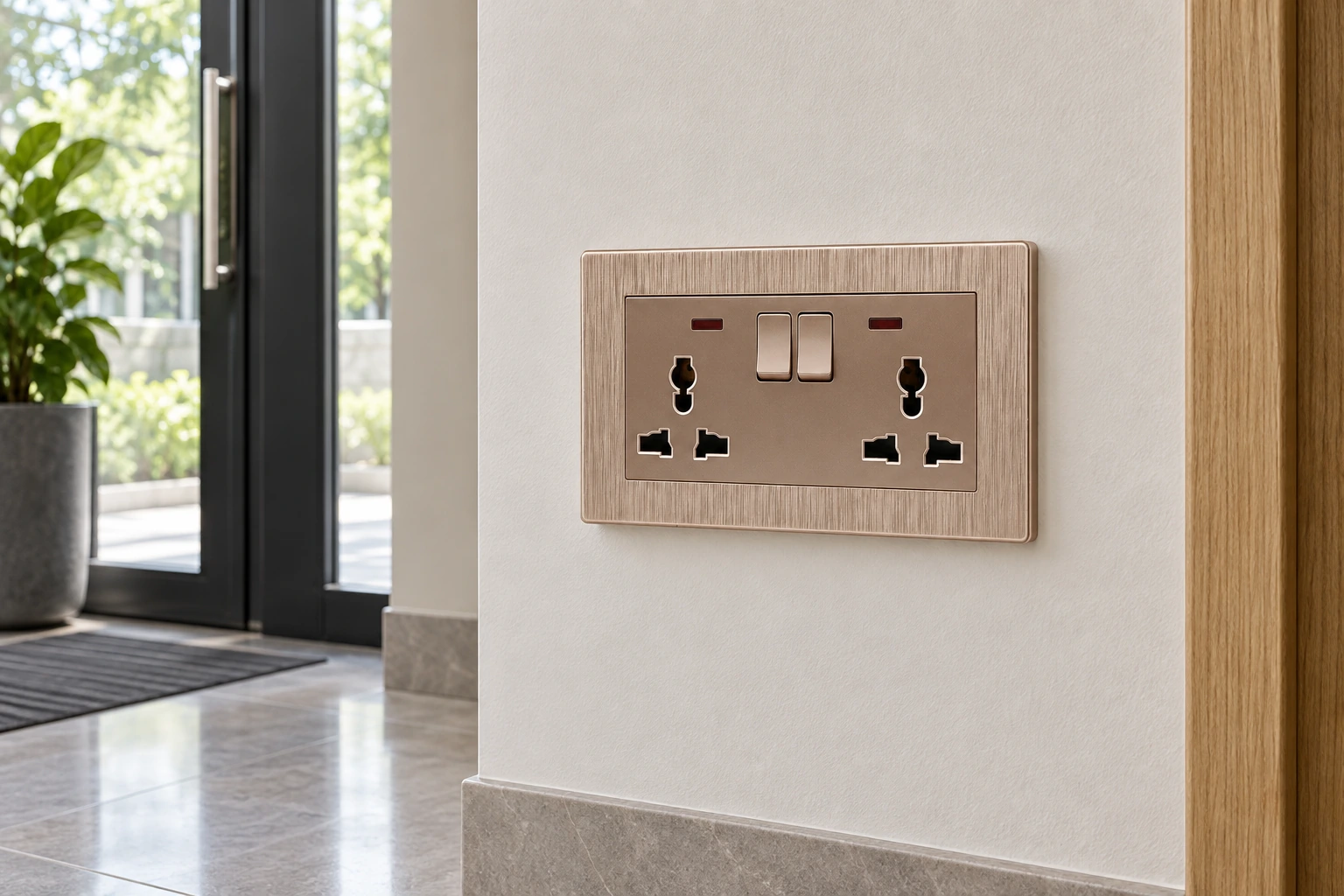
“Universal” sockets require more evidence, not fewer checks. Accommodating several pin diameters, widths and spacings in one contact system can create questions about engagement depth, contact pressure, earth continuity, polarity and shutter operation. Procurement evidence should therefore identify each accepted plug, show gauge and abnormal-use results, document protective-earth sequencing where applicable, and include temperature-rise results at the claimed rating. Approval or a test report for one national interface must not be assumed to cover every opening on the faceplate. Unless the destination authority accepts the exact design and use, specify a dedicated national-standard interface.
Voltage, current, load duty and installation conditions determine the usable load
A nameplate rating is a ceiling under stated conditions. As an initial check, current is power divided by voltage: 1,500 W at 120 V draws 12.5 A, while 3,000 W at 230 V draws about 13.0 A. Starting current, duty, power factor, wiring and local rules can change the decision.
High-load appliances need a matched plug-and-socket system, protective device and circuit—not merely the largest printed ampere value. UL 498 covers U.S. attachment plugs and receptacles; BS 1363 addresses the UK 13 A system; IEC 60884-1 provides general household requirements. Confirm the governing edition and local deviations.
Domestic wall sockets should also be separated from purpose-specific connectors. Equipment for factories, construction sites, data facilities or other demanding locations may require an industrial plug-and-socket system selected for current, voltage, frequency, keying, duty and environment. IEC 60309-1 covers industrial plugs, fixed or portable socket-outlets and appliance inlets within its stated scope; its existence does not make a domestic Type letter an industrial rating. A 16 A domestic socket and a 16 A industrial connector can share a current number while differing in construction, mechanical coding, endurance and intended conditions.
For an outdoor wall socket, the two-numeral IEC 60529 IP code describes tested ingress protection, but not complete outdoor suitability. Enclosure, in-use cover position, seals, cable entries, exposure, orientation, drainage, RCD/GFCI protection and workmanship still matter; an IP-rated insert cannot compensate for an unsealed box.
For replacements, a matching faceplate does not prove compatibility. Check mounting centers, terminals, conductor capacity, earth provision and back-box depth; USB, smart or shuttered mechanisms may require extra rear clearance.
Verified compatibility usually lowers lifecycle exposure even when the unit price is higher
| Procurement approach | Performance and compatibility | Maintenance and returns | Unit-cost tendency | Total-cost exposure |
|---|---|---|---|---|
| Destination-specific approved socket | One national system; documented ratings | Lower installer ambiguity | May be higher across separate SKUs | Easier submittal and inspection control |
| Multi-standard “universal” socket | Broad acceptance; contact and approval need proof | Misuse, fit and replacement risk | Can appear attractive | Rework can erase savings |
| Visual-match replacement | Box, terminal and circuit fit unknown | Delays and repeat visits | Lowest apparent effort | Highest commissioning uncertainty |
Illustrative TCO: a 1,000-unit order saving $0.80 each saves $800; if 3% require a $25 revisit, field labor reaches $750 before freight, downtime or parts. Replace these assumptions with project rates and compare verified landed cost.
The installation environment should drive the evidence requested for each application
| Application | Minimum questions to resolve | Evidence to request | Commonly missed cost driver |
|---|---|---|---|
| Dry indoor residential | Type, shutters, earth, rating, box | Marking, drawing, test/approval record | Faceplate or box mismatch |
| Hotel or multi-user space | Approved interface, tamper resistance | Approval and shutter description | Universal-socket misuse |
| Kitchen, wash area or outdoors | Ingress, in-use cover, RCD/GFCI, entry | IEC 60529 report and instructions | Box, gland and protective device |
| High-load appliance | Watts, duty, starting current, circuit | Rating, temperature-rise evidence, schedule | Wiring and breaker upgrades |
| Industrial or harsh-duty equipment | Connector system, keying, duty, environment | Applicable IEC 60309 or national evidence | Interlocks, enclosure and maintenance stock |
| Retrofit or smart/USB socket | Depth, terminals, neutral, heat | Rear drawing and wiring diagram | Opening, rewiring and repair |
Standards and conformity claims apply only within a defined model, scope and destination
- IEC 60083 is a catalog of national domestic and similar plug/socket systems; it is not a global installation code or a blanket product approval.
- IEC 60884-1 sets general requirements and tests for household and similar plugs and socket-outlets, but national standards, deviations and certification schemes still apply.
- IEC 60309-1 addresses industrial plugs, socket-outlets and appliance inlets within its scope; it should not be used to imply that a domestic wall socket is suitable for industrial duty.
- IEC 60529 defines IP-code classification and tests. It addresses enclosure ingress protection, not the complete outdoor installation.
- National systems such as UL 498/NFPA 70, BS 1363/BS 7671, AS/NZS 3112 and local Gulf requirements determine product and installation obligations in their jurisdictions.
A standard may define construction requirements or a test method without itself being a product certificate. Likewise, CE marking, RoHS restrictions and GCC/Gulf conformity pathways have different legal scopes; none is a universal quality certificate. Confirm the issuer, report number, model coverage, edition, tested rating and destination applicability. Unsupported marks can cause tender rejection, customs holds, relabeling or recalls.
A five-step specification process closes the gaps that cause rework and approval delays
- Freeze the destination country, national standard, approval route and standard edition before requesting prices.
- Calculate the load and verify voltage, frequency, current, circuit protection, conductor capacity and earthing.
- Define shutters, recess/contact protection, IP/environmental conditions, cover-in-use requirement and mounting orientation.
- Check the drawing against mounting centers, plate dimensions, terminal access and minimum back-box depth; validate a sample with the intended plug and box.
- Build the submittal around traceable model numbers, markings, declarations and test reports rather than a family-level certificate.
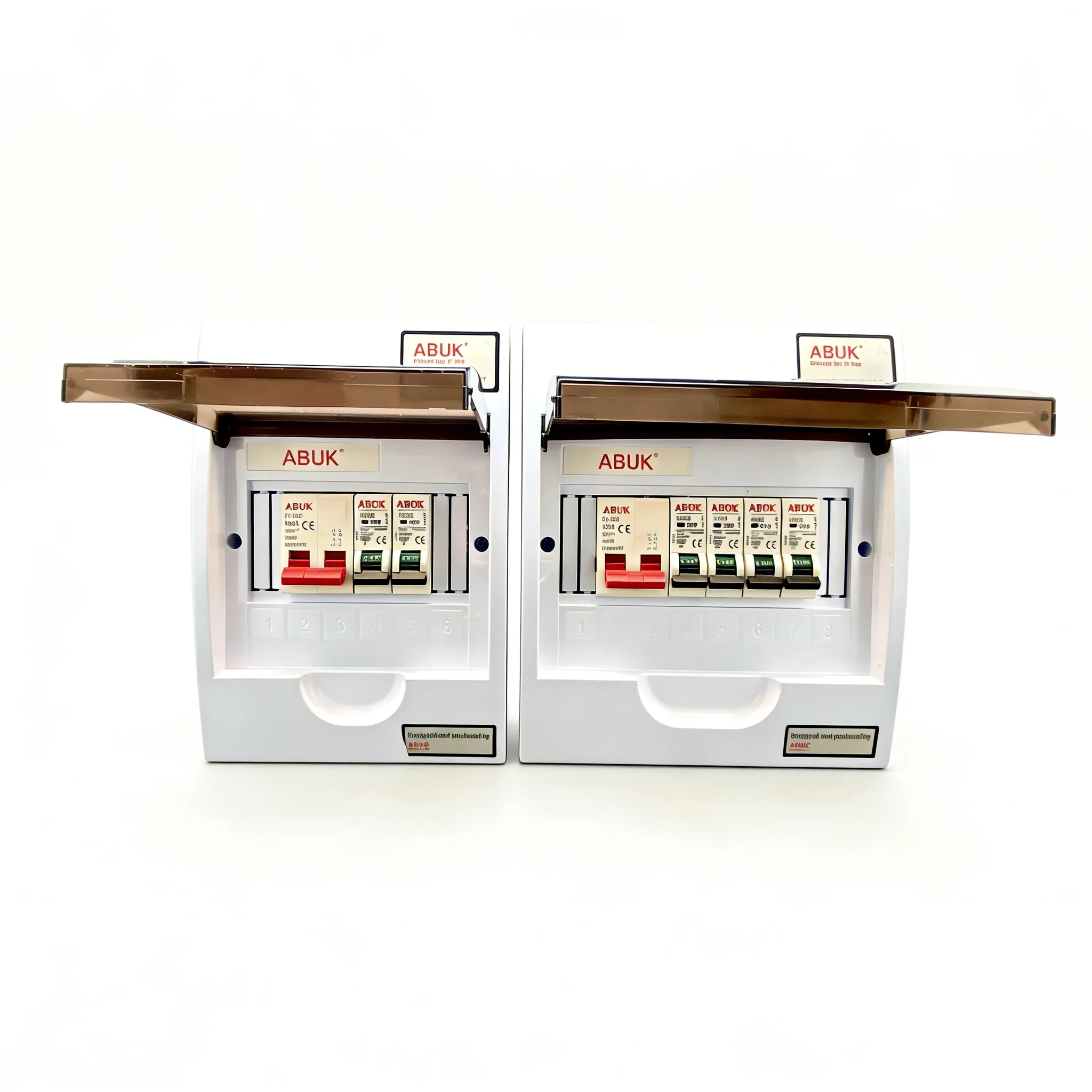
ABUK supports B2B evaluation of mechanical wall switches, sockets/receptacles, distribution boards and related products. Request CE, RoHS or GCC documentation only where it applies to the exact model and destination; local installation acceptance remains project-specific.
Buyers should resolve these common wall-socket questions before ordering
What are the main types of wall sockets?
The IEC World Plugs reference uses 15 familiar lettered configurations, Type A through Type O. Each describes a plug/socket geometry, but the national standard, earthing, voltage, frequency and current rating still need separate confirmation; this overview of electrical socket types can support further comparison when available.
How do I identify a wall socket by its pin layout?
When comparing wall socket types, count the contacts, note whether pins are flat, round, angled or rectangular, and identify the earthing method and spacing. Then compare product markings and dimensions with the national standard; pin layout alone cannot establish voltage, frequency or legal installation status.
Which wall socket is suitable for a high-load appliance?
Use the socket specifically approved for the appliance plug, calculated current, supply voltage and circuit design. A qualified designer or electrician should also check starting current, duty cycle, conductor size and breaker/RCD/GFCI requirements; a higher socket rating cannot correct an undersized circuit.
What is the difference between a grounded and ungrounded socket?
A grounded socket adds a protective-earth contact intended to carry fault current so the protective device can operate. An ungrounded two-contact socket lacks that path and should not be used to defeat the earth connection of Class I equipment; the building earthing system and continuity must also be verified.
Does an IP-rated socket automatically qualify for outdoor use?
No. The IP test applies to the stated enclosure and condition, while real suitability also depends on the box, seals, cable entry, closed or in-use cover position, exposure and local shock-protection rules. Specify the complete assembly and installation method.
Authoritative references support the interface, safety and environmental checks
- International Electrotechnical Commission, World Plugs — plug systems, nominal voltage and frequency by country.
- International Electrotechnical Commission, IP ratings — explanation of ingress-protection classification.
- IEC 60309-1 — scope for industrial plugs, socket-outlets and appliance inlets.
- Electrical Safety First, Plugs and Fuses — UK plug, fuse and socket safety guidance.
- U.S. Consumer Product Safety Commission, Childproofing Your Home — consumer guidance covering electrical-outlet safeguards.
The reliable socket is the one whose interface, rating, protection and installation evidence point to the same use.
ABUK builds configurable wall-switch and socket solutions for that procurement decision. Review the wall switch and socket range, then contact ABUK with the destination standard, load schedule, installation environment and back-box drawing for model-specific documentation.